
The scissors have started pulling hair, cutting poorly at the tips, catching, or becoming harder to use.
The first thought is usually: they have gone dull.
But the problem may not be limited to the cutting edge. Scissor performance also depends on tension, the pivot assembly, blade alignment, damage from drops and the effects of previous sharpening.
That is why good sharpening starts with a careful inspection.
1. Cutting edge and tips
First, the cutting edge is examined along its entire length to determine what has happened:
- even, natural wear;
- a local micro-chip;
- worn or damaged tips;
- signs of impact or a drop;
- effects of previous sharpening.
Even a small local defect can make the scissors catch or pull hair while the rest of the cutting edge is still sharp.
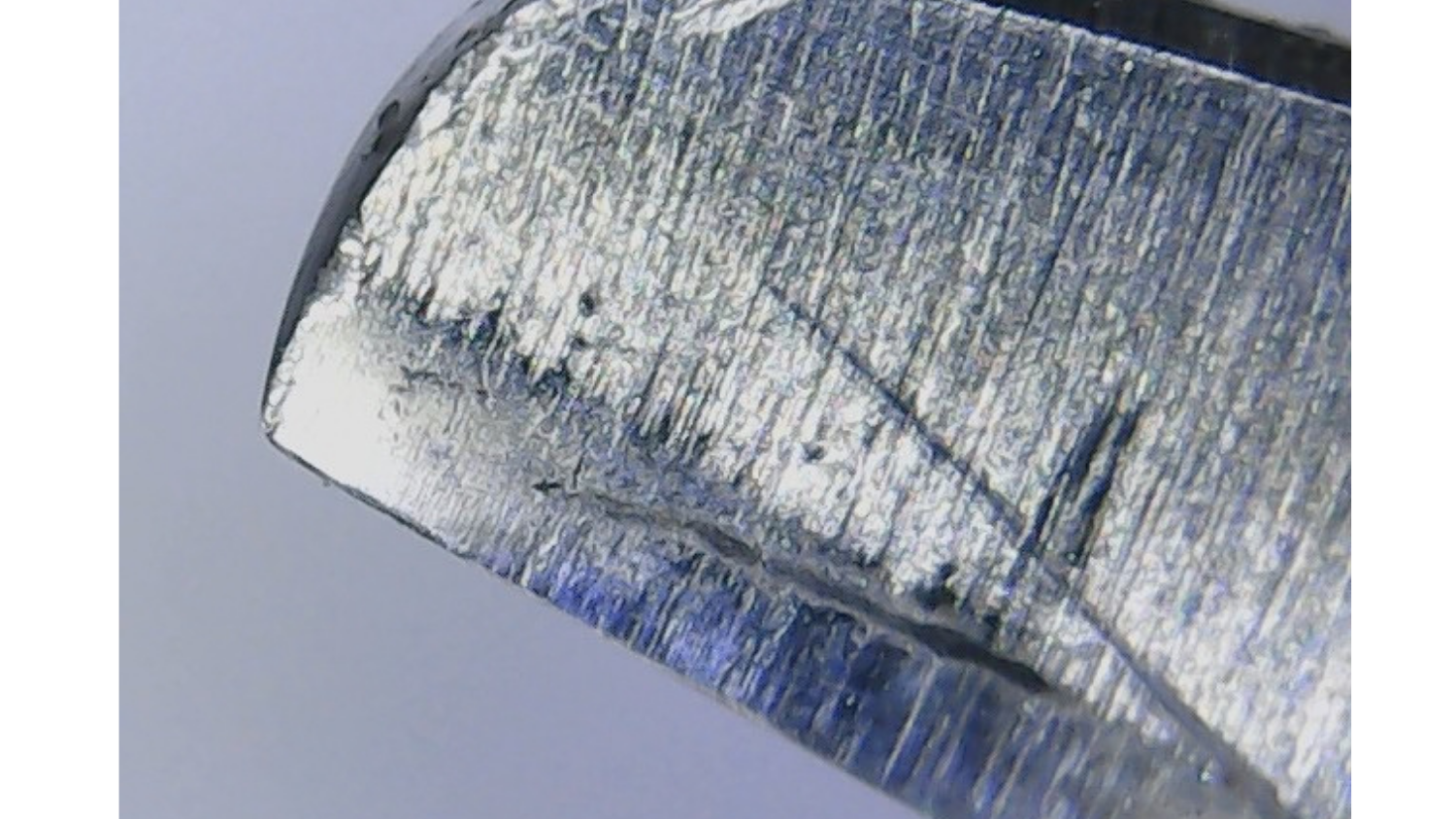
Local damage to the cutting edge under magnification
2. Scissor movement and pivot assembly
The scissors should open and close smoothly and evenly.
Tension that is too loose or too tight changes how the scissors work. If the tension is too loose, hair may fold between the blades instead of being cut cleanly. If it is too tight, the scissors become harder to operate and place more strain on the hand.
The pivot assembly is also checked for play, debris or anything else that may interfere with smooth movement.
The scissors are adjusted both before and after sharpening: first to assess their performance correctly, and afterwards for final adjustment and testing.
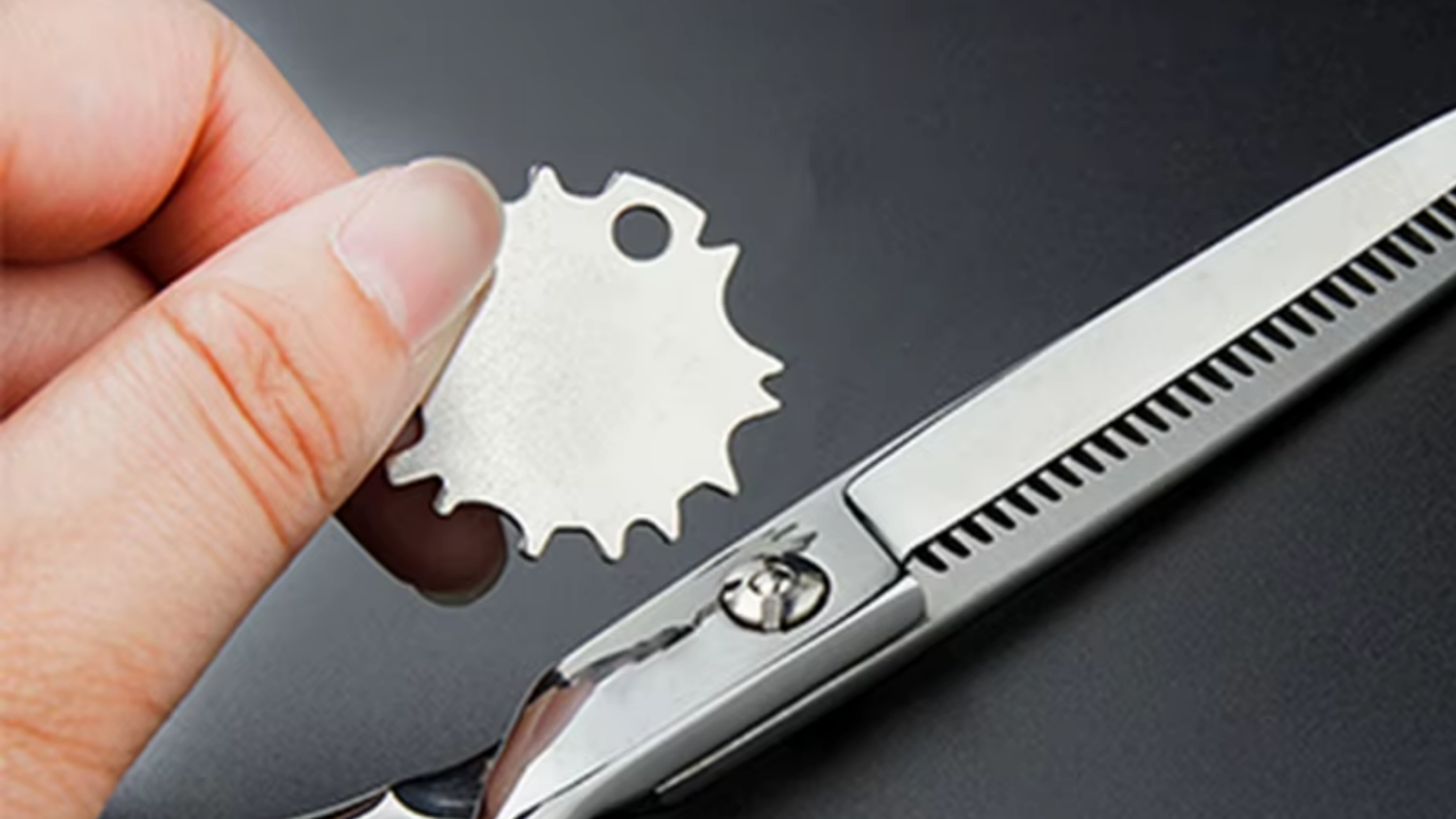
Tension and pivot operation are checked before and after sharpening
3. Blade alignment and interaction
The professional checks blade alignment, how the blades work together as the scissors close, and whether the tips cut correctly.
This is especially important after a drop or impact.
The scissors may look normal from the outside, but a chip, deformation or altered blade alignment can already affect the cut.
4. Has the original geometry been preserved?
Before sharpening, it is important to understand how these particular scissors are designed to work.
The cutting-edge profile, blade shape and overall geometry determine how the tool cuts and behaves in use.
Convex, Semi-Convex and Bevel profiles are different. Different blade curvatures behave differently in precision cutting and slicing. Special edge features, such as micro-serration, also need to be preserved.
Signs of previous sharpening can show whether the original geometry has been altered.
The aim is not simply to create a sharp edge, but to preserve the tool’s intended cutting characteristics.
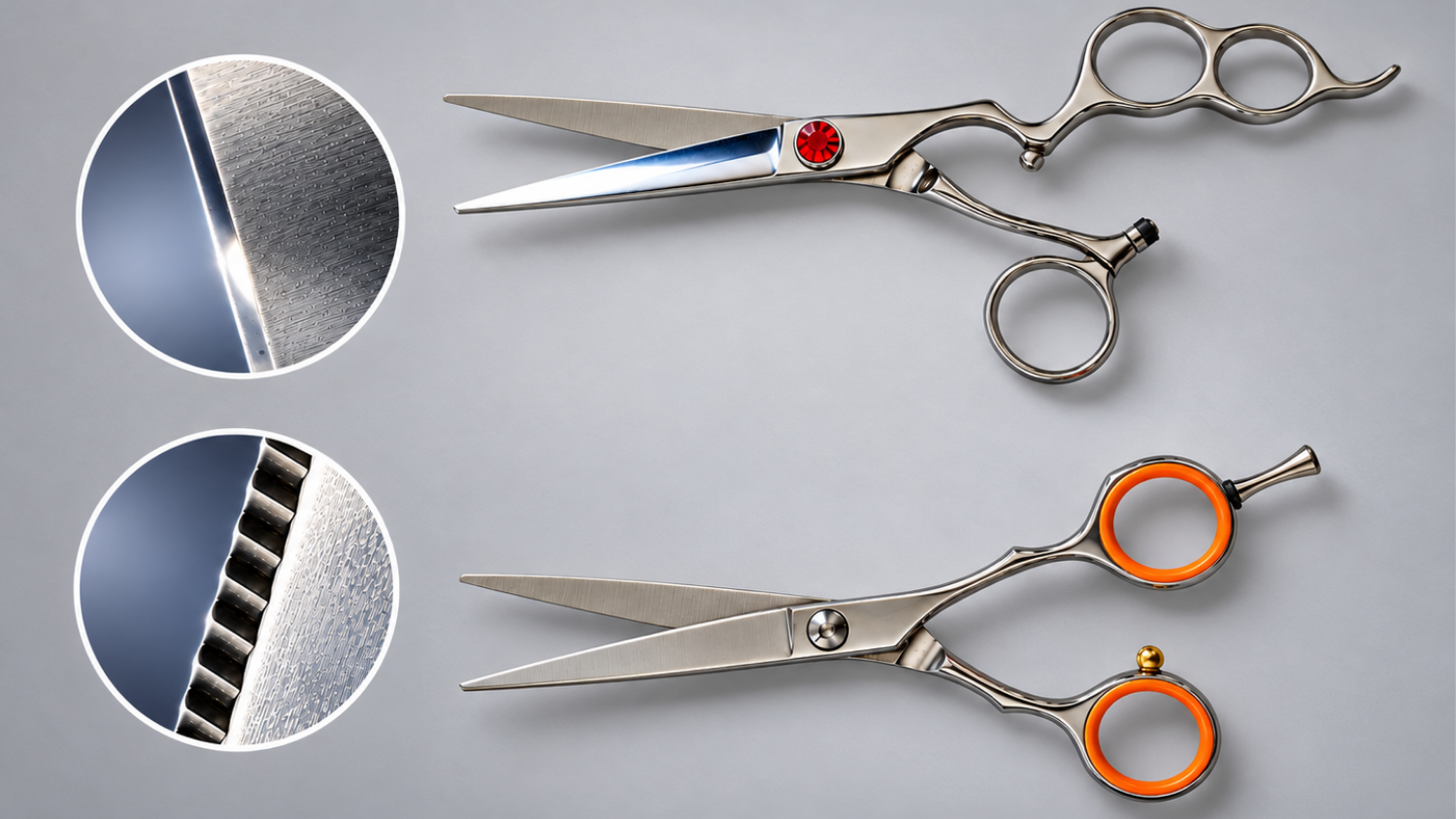
Different blade and cutting-edge geometries require different approaches to sharpening
5. What the inspection tells us
After the inspection, it becomes clear what work is actually required.
Sometimes sharpening and adjustment are enough. In other cases, deformation must be corrected, a damaged area or the tips restored, or geometry altered by previous sharpening corrected.
In rare cases, the inspection shows that restoration is no longer possible or worthwhile.
So the same complaint — “the scissors don’t cut properly” — can have different causes and require different solutions.
Why the inspection matters
To avoid removing unnecessary metal, trying to solve a damaged cutting edge through adjustment, or changing the geometry when there is no need to.
Understand first — sharpen second.
Baltic Beauty 2026
The largest and most spectacular beauty industry event in the Baltics and Scandinavia is approaching.
→ ZATOCHKA.LV & Baltic Beauty 2026
6–8 November • Riga • Hall No 1 • Stand K-11
Bring your working scissors with you.
At the ZATOCHKA.LV stand — a free scissor inspection and the special “5+1” offer.
📚 → All articles about sharpening, restoration and professional tools
✂️ → ZATOCHKA.LV — preserving tool geometry and service life.