
Proper blade tension directly affects cutting performance, smooth movement, and working comfort.
Tension that is too
tight:
• creates unnecessary friction
• increases strain on the hand
• accelerates mechanical wear
Tension that is too
loose:
• may “chew” the hair
• reduces cutting quality
• decreases control during work
📌 Incorrect tension affects scissor performance even with high-quality sharpening.
How to Check Scissor Tension
One of the most common testing methods:
- Open the scissors to approximately 90°
- Lift one blade
- Gently release it
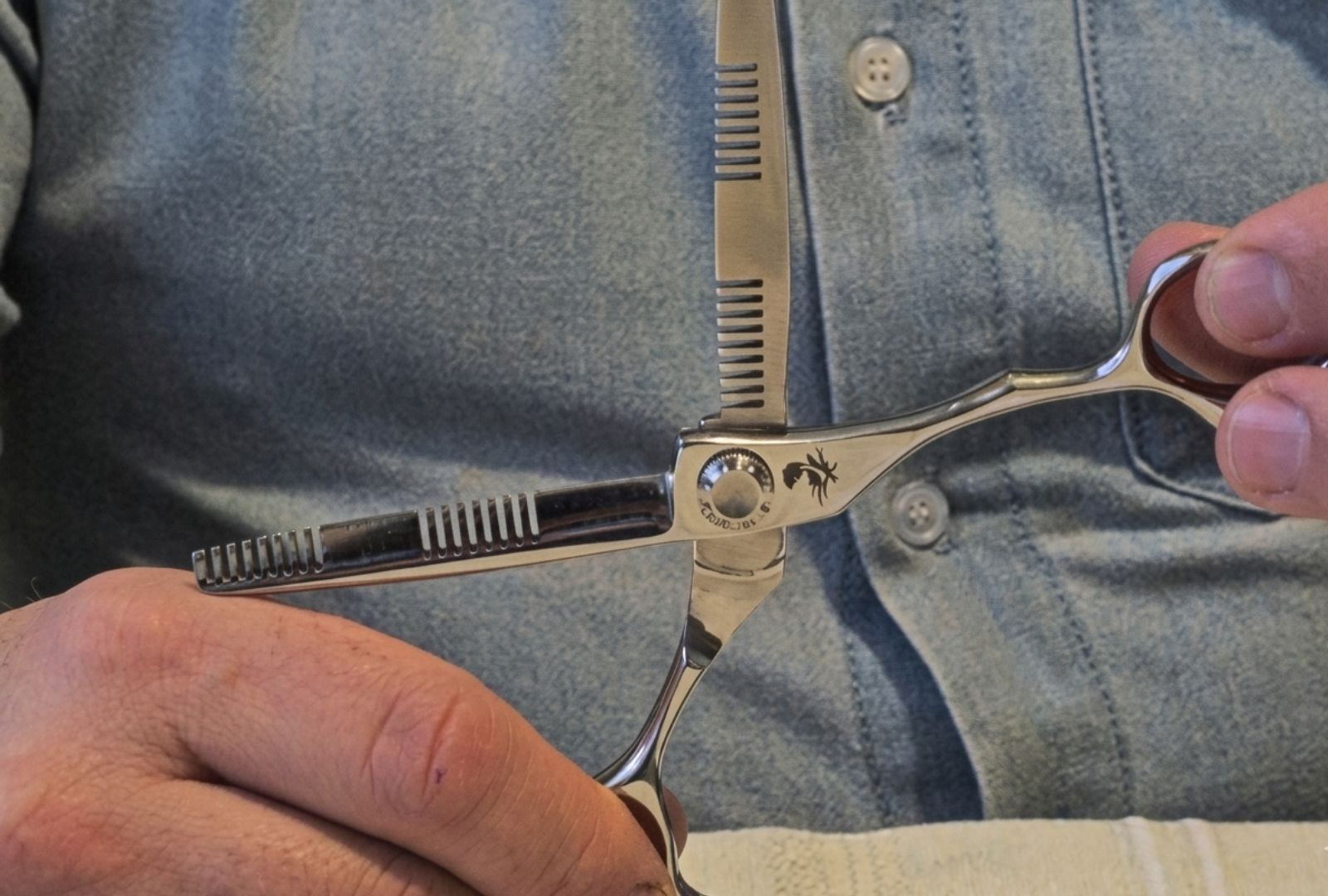
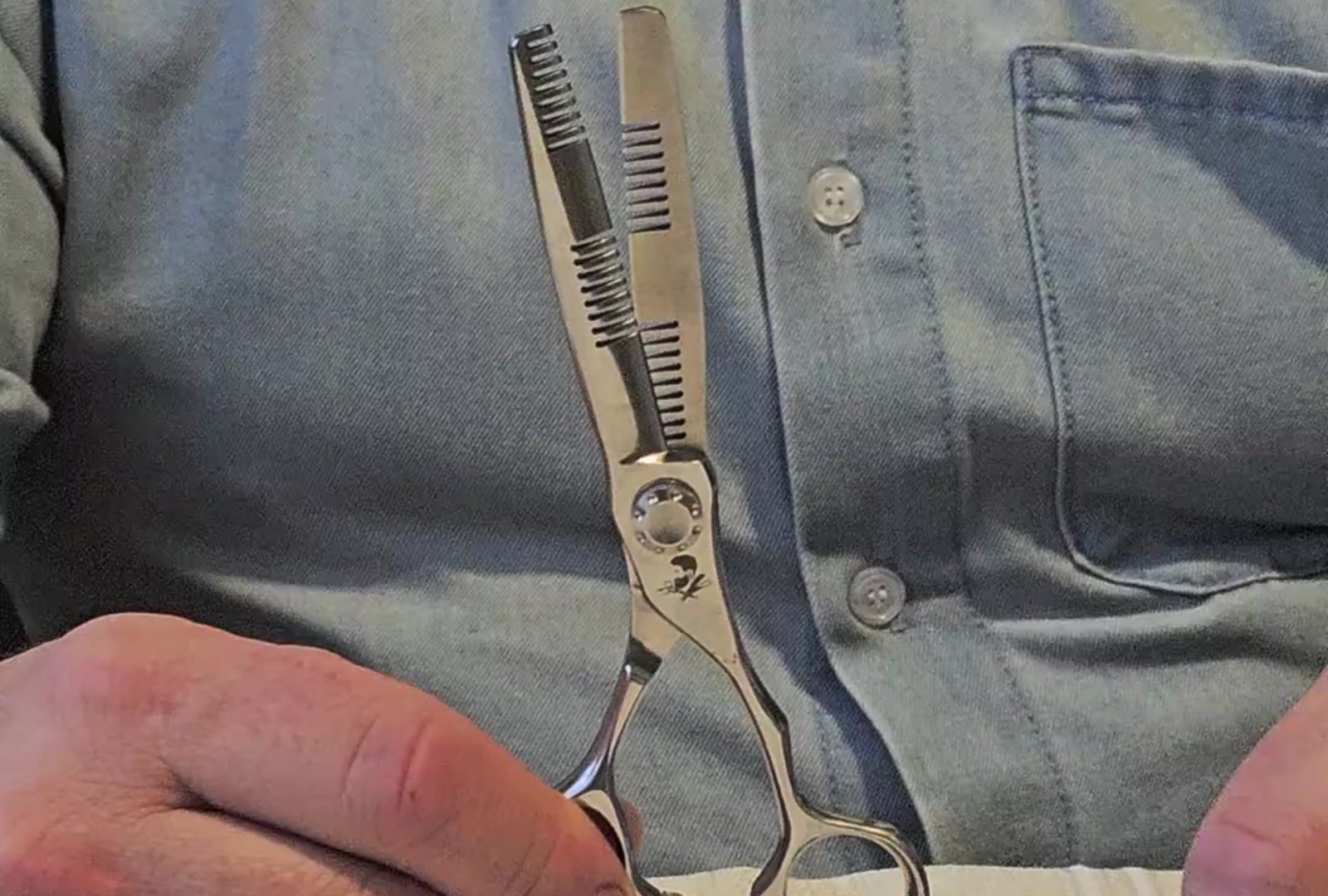
With proper tension, the blades should close smoothly but not completely, leaving a small gap between the tips.
• if the scissors close
too easily — the tension is too loose
• if the movement feels too tight — the tension is too tight
📌 This method is suitable for most hairdressing scissors.
How to Adjust Tension
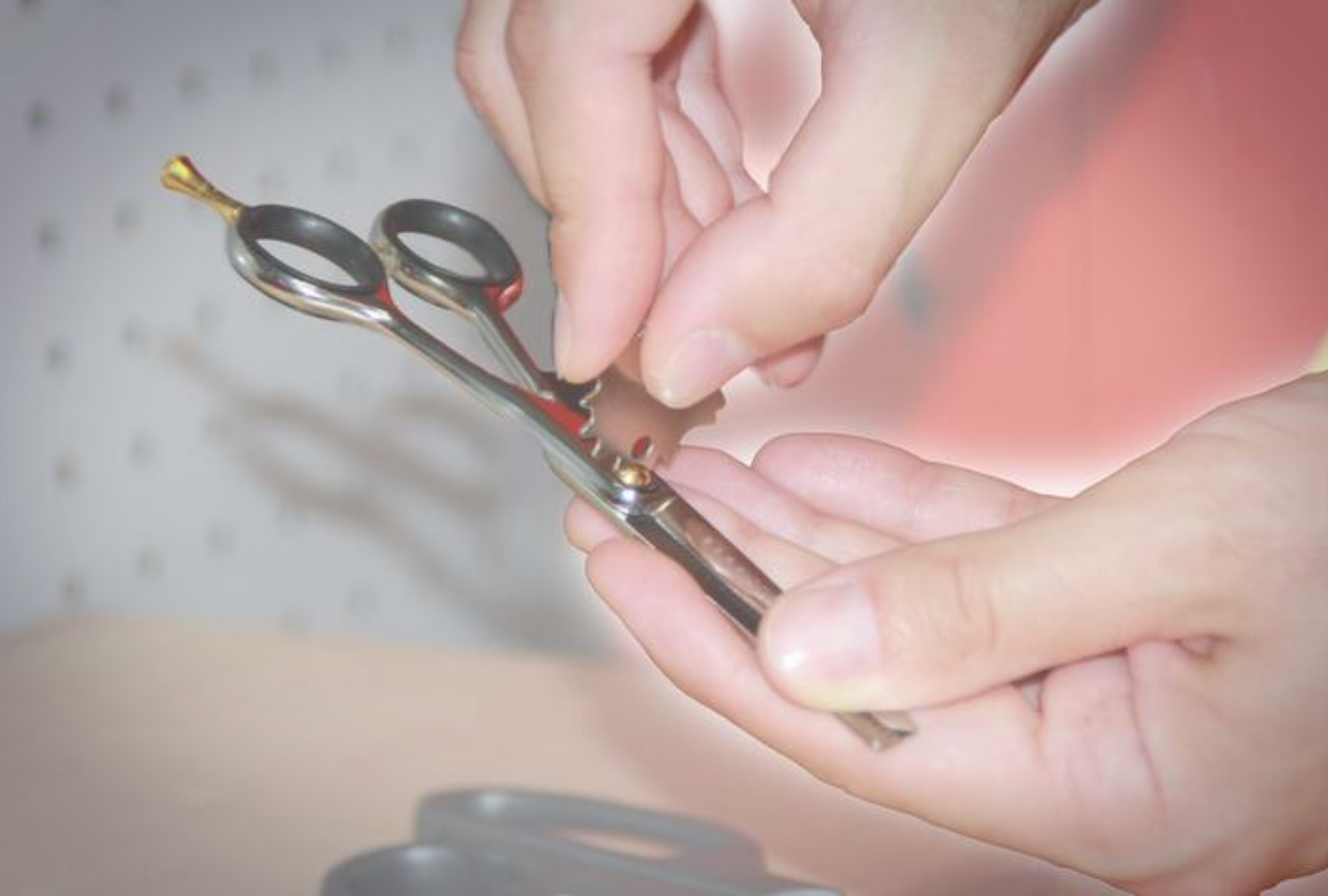
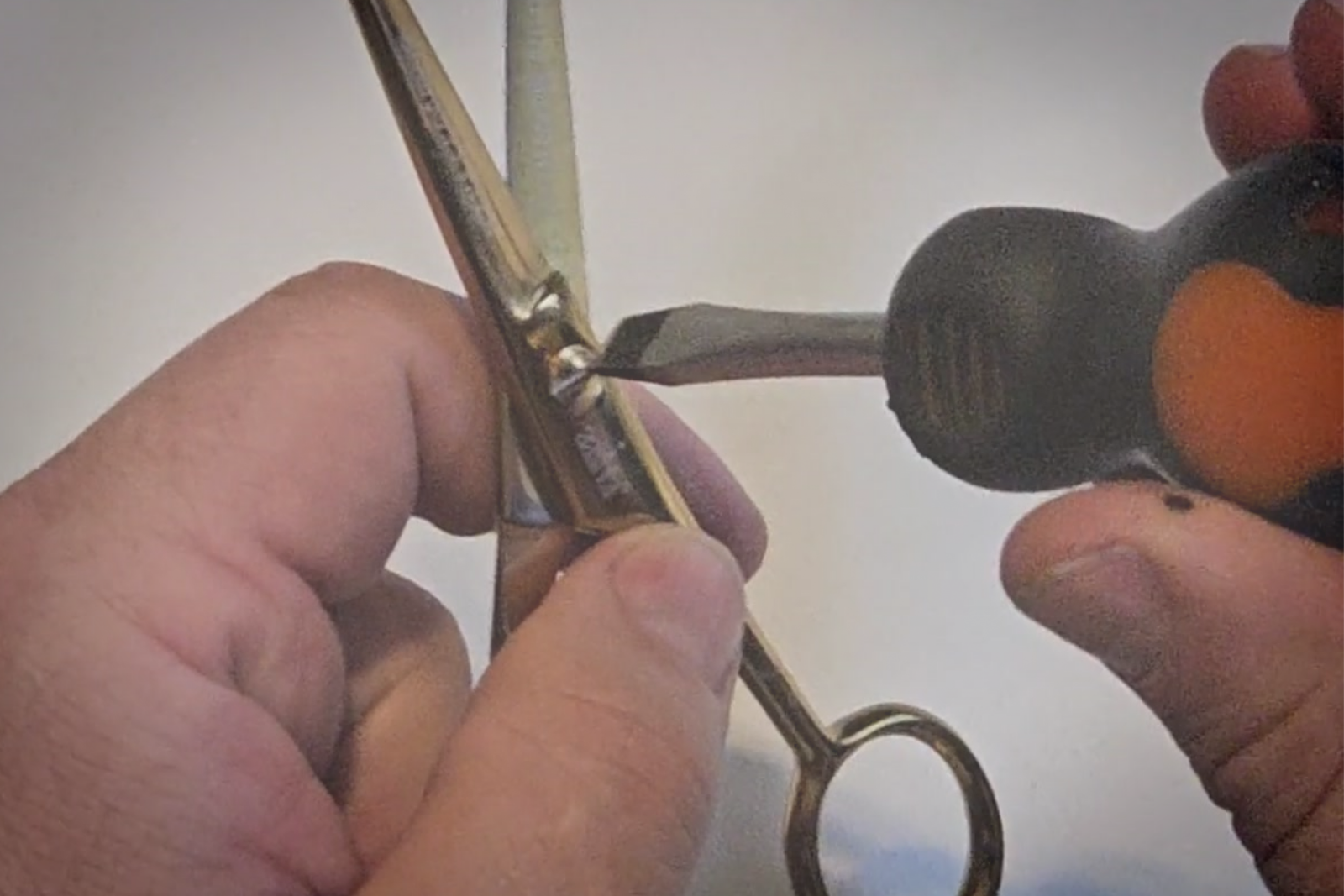
Adjustment is made using the tension screw.
• if the scissors close
too easily — slightly tighten the screw
• if the movement feels too tight — slightly loosen the screw
📌 Make small adjustments and check the movement after each change.
Over-adjustment may negatively affect scissor performance and accelerate mechanical wear.
What Is Important to Remember
Scissor performance
depends on:
• proper tension adjustment
• the condition of the cutting edge
• cleanliness of the pivot area
• regular maintenance
📌 Read more:
→ How to Properly Care for Hairdressing Scissors
→ Why Timely Sharpening Matters
→ When It’s Time to Replace Your Scissors
Conclusion
Proper tension adjustment helps maintain smooth movement, cutting quality, and working comfort.
Regular tension checks and timely maintenance significantly extend the lifespan of hairdressing scissors.