
The scissors still cut normally with the middle section of the blades, but at the tips they start bending the hair or fail to cut it cleanly.
This symptom can appear before the overall cutting performance noticeably deteriorates.
Why the tips?
Scissors work on the principle of a lever.
Cutting force is greater closer to the pivot. The farther the cutting point is from the pivot, the less mechanical advantage the scissors have.
That is why even minor wear or a change in scissor performance may become noticeable at the tips first.
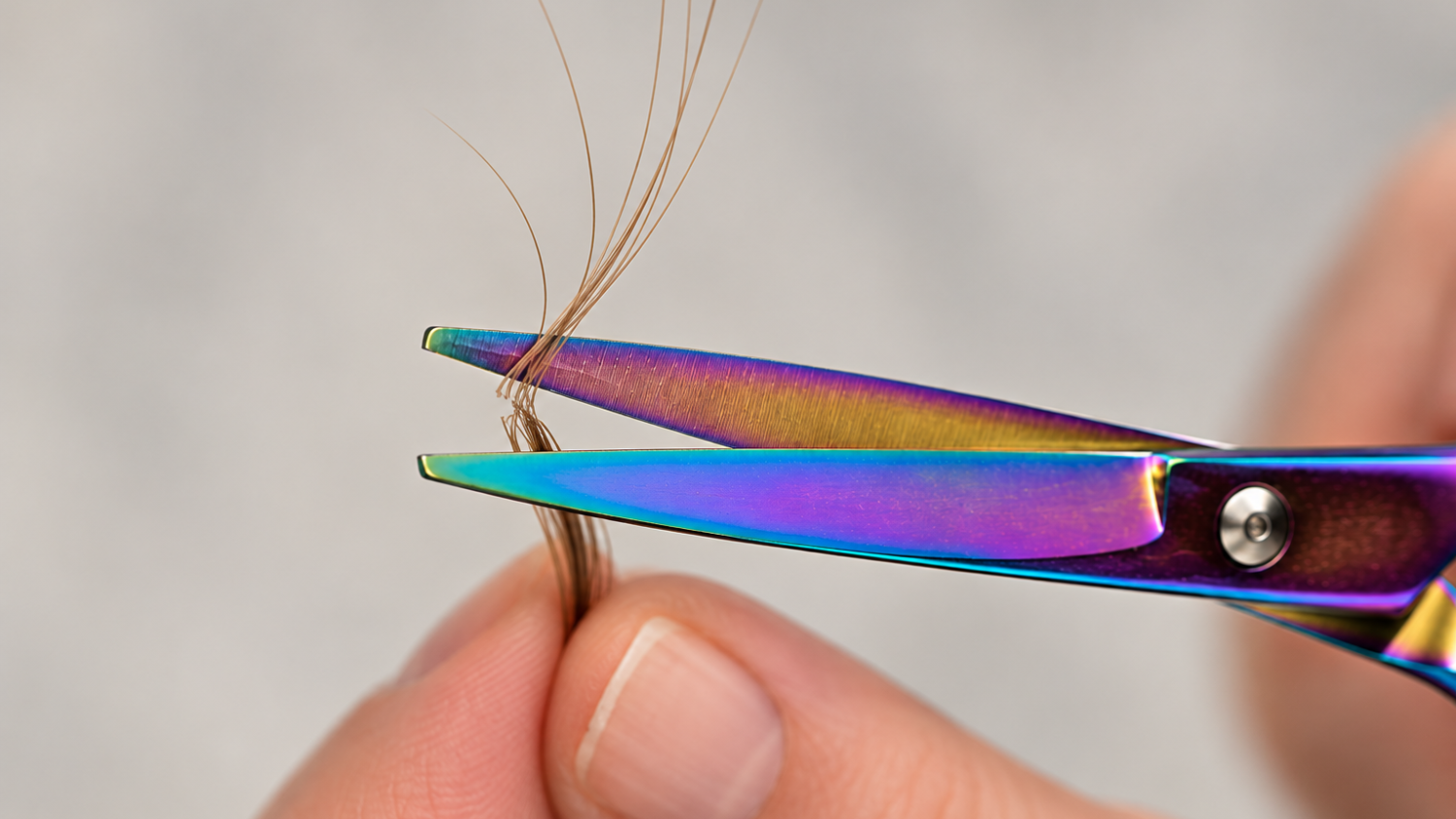
It is not always just about sharpness
If the tips stop cutting cleanly, it does not mean that simply sharpening the very ends of the blades will solve the problem.
There can be several causes.
Cutting-edge wear.
Even a small deterioration in the condition of the edge is more noticeable where the available cutting force is lower.
Incorrect tension.
If the tension is too loose, the blades may not maintain stable contact, and the hair may bend or slip between them.
→ How to check and correctly adjust scissor tension
Incorrect blade contact or geometry.
The cutting edges need to meet correctly along the full working length. If blade contact is disrupted, the problem often becomes noticeable closer to the tips.
Damage from a drop or impact.
Even a small shift in blade alignment or local damage to the cutting edge can affect precise cutting at the tips.
→ Dropped your scissors? What to check before you keep working
Why might a stylist not notice it straight away?
Because scissors usually do not stop cutting all at once.
The middle section of the blades still cuts normally, while the stylist gradually starts compensating for the problem: squeezing the scissors harder, changing the angle or repeating the cut.
When working with the tips, it is harder to compensate for the problem.
→ When your hand starts doing the scissors’ job
If you start thinking:
“The scissors still feel sharp, but the tips no longer work like they used to.”
It is worth having the scissors checked.
Should you simply tighten the screw?
Sometimes the problem really is related to tension.
But tightening the screw more “just in case” is not a good solution. Excessive tension also interferes with normal scissor action and increases the load on the blades.
If the tips still do not cut cleanly after adjustment, the screw may not be the cause.
What should be checked?
During an inspection, the following are checked:
— the condition of the cutting edges;
— tension and the pivot mechanism;
— blade contact along the full working length;
— tip geometry and condition;
— possible damage caused by a drop or impact.
A problem that shows up at the tips is not necessarily a problem with the tips alone.
→ Why professional sharpening is about more than a sharp cutting edge
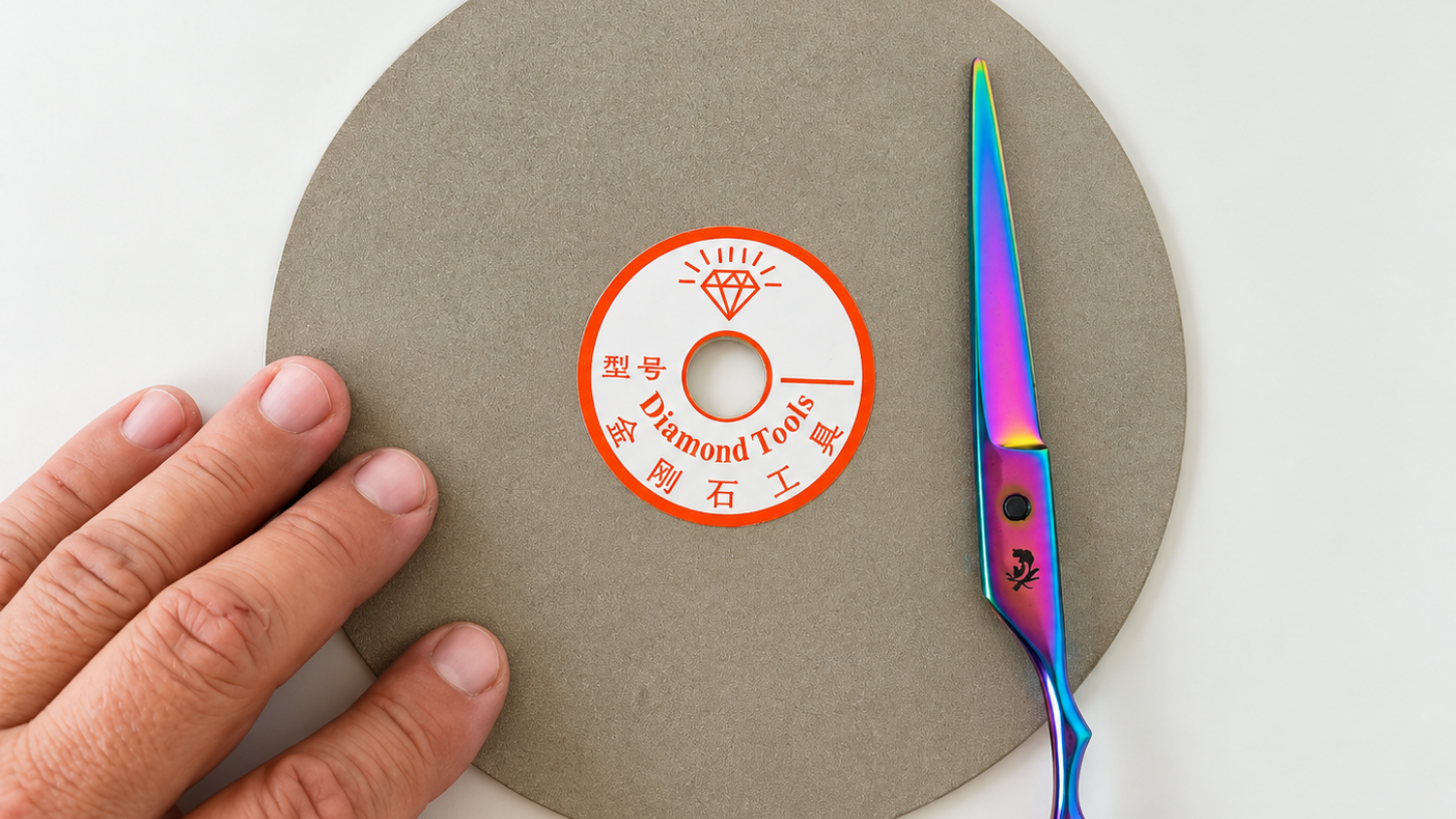
The tips are a good indicator of scissor condition
If the scissors cut normally near the pivot and through the middle section of the blades but start bending hair or leaving it uncut at the tips, it is worth having the scissors checked.
There is no need to wait until cutting performance deteriorates along the entire blade.
Hairdressing scissors should cut cleanly along the full working length — right to the tips.
ZATOCHKA.LV — diagnostics and professional sharpening of hairdressing scissors.