
Dropping scissors is one of the most common causes of sudden damage to a professional tool.
Sometimes everything appears normal after the impact: the scissors still open, the screw remains in place, and there are no visible chips. A stylist may therefore assume that nothing serious has happened and continue working.
However, even a minor fall can alter the geometry of the scissors, damage the cutting edge, or disrupt proper blade contact. The sooner the scissors are inspected, the greater the chance of restoring them without extensive intervention.
What can happen to scissors after a fall
The type of damage depends on the height of the fall, the surface the tool lands on, and whether the scissors are open or closed at the moment of impact.
If the scissors fall while closed, the tips, finger rings, finger rest, or screw assembly are most likely to be damaged.
If they fall while open, the impact may affect the inner surface of a blade or the cutting edge itself.
A fall may cause:
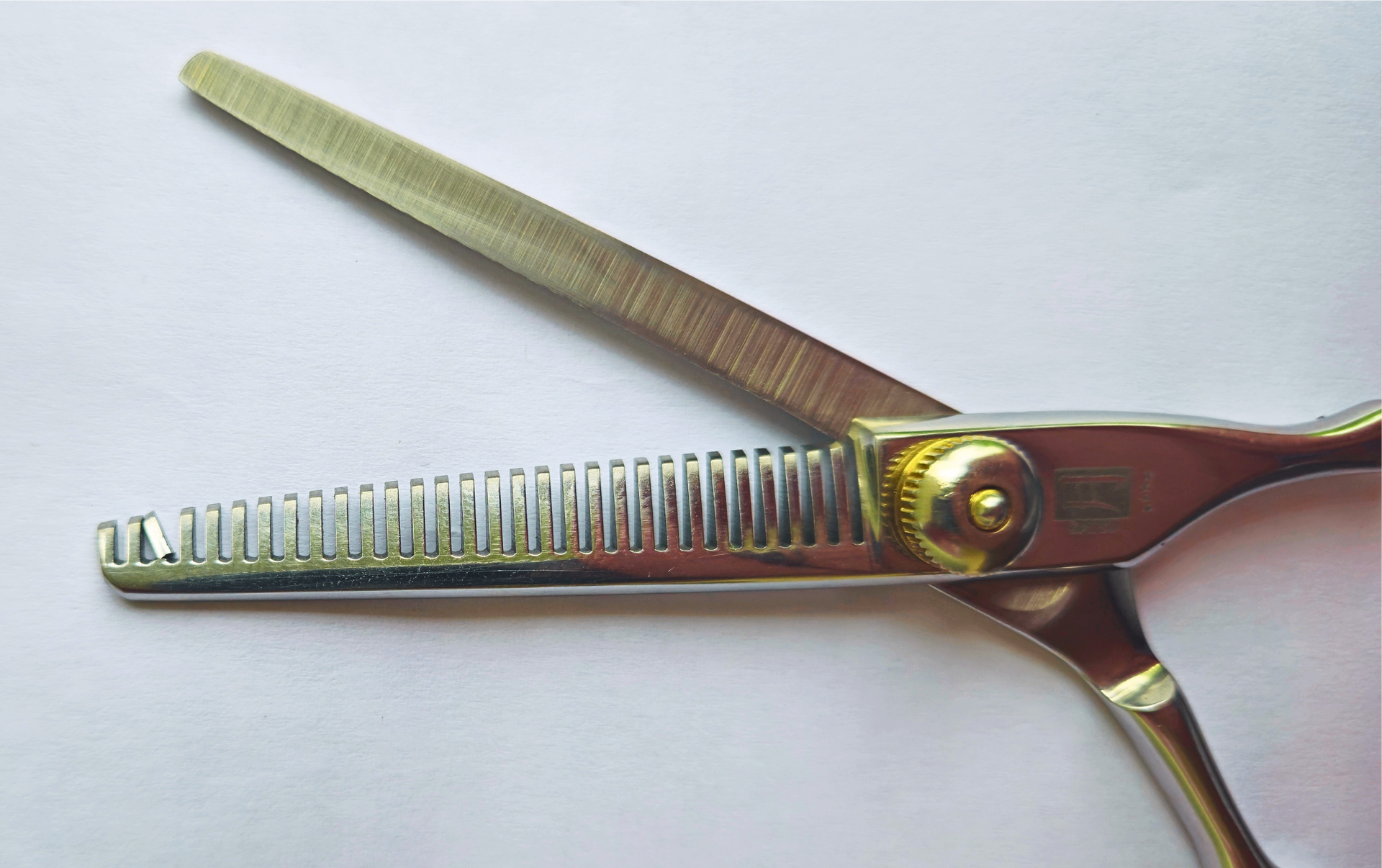
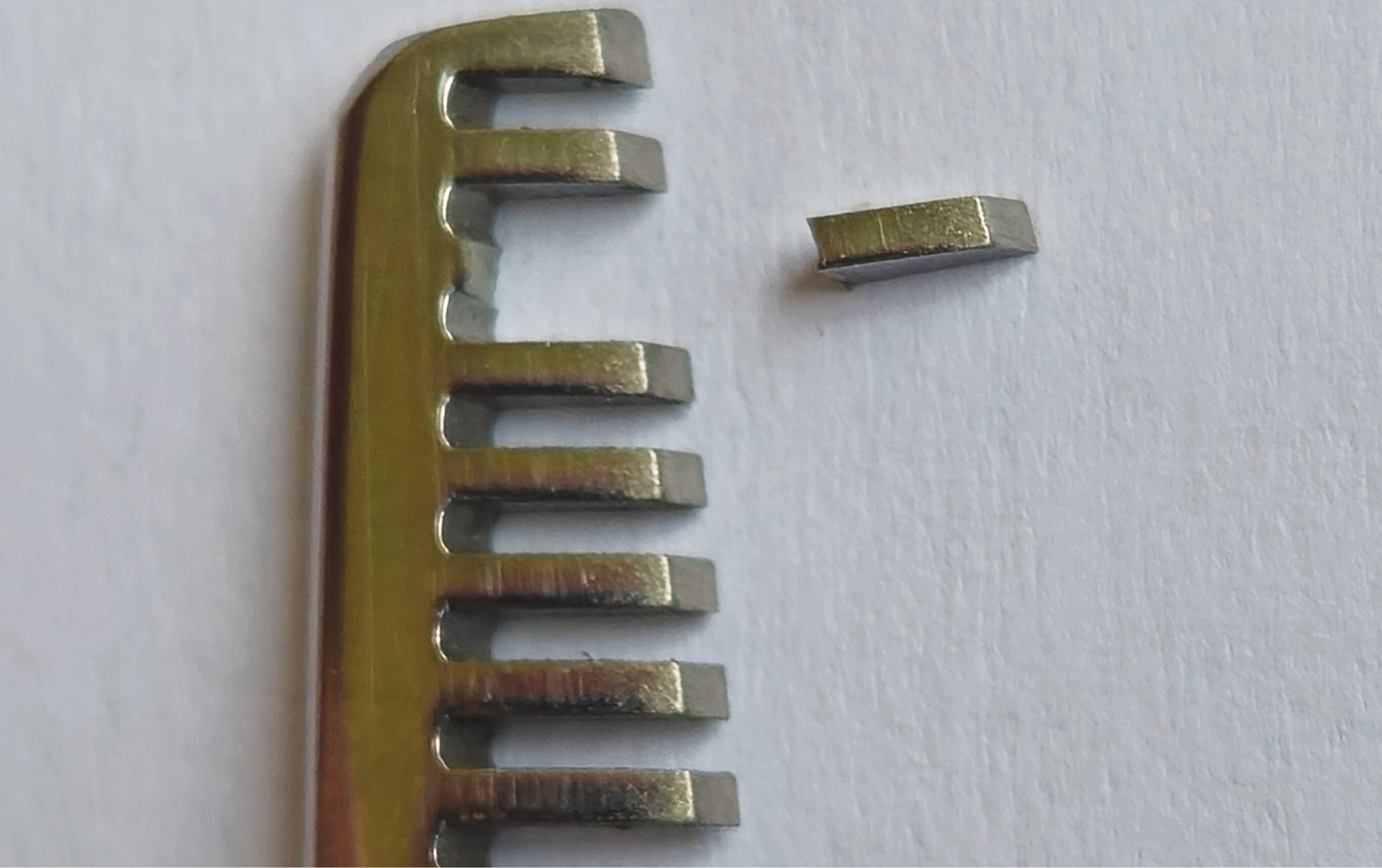
- chips and dents along the cutting edge;
- damage to or deformation of the tips;
- improper blade contact;
- changes to the blade geometry;
- movement that is too tight or too loose;
- damage to the screw or adjustment mechanism;
- catching or resistance when opening and closing the scissors;
- reduced cutting quality.
Some types of damage are immediately visible, while others can only be detected during a professional inspection.
Why you should not immediately test the scissors on hair
After a fall, it can be tempting to open and close the scissors several times and then test them on a section of hair.
This should be avoided.
If a small dent has formed on the cutting edge, the damaged areas may come into contact when the scissors are closed and cause further damage to each other. As a result, an initially minor defect may become deeper.
Testing the scissors on hair can also make the situation worse. Damaged scissors may begin to pull, bend, or chew the hair, causing the stylist to instinctively apply more pressure to the handles.
This does not solve the problem. It only places additional strain on the blades and screw assembly.
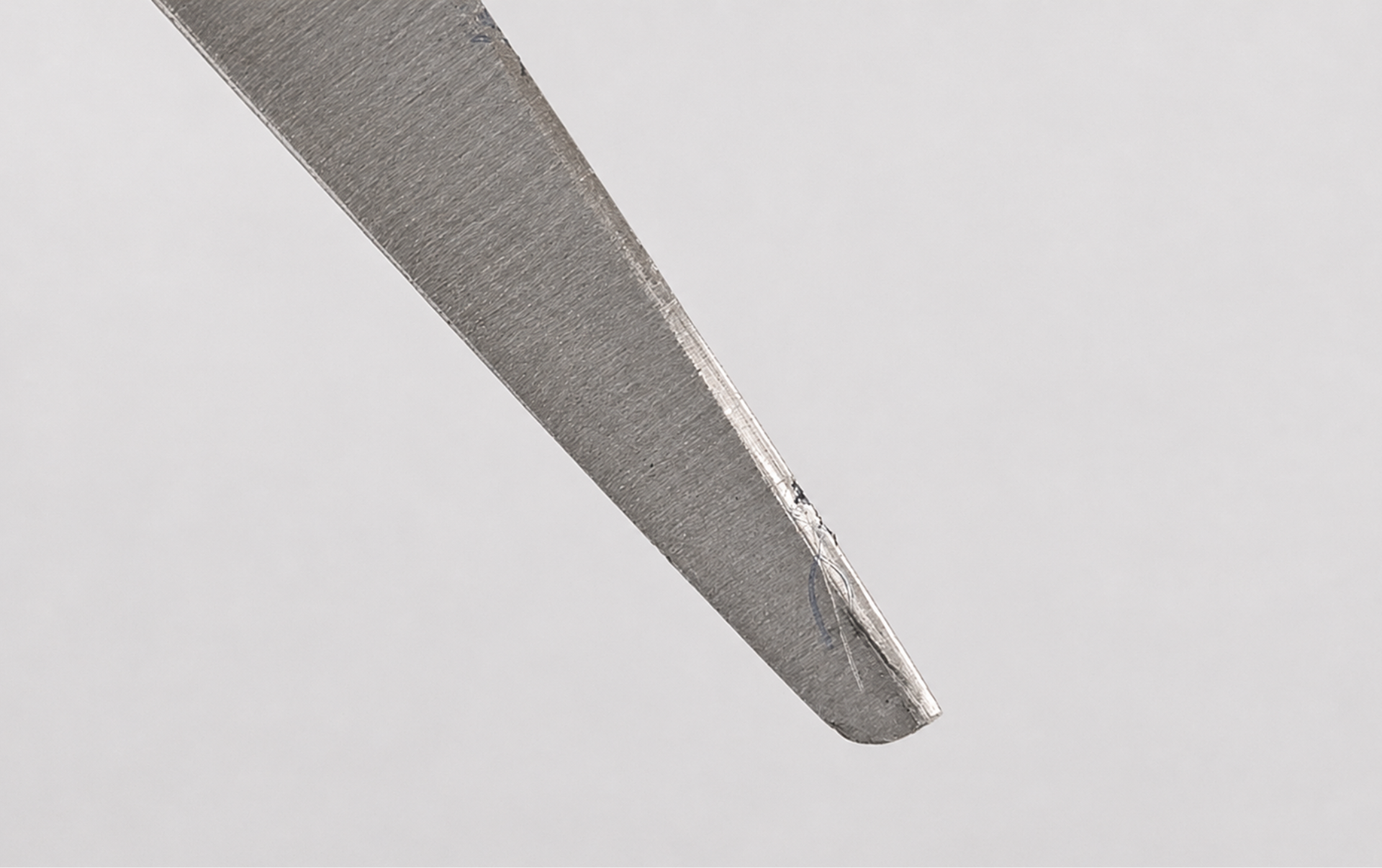
A dent in the cutting edge
caused by impact. When the scissors are closed,
the damaged areas may come
into contact and damage each other further.
What to do immediately after dropping your scissors
First, pick up the tool and inspect it under good lighting. A magnifying glass can be used for a more thorough examination.
Pay particular attention to:
- the tips;
- the cutting edges;
- the screw and adjustment mechanism;
- the blade joint;
- the position of the blades in relation to each other.
Do not try to close the scissors abruptly, especially if you feel resistance or notice that the blades are catching against each other.
Do not continue working with the tool, even if the damage appears minor.
Carefully place the scissors in a protective case so that they do not come into contact with other tools, and have them professionally inspected.
Signs that may indicate damage
After a fall, the scissors may feel or behave differently from before.
They should be inspected by a specialist if:
- a clicking sound appears when the scissors are closed;
- the blades catch against each other;
- the movement has become tight or uneven;
- the scissors open too freely;
- the tips no longer meet correctly;
- the tool pulls or bends the hair;
- the cut has become uneven or interrupted;
- the scissors feel as though they are catching in the hair;
- a dent, chip, or shiny spot is visible on a blade;
- the familiar feel of the tool in the hand has changed after the impact.
Even one of these signs is enough reason to stop working and have the scissors checked.
Can scissors be restored after a fall?
In many cases, yes.
Small dents, adjustment problems, and moderate deformation can often be corrected. To learn more about the types of damage that can usually be repaired, read → “Can a Damaged Tool Be Restored?”
Whether restoration is possible depends on several factors:
- the force of the impact;
- the location of the damage;
- the depth of the chip or dent;
- the degree of blade deformation;
- the construction of the scissors;
- the amount of metal removed during previous sharpenings;
- whether the tool continued to be used after the fall.
If the scissors were used extensively after being dropped, an initially minor defect may have become more serious. The sooner the tool is professionally inspected, the better.
How the scissors are inspected
The specialist first assesses the overall condition of the scissors.
The following are checked:
- the cutting edges;
- the tips;
- the blade geometry;
- correct blade contact;
- the condition of the screw assembly;
- the smoothness and consistency of movement;
- any areas where the blades catch;
- the quality of the test cut.
The inspection helps determine whether adjustment and geometry correction will be sufficient or whether sharpening will also be required.
It is important to understand that, after a fall, the problem is not always limited to the sharpness of the cutting edge. Even sharp scissors may work incorrectly if the geometry, tension, or contact between the blades has been disturbed.
To learn why professional scissors servicing involves more than simply sharpening the cutting edges, read → “Professional Sharpening of Hairdressing Scissors.”
How scissors are restored after a fall
The sequence of work depends on the type and extent of the damage.
Where necessary, the specialist:
- removes dents and chips;
- restores the blade geometry;
- corrects the blade position;
- sharpens the cutting edges;
- adjusts the tension;
- restores smooth and even movement;
- checks blade contact;
- performs a final test.
After servicing, the scissors must work correctly along the entire length of the blades, rather than simply appearing undamaged.
The restoration process is described in more detail in → “How Hairdressing Scissors Are Restored.”
Why you should not repair the scissors yourself
Attempting to straighten a tip, tighten the screw, or work on the damaged area yourself may cause even more serious changes.
Do not:
- straighten a blade with pliers;
- use a file or sandpaper;
- grind down a damaged tip yourself;
- overtighten the screw;
- force the scissors closed against resistance;
- repeatedly open and close the tool if the blades are catching against each other.
DIY repair can alter the shape of the cutting edge or the geometry of the blade. It can also reduce the amount of metal available for professional restoration.
Is the damage always immediately noticeable?
No.
Sometimes scissors continue to cut after a fall, but their performance gradually deteriorates.
A stylist may notice that more pressure is required on the handles, the same movement has to be repeated more often, or previously cut sections of hair need to be revisited.
These changes are often mistaken for normal dulling. However, the actual cause may be disrupted blade geometry or improper blade contact resulting from the impact.
For this reason, it is advisable to have dropped scissors inspected even when there is no obvious visible damage.
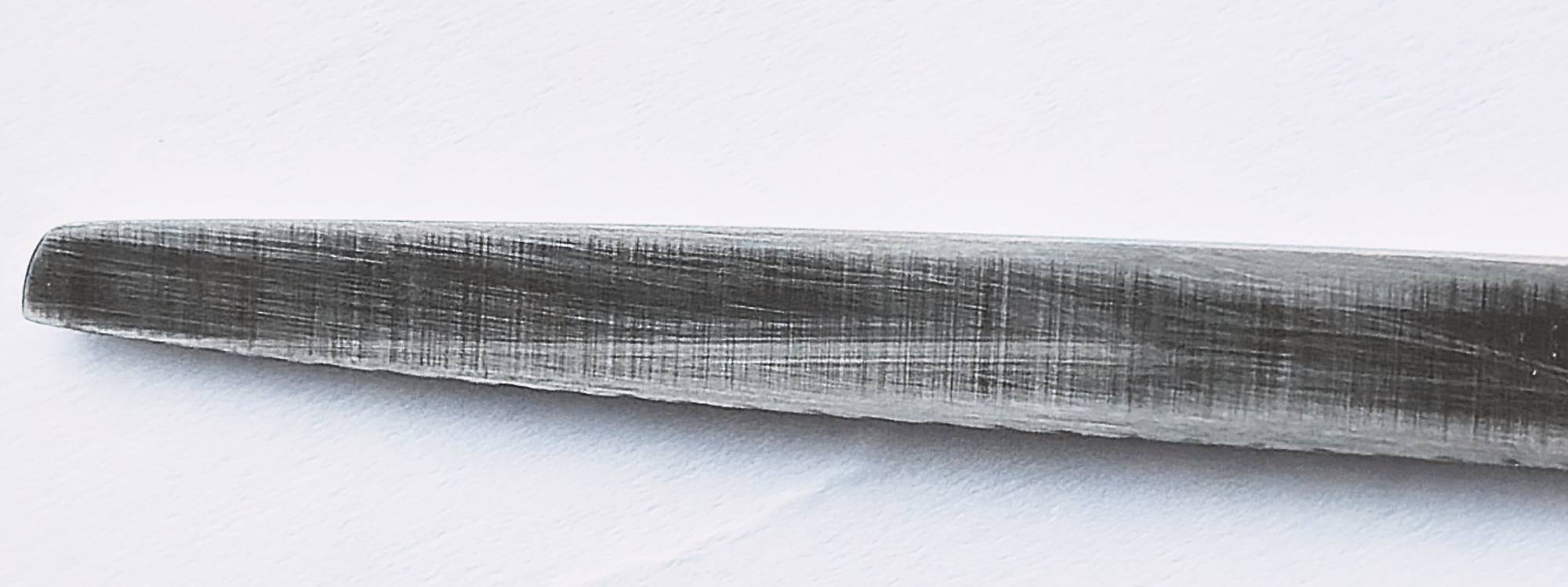
A small blade defect is not always visible without careful inspection under good lighting
When restoration may not be possible
Not every tool can be returned to full working condition.
Restoration may be difficult or impossible in cases involving:
- a deep chip;
- severe deformation;
- a crack in the metal;
- damage to the pivot or screw assembly;
- significant disruption of the blade geometry;
- excessive metal removal during previous sharpenings or attempted DIY repairs.
To learn more about critical damage and situations in which repair may no longer be possible or worthwhile, read → “When Can a Tool No Longer Be Restored?”
A final decision can only be made after the tool has been examined. A professional assessment helps determine whether restoring the scissors is worthwhile or whether replacing them would be the safer option.
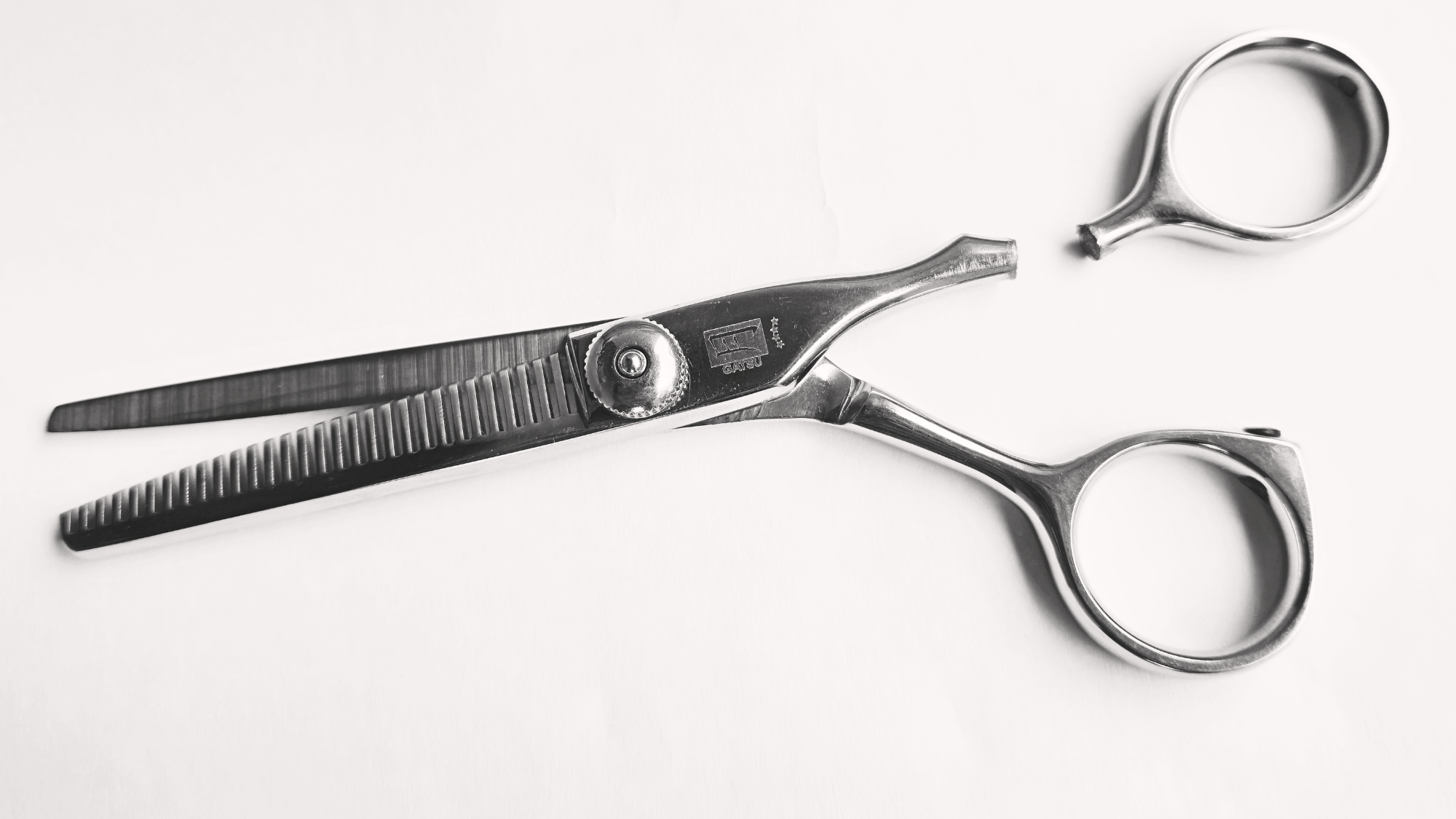
Severe mechanical damage to the scissors. The tool cannot be restored
How to reduce the risk of dropping your scissors again
Accidents cannot be prevented completely, but the risk of dropping scissors can be significantly reduced.
During work, it is advisable to:
- place the scissors on a stable surface;
- use a purpose-made mat or holder;
- avoid leaving the tool near the edge of the work surface;
- close the scissors before moving around the work area;
- store each tool in a separate compartment of its case;
- avoid placing scissors in a shared bag with heavy or metal objects.
Professional scissors require careful handling not only during use, but also during storage and transportation. To learn more about safe use, care, and storage, read → “Proper Handling and Use of Scissors.”
The most important thing after a fall is not to make the damage worse
A fall does not always mean that the scissors have been permanently damaged.
In many cases, the tool can be restored and returned to full working condition. However, the result largely depends on what the stylist does immediately after the accident.
Do not test damaged scissors on a client’s hair, attempt to straighten the blades yourself, or continue working if you feel resistance or notice a change in the movement.
Carefully place the tool in its case and have it professionally inspected.
The sooner the cause of the problem is identified, the greater the chance of preserving the scissors’ geometry and working performance.
Have your scissors been dropped, and has their movement or cutting quality changed?
→ Send the tool for a professional inspection.
We will check the condition of the cutting edges, blade geometry, and blade contact, and determine whether the scissors can be restored.