
Many people believe it is enough to simply “sharpen” the scissors.
However, without proper
adjustment:
• scissors may start “chewing” the hair
• smooth movement deteriorates
• strain on the hand increases
• cutting consistency deteriorates
📌 Even sharp scissors may work incorrectly if the blade geometry or tension adjustment is compromised.
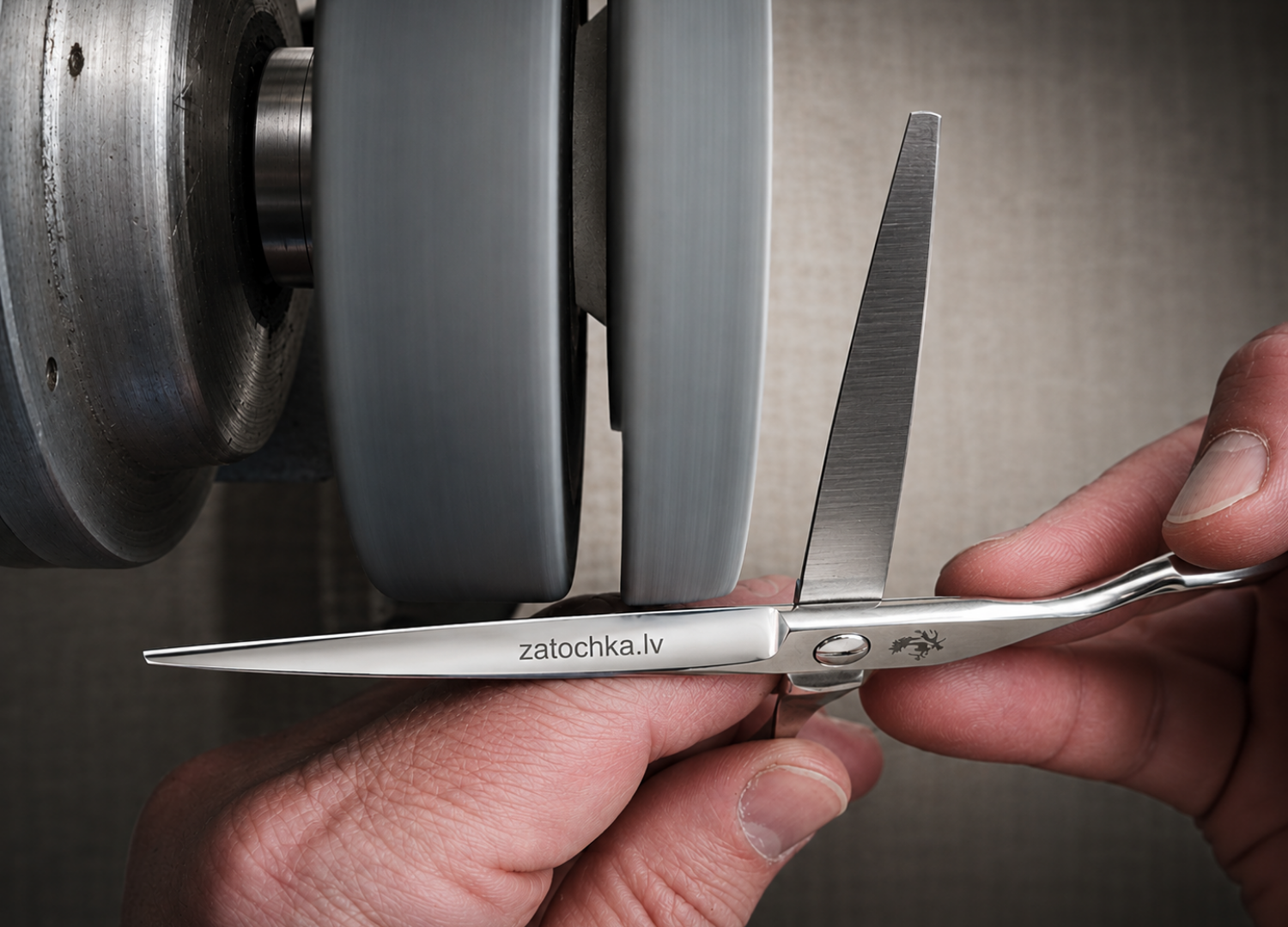
What Professional Sharpening Includes
What Professional Sharpening Includes
Restoring the Cutting Edge
Creating the correct sharpening angle based on the scissor type and the stylist’s working technique.
Finishing the Cutting Edge
Precise finishing for a clean and smooth cut.
Final Adjustment and Performance Check
Adjusting smooth movement and proper blade contact.
Checking Blade Contact
Ensuring correct blade contact along the entire working length of the scissors.
Cleaning and Lubrication
Removing dirt, cleaning the screw assembly, and applying oil for smooth scissor operation.
Checking Balance and Performance
Final inspection of the scissors after servicing.
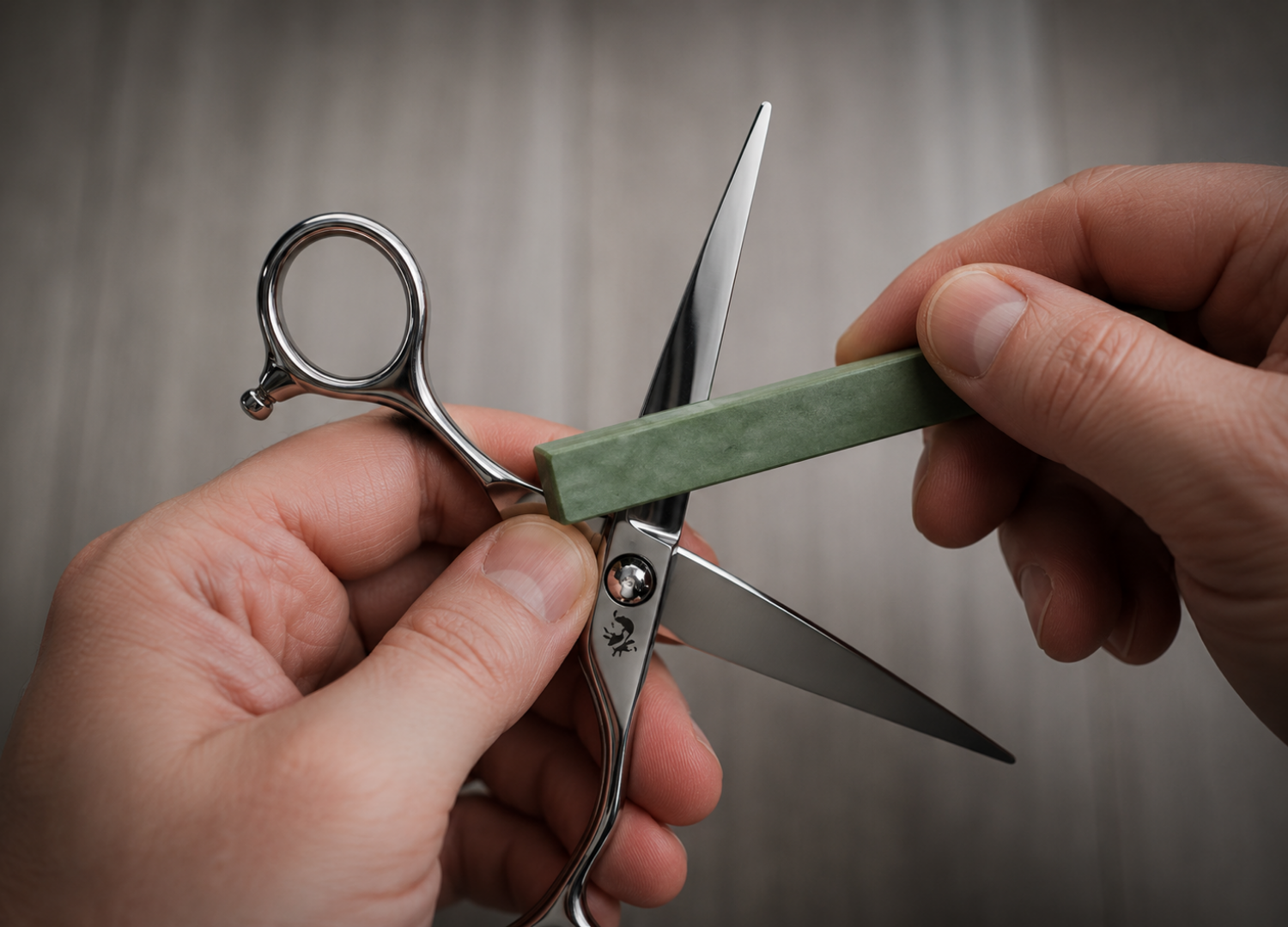
What Improper Sharpening Can Damage
Improper sharpening may:
• damage the cutting edge
• alter blade geometry
• reduce cutting quality
• accelerate scissor wear
📌 In some cases, the tool can no longer be fully restored.
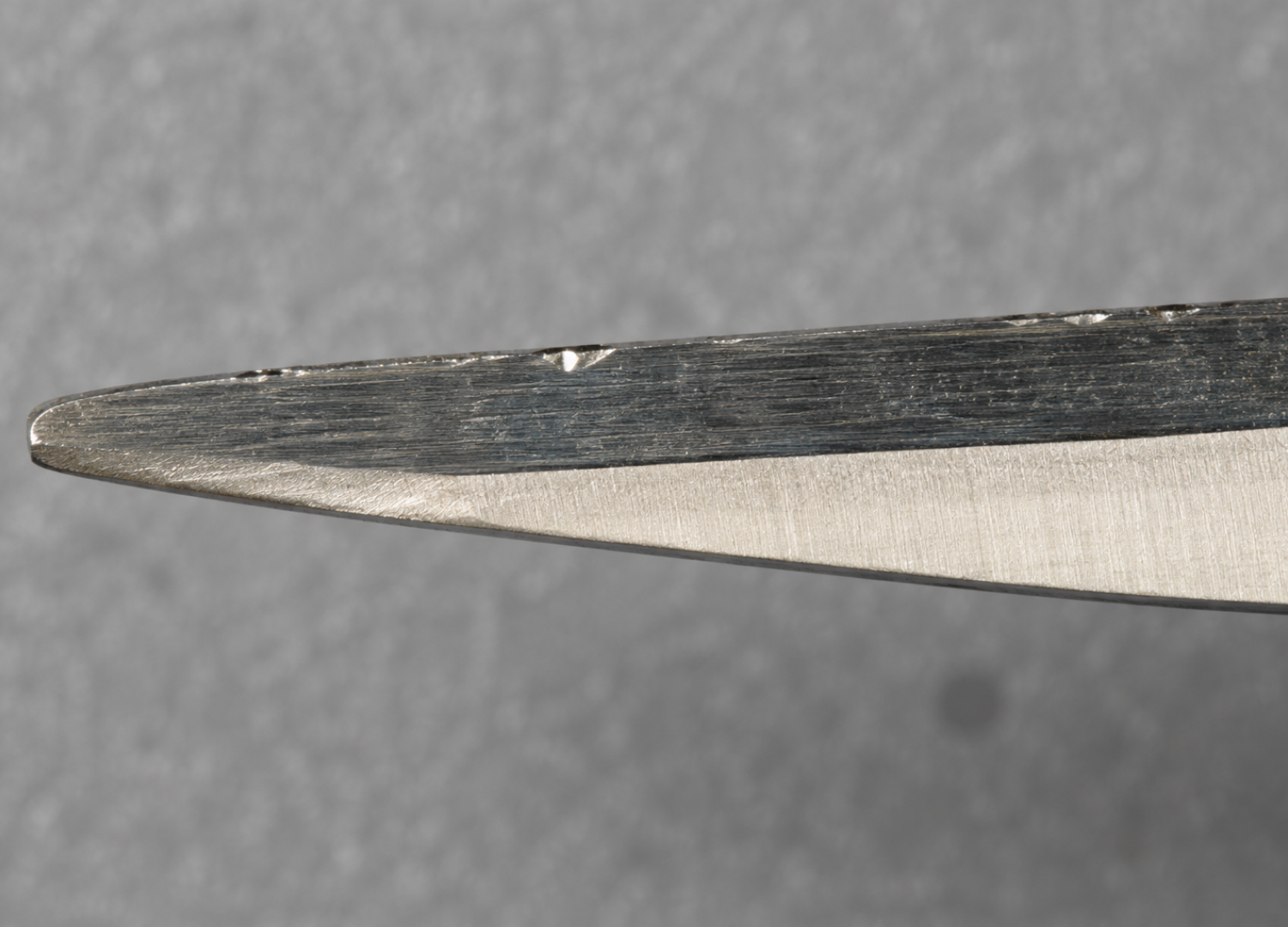
Damage to the cutting edge caused by improper sharpening or use
Not Sure Whether Your Scissors Need Sharpening?
Sometimes the problem can be solved with adjustment or maintenance without full sharpening.
Contact us — we will help assess the condition of your scissors and recommend the best solution.
📩 → Contact us — we will help evaluate the condition of your scissors
What Is Important to Remember
Scissor performance
depends on:
• the condition of the cutting edge
• proper tension adjustment
• regular maintenance
• careful handling
📌 Read more:
→ Why It Is Important to Sharpen Hairdressing Scissors on Time
→ Checking and Adjusting Hairdressing Scissor Blade Tension
→ How to Properly Care for Hairdressing Scissors
→ Handling and Proper Use of Hairdressing Scissors
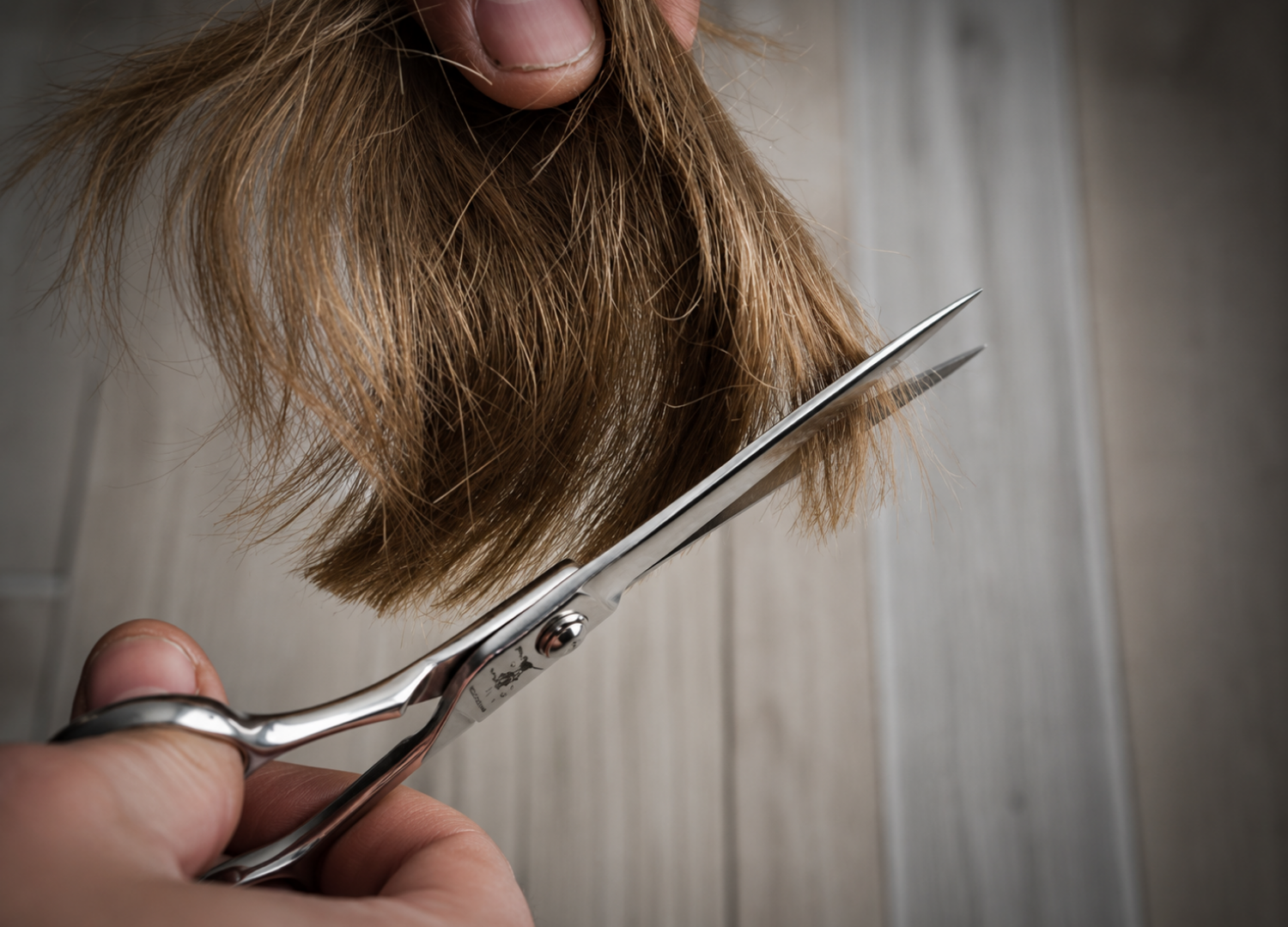
Conclusion
Professional sharpening helps maintain cutting quality, smooth operation, and working comfort.
Proper scissor adjustment allows the tool to work precisely, smoothly, and gently on the client’s hair.