Two pairs of scissors can be equally sharp — yet behave completely differently on the same section of hair.
Some hold the hair firmly between the blades.
Others allow it to slide more easily along the cutting edge.
It is not a question of one being “better” or “worse”.
They are simply designed for different tasks.
When holding the hair matters
Some scissors have a micro-serrated edge — a very fine serration along the cutting edge.
It helps keep the hair in the cutting zone and reduces its tendency to slide along the blade.
A good example is creating a clean perimeter line.
When a stylist is creating a precise, defined line, it is important that the hair does not slide forward along the cutting edge. Micro-serration helps hold it in place and gives the stylist greater control over the cut.
In blunt cutting, micro-serration helps keep the hair in the cutting zone.
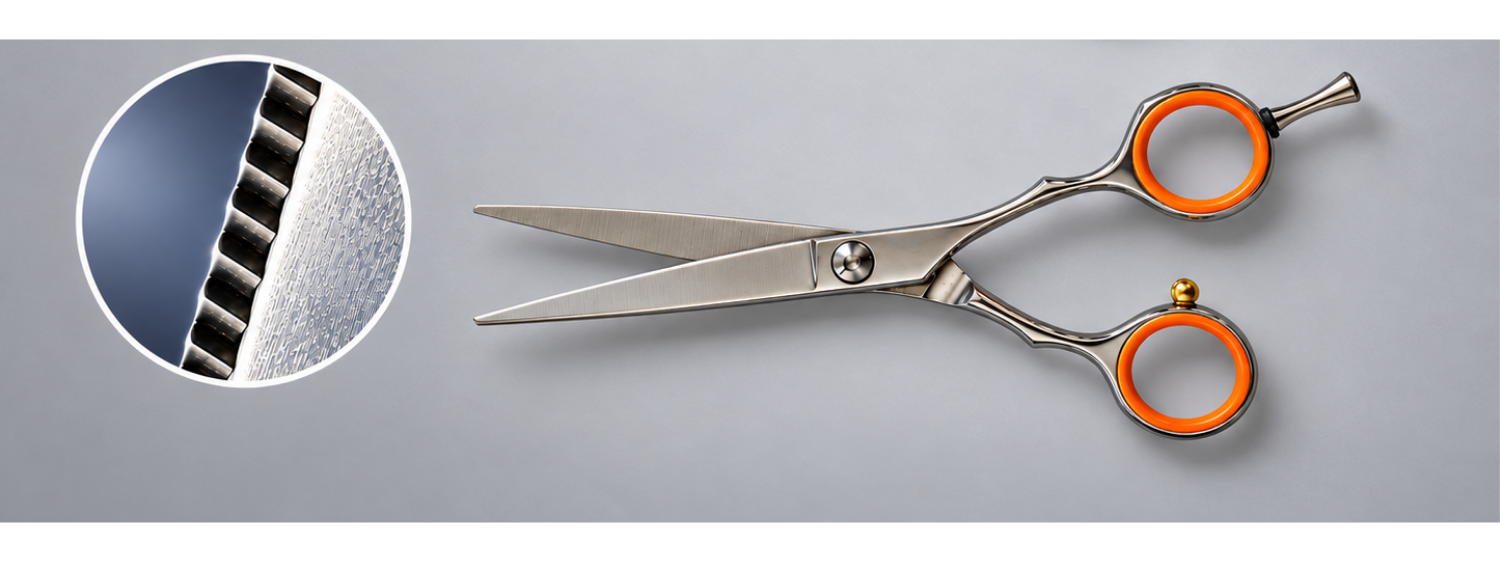
Micro-serration helps keep the hair in the cutting zone.
Slicing requires different behaviour
With slicing, the task is different.
The scissors move along the section of hair, so a smooth, controlled glide is essential.
For example, when softening or texturising long hair, the stylist moves the scissors along the section, gradually creating texture and a softer transition.
In slicing, the scissors glide smoothly along the hair.
Too much grip would interfere with that smooth movement.
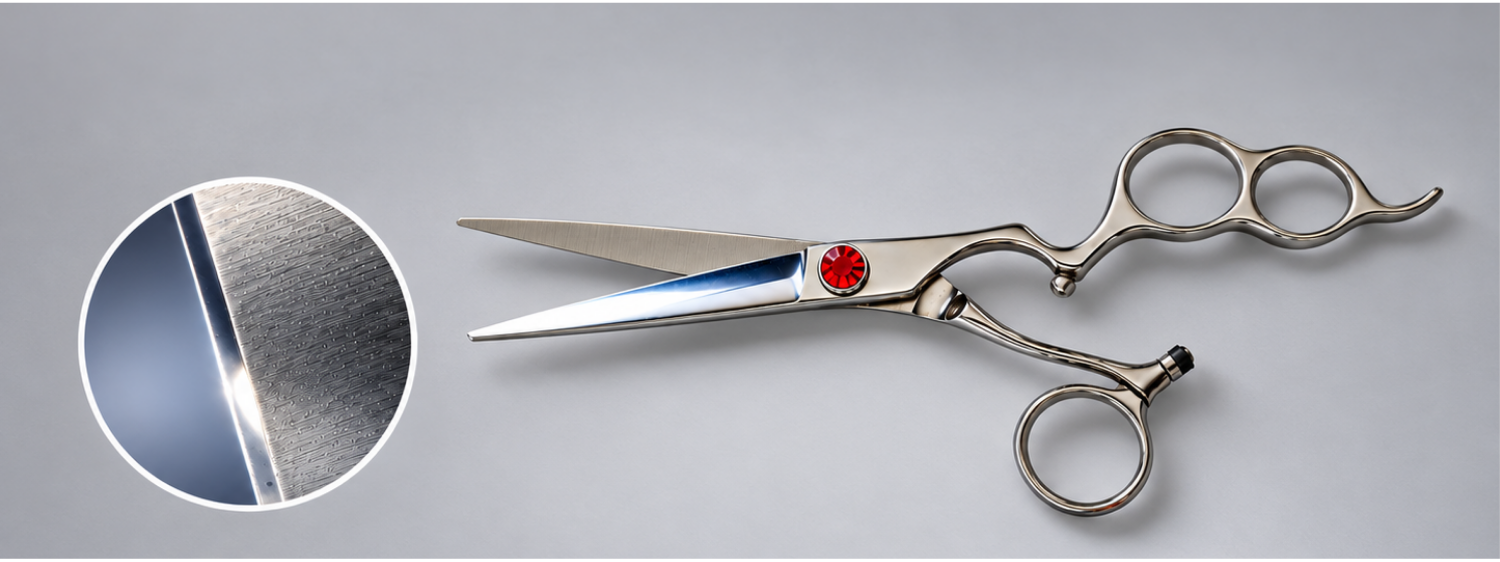
A smooth cutting edge allows the hair to glide more easily.
But micro-serration is not the only factor
This is where it gets more interesting.
The way hair behaves between the blades is influenced not only by the cutting edge, but also by the shape of the blade line.
The straighter the blade line, the easier it is for the scissors to keep the hair in the cutting zone.
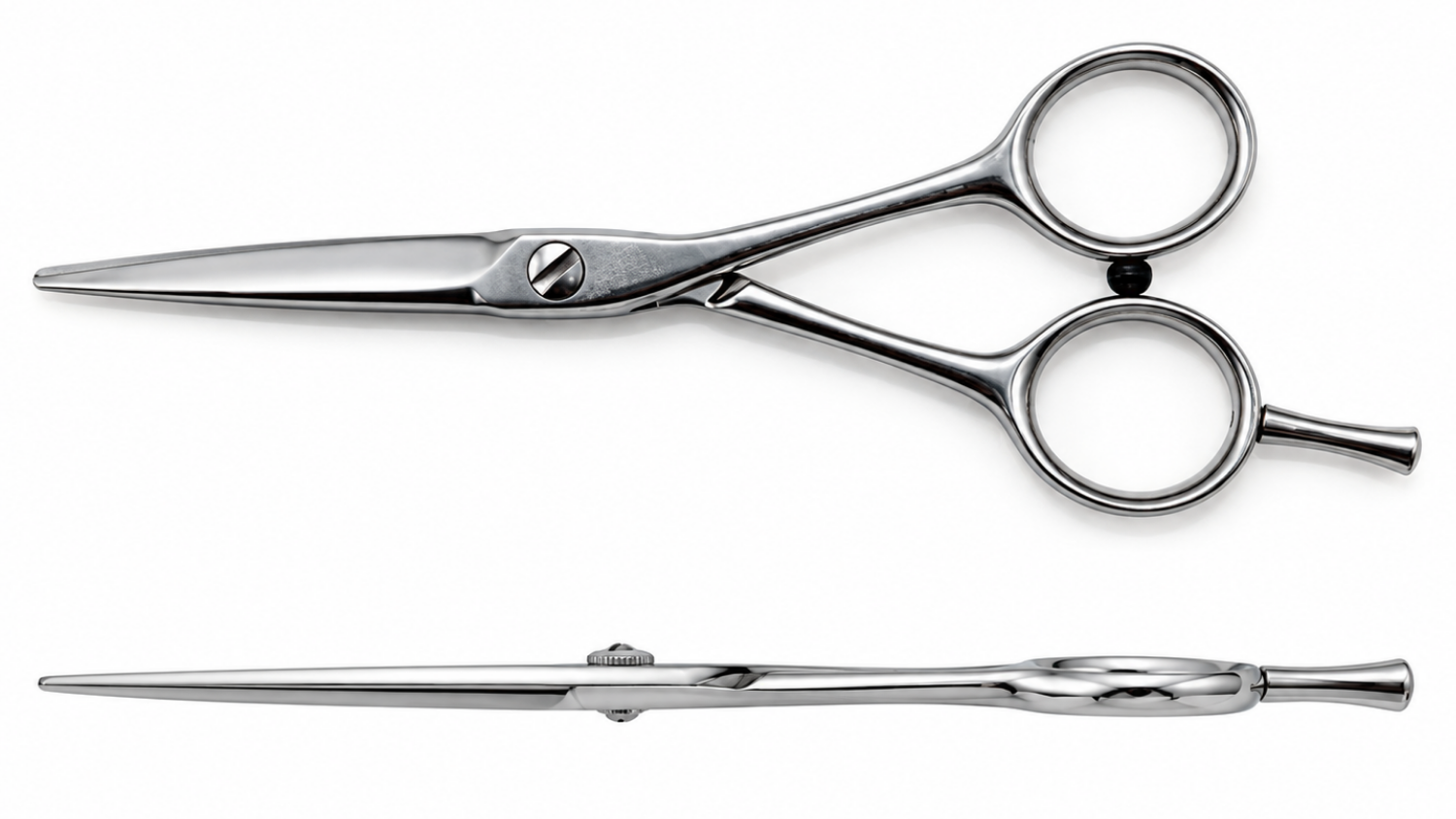
A straight blade line helps hold the hair more securely.
The more pronounced the curve, the more easily the hair can move along the cutting line. This is why some scissors have specially curved blade shapes designed for slide cutting and slicing.
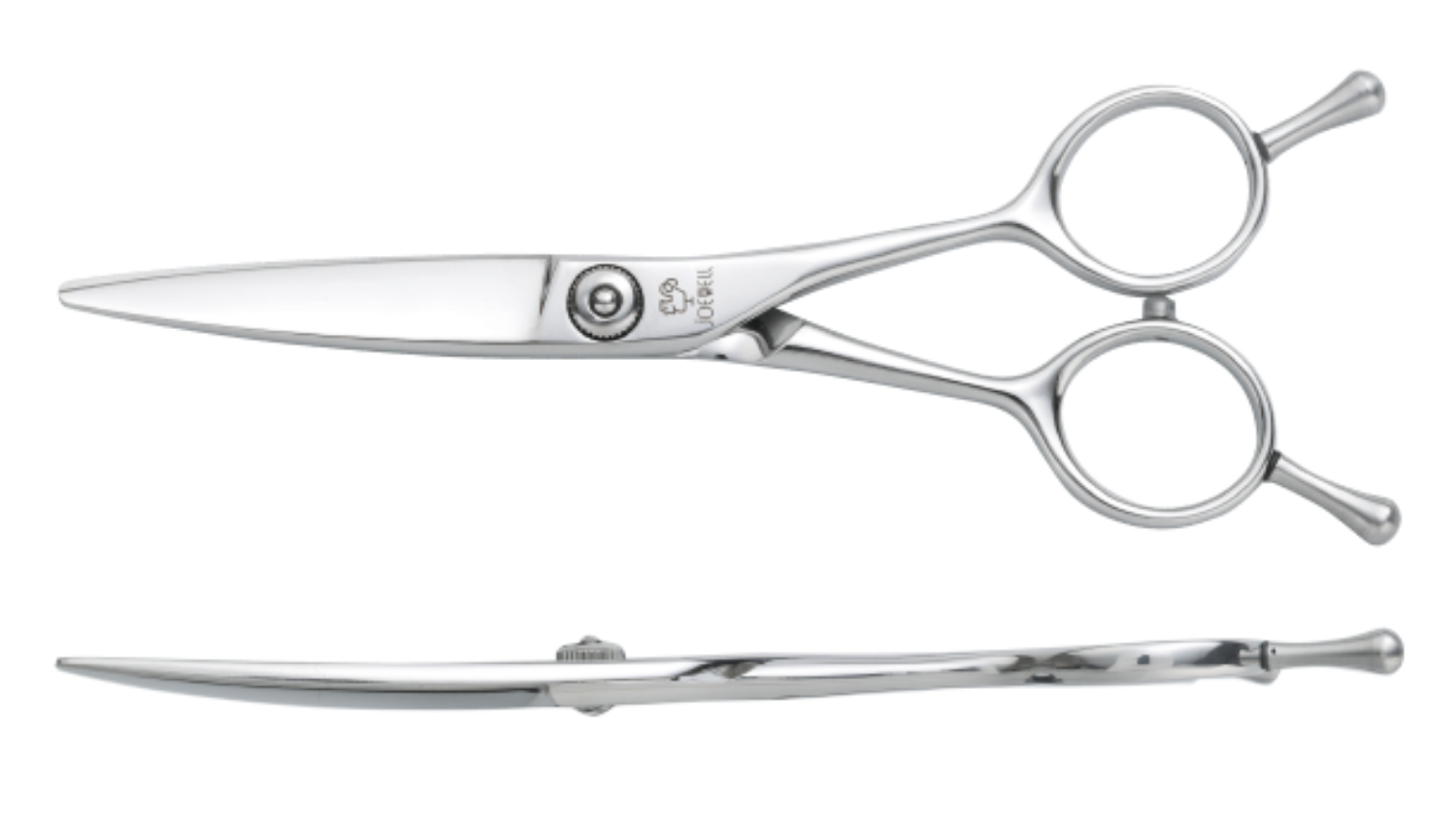
A curved blade line makes sliding easier during slide cutting and slicing.
As a result, two pairs of scissors without micro-serration and with the same level of sharpness can still behave very differently in the hair.
Other design features also influence the character of the cut: the profile and finish of the cutting edge, the inner geometry of the blades and the way the two blades interact as the scissors close.
A pair of scissors works as a single system.
→ Hairdressing scissors geometry: why it is important to preserve it during sharpening
Why this matters when sharpening
If we focus only on sharpness, we can miss the most important point — what the scissors were designed to do.
Scissors intended for smooth slicing should retain their ability to move freely along the hair after sharpening.
If micro-serration is part of the original design, its function should be preserved during sharpening. Turning a micro-serrated edge into a standard smooth edge will change the way the scissors behave.
Good sharpening should not change the character of the tool — the scissors should retain the familiar feel and behaviour the stylist expects in use.
→ What is included in professional hairdressing scissors sharpening?
Control or glide?
For precise cutting, secure control of the hair may be more important.
For slicing, the priority is a smooth movement along the section.
For blunt cutting, control matters. For slicing, smooth glide matters.
It all depends on what the scissors were designed for.