
Manicure tools rarely become dull overnight.
In most cases, it happens gradually: first the feel of the tool changes, then discomfort appears, and over time the quality of the result begins to decline.
Many technicians try to compensate by adjusting their technique:
• applying
more pressure;
• changing the working angle;
• making extra movements.
However, if a tool starts performing worse, the reason is not always related to the technician’s skills.
Often, it is a sign that the tool needs servicing.
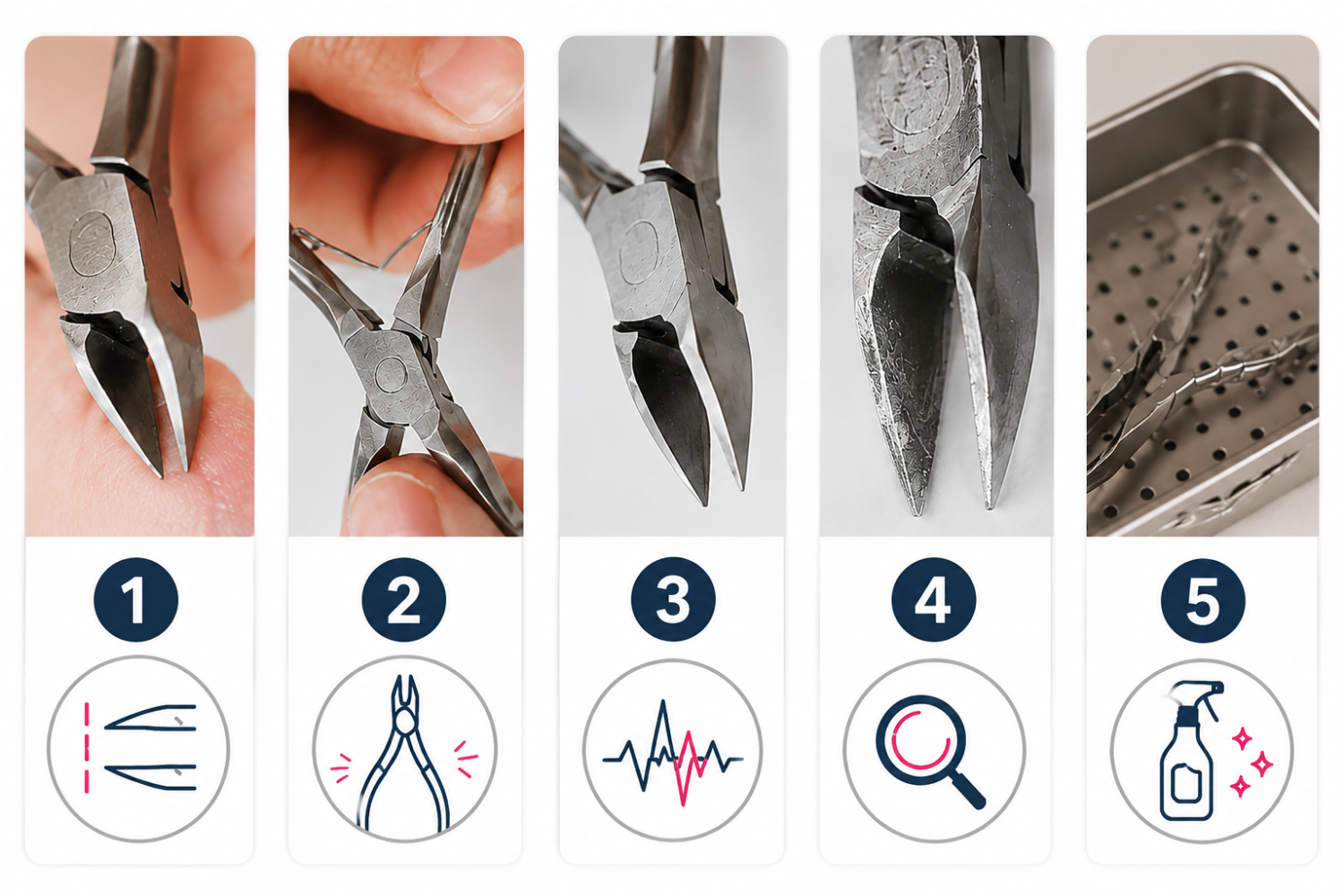
Sign #1. The Tool No Longer Makes a Clean Cut
One of the first signs of wear is a change in cutting performance.
Pay attention if the tool:
• starts
pulling the skin or nail;
• does not cut cleanly on the first attempt;
• requires a repeated motion;
• leaves an uneven edge;
• no longer works precisely with the tips.
A properly sharpened tool usually performs predictably and without unnecessary effort.
Sign #2. You Need to Apply More Force
A properly functioning tool should not require constant pressure.
If you find yourself needing to:
• squeeze
the handles harder;
• spend more time on the same area;
• change your usual working technique —
the issue may not be sharpening alone.
Sometimes the cause is related to:
• changes
in the tool’s movement;
• wear in the joint;
• improper contact between the working surfaces.
Sign #3. The Tool Has Become Inconsistent
Today the tool cuts well, tomorrow it performs worse.
This can happen because of:
• localized
wear of the cutting edge;
• micro-damage;
• changes in the tool’s mechanics;
• buildup of debris in the joint.
If the tool no longer feels consistent during use, it is worth having it checked by a specialist.
Sign #4. Visible Signs of Wear Have Appeared
It is a good idea to have the tool inspected if you notice:
• nicks;
• chips;
• a gap between the working surfaces;
• discoloration of the metal;
• signs of corrosion;
• looseness in the joint.
Not all of these issues can be solved with sharpening alone. In some cases, restoration or servicing may be required.
Sign #5. Problems Have Become More Noticeable After Sterilization
If changes in the tool’s performance become more noticeable after regular disinfection and sterilization, it may be time to assess its condition.
The cause is not necessarily the processing itself.
Sometimes regular use simply makes existing wear more apparent.
Performance can also be affected by:
• improper
maintenance;
• the condition of the working surfaces;
• specific usage patterns.
Should You Wait Until the Tool Becomes Completely Dull?
Not necessarily.
Preventive maintenance often helps to:
✔ maintain cutting quality;
✔ reduce wear;
✔ extend the service life of the
tool;
✔ avoid more extensive restoration
work.
Sharpening is not only about restoring sharpness — it is also an important part of regular professional tool maintenance.
✔ Conclusion
If your tool starts feeling different, do not rush to change your technique.
Discomfort during work, declining cutting quality, or changes in movement often indicate that the tool should be inspected by a specialist.
Timely servicing usually helps maintain performance and extend the life of the tool.
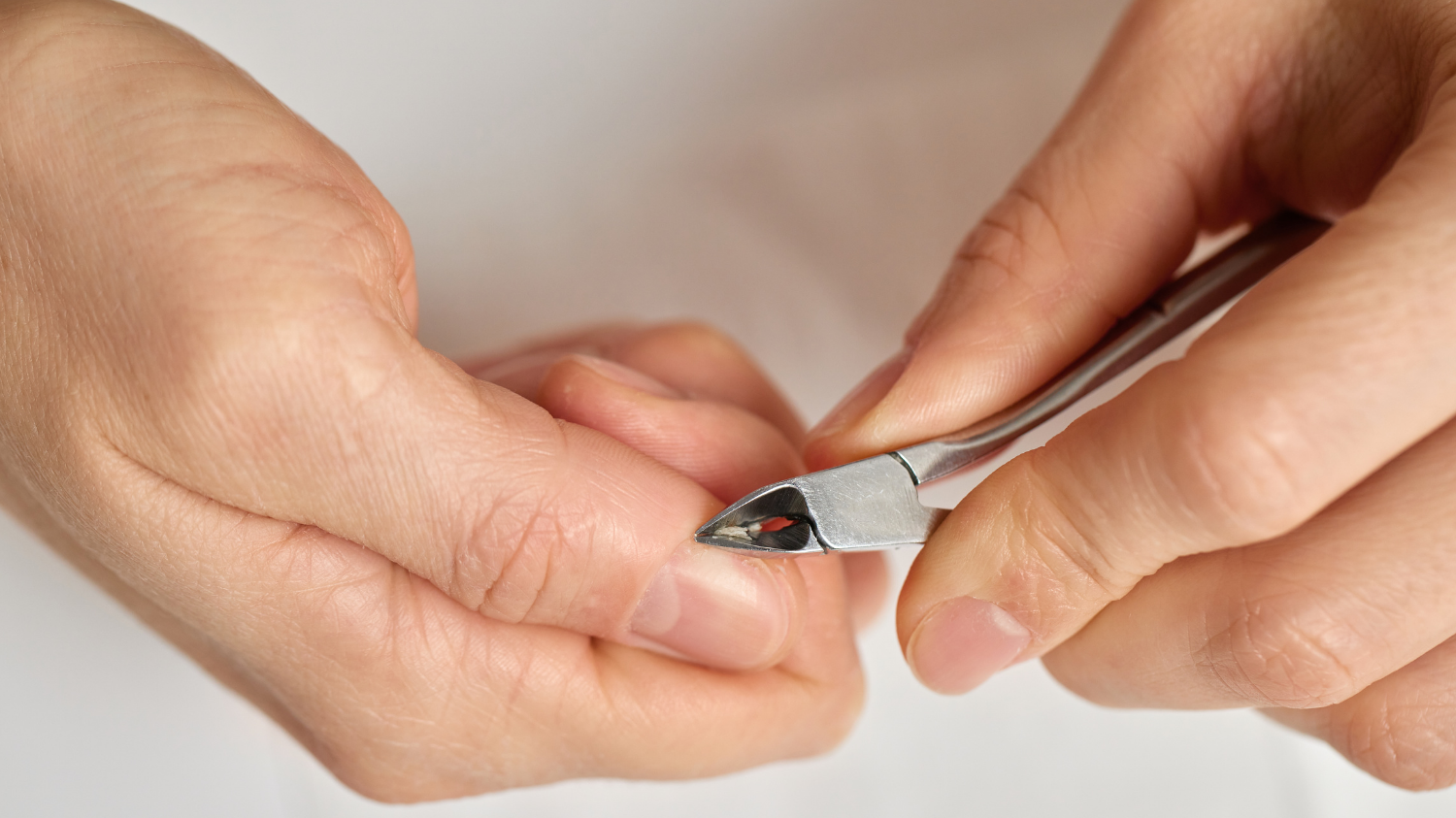
💬 Expert Tip
Do not wait until the tool stops working properly.
In many cases, timely maintenance helps preserve more of the tool’s original geometry and reduces the amount of corrective work required.
📩 Not Sure Whether Your Tool Needs Sharpening or Servicing?
See our contact options and service information.
→ Contact Information and Services
Helpful Articles for Manicure and Pedicure Technicians
→ How to
Choose a Manicure Tool: Key Guidelines
→ What Is the Best Steel for Manicure Tools?
→ How to Tell If a Manicure Tool Is Properly Sharpened
→ How to Maintain the Sharpness of Manicure Tools
→ How Long Do Manicure Tools Last?
→ What Is Included in Professional Manicure Tool Sharpening?
→ Tips for Manicure and Pedicure Technicians