
What types of steel are used to manufacture manicure and pedicure tools, and does the steel affect work quality?
Many professionals pay attention to labels such as “premium steel, ” “medical-grade steel, ” “cobalt, ” or various impressive alloy names.
In practice, however, the material is only one part of the overall result.
The quality of a tool depends on several factors:
✔ type of steel
✔ quality of heat treatment
✔ manufacturing precision
✔ sharpening quality
✔ proper maintenance
Even high-quality steel cannot compensate for poor tool geometry.
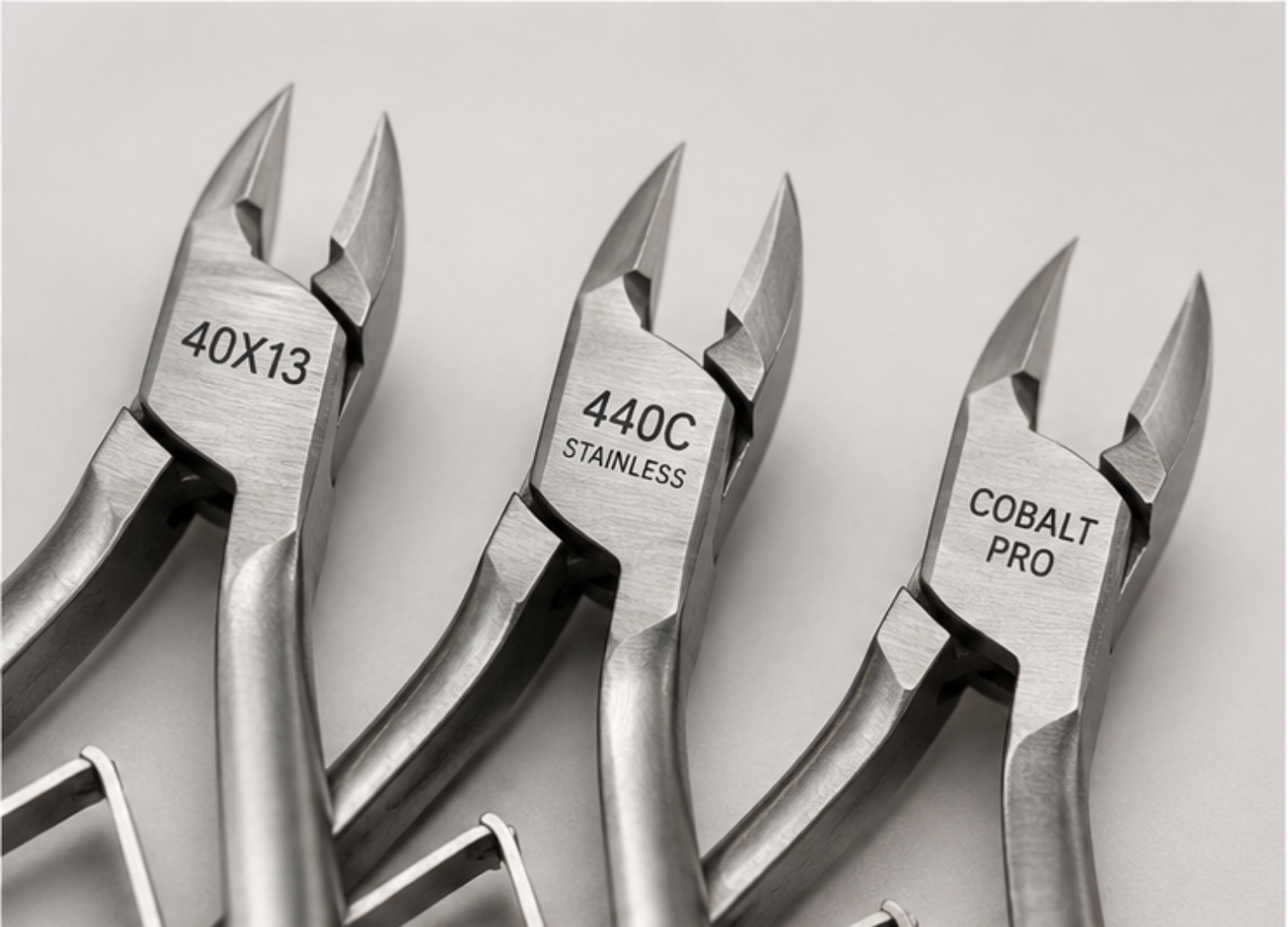
The steel grade is important, but it does not determine tool quality on its own.
What Steel Is Suitable for Professional Tools?
Modern manicure and pedicure tools are most commonly made from stainless steel.
For professional tools, the key is finding the right balance between:
• corrosion
resistance;
• retention of cutting performance;
• serviceability and maintainability;
• reliable performance after regular processing and maintenance.
That is why quality professional tools are generally designed to withstand regular disinfection and sterilization.
What Does HRC Mean?
HRC (Rockwell Hardness C) is a measure of steel hardness.
Simply put:
👉 the higher the HRC value, the longer a tool can maintain its cutting performance.
However, high hardness alone does not automatically mean a better tool.
Performance also depends on:
• the
quality of heat treatment;
• manufacturing precision;
• the geometry of the working surfaces;
• the quality of sharpening.
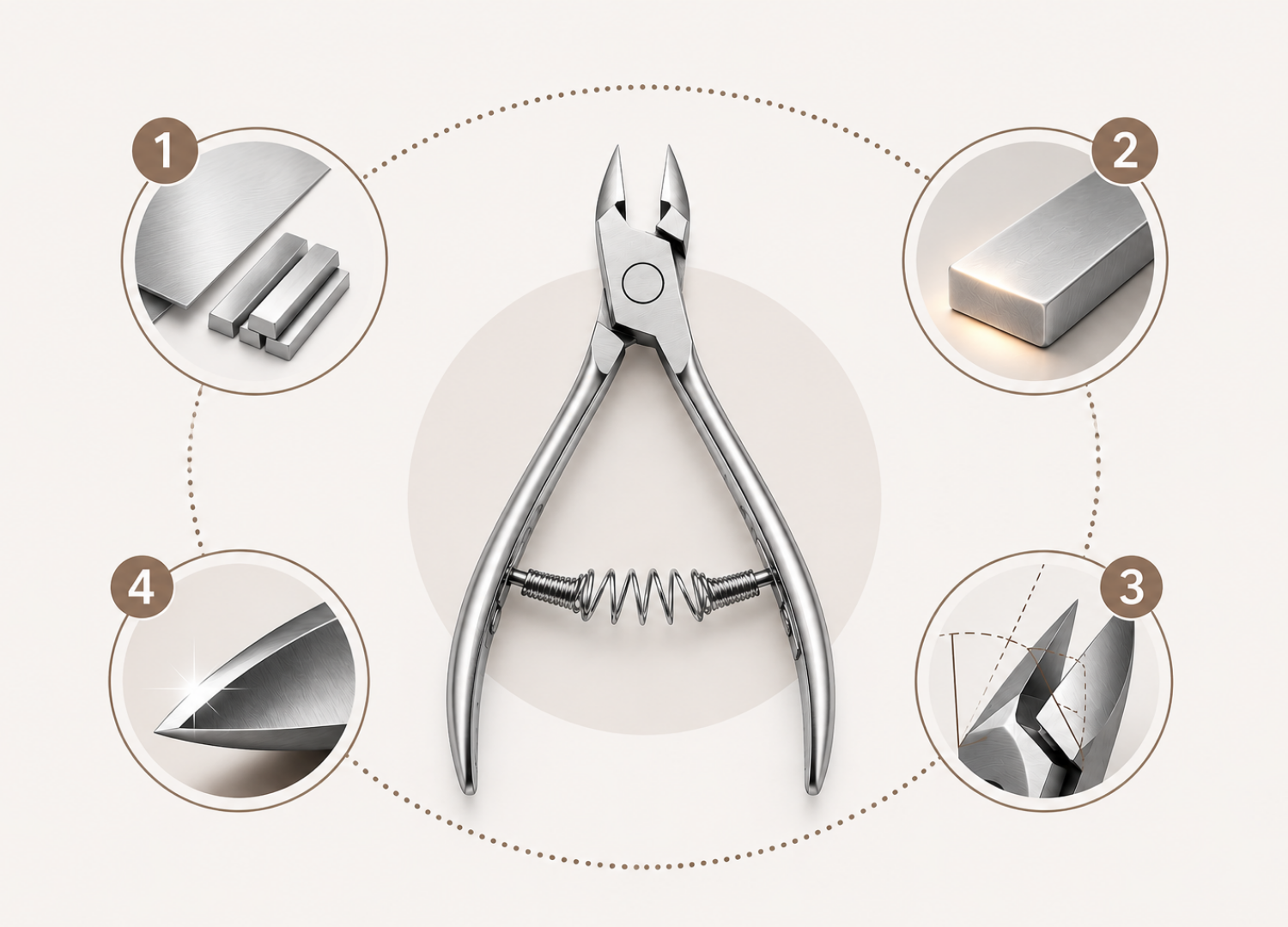
Tool quality depends on a combination of several factors.
1 — Steel | 2 — Heat treatment | 3 — Geometry | 4 — Sharpening
What Hardness Is Considered Suitable?
For most professional applications, the following ranges are commonly used as guidelines:
• for
cuticle work → approximately 50–55 HRC;
• for nail work → 45–50 HRC is often sufficient.
These values are general guidelines rather than universal rules.
Different manufacturers may use different hardness values while achieving very similar tool performance.
Why Higher Is Not Always Better
Higher hardness can provide:
✔ a cleaner and more consistent cut
✔ longer retention of cutting
performance
At the same time:
✖ the tool becomes more demanding to
maintain
✖ sharpening requires a higher level
of precision and quality
✖ manufacturing and restoration costs
increase
For this reason, the hardest steel is not always the best choice.
What to Look for When Choosing a Tool
Do not rely solely on labels such as:
✖ “cobalt”
✖ “premium steel”
✖ marketing names
It is far more important to pay attention to:
✔ surface finishing quality
✔ smooth and consistent movement
✔ comfort in the hand
✔ quality of the cutting surfaces
✔ the possibility of professional
servicing and sharpening
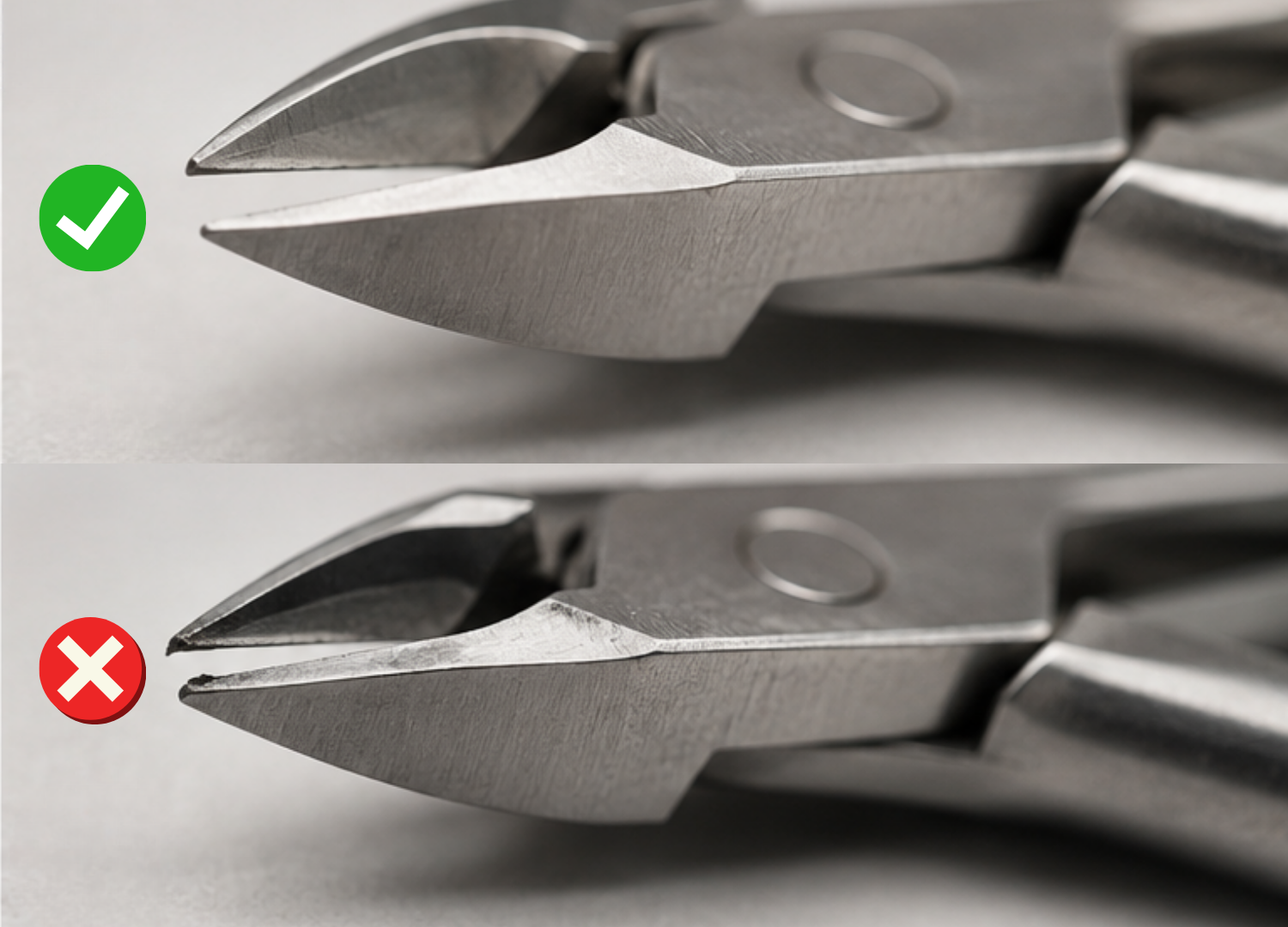
Even tools made from the same steel can perform differently.
✔ Conclusion
For professional work, it is usually enough to have:
✔ quality stainless steel
✔ appropriate hardness
✔ professional sharpening
✔ proper maintenance
Steel is important, but a good tool is the result of quality manufacturing, proper sharpening, and ongoing maintenance.
The material matters, but it does not make a tool good on its own.
💬 Expert Tip
A good tool is not the one made from the most expensive steel.
It is the balance between manufacturing quality, comfort in use, proper sharpening, and ongoing maintenance.
📩 Do you have questions about choosing a tool or evaluating its condition?
See the contact options and information about our services.
Useful Articles for Manicure and Pedicure Professionals
→ How to
Choose Manicure Tools: Essential Guidelines
→ How to Tell If a Manicure Tool Is Properly Sharpened
→ How to Maintain the Sharpness of Manicure Tools
→ How Long Do Manicure Tools Last?
→ When Is It Time to Have Your Manicure Tools Sharpened?
→ What Is Included in Professional Manicure Tool Sharpening?
→ Tips for Manicure and Pedicure Professionals