
Many people think of sharpening as simply restoring the cutting edge.
However, professional maintenance of manicure tools involves much more than bringing back sharpness.
The quality of a tool’s performance depends on several factors:
✔ condition of the cutting surfaces
✔ tool geometry
✔ smoothness of movement
✔ condition of the joint or pivot
✔ quality of the final finishing
That is why professional sharpening is always a comprehensive process.
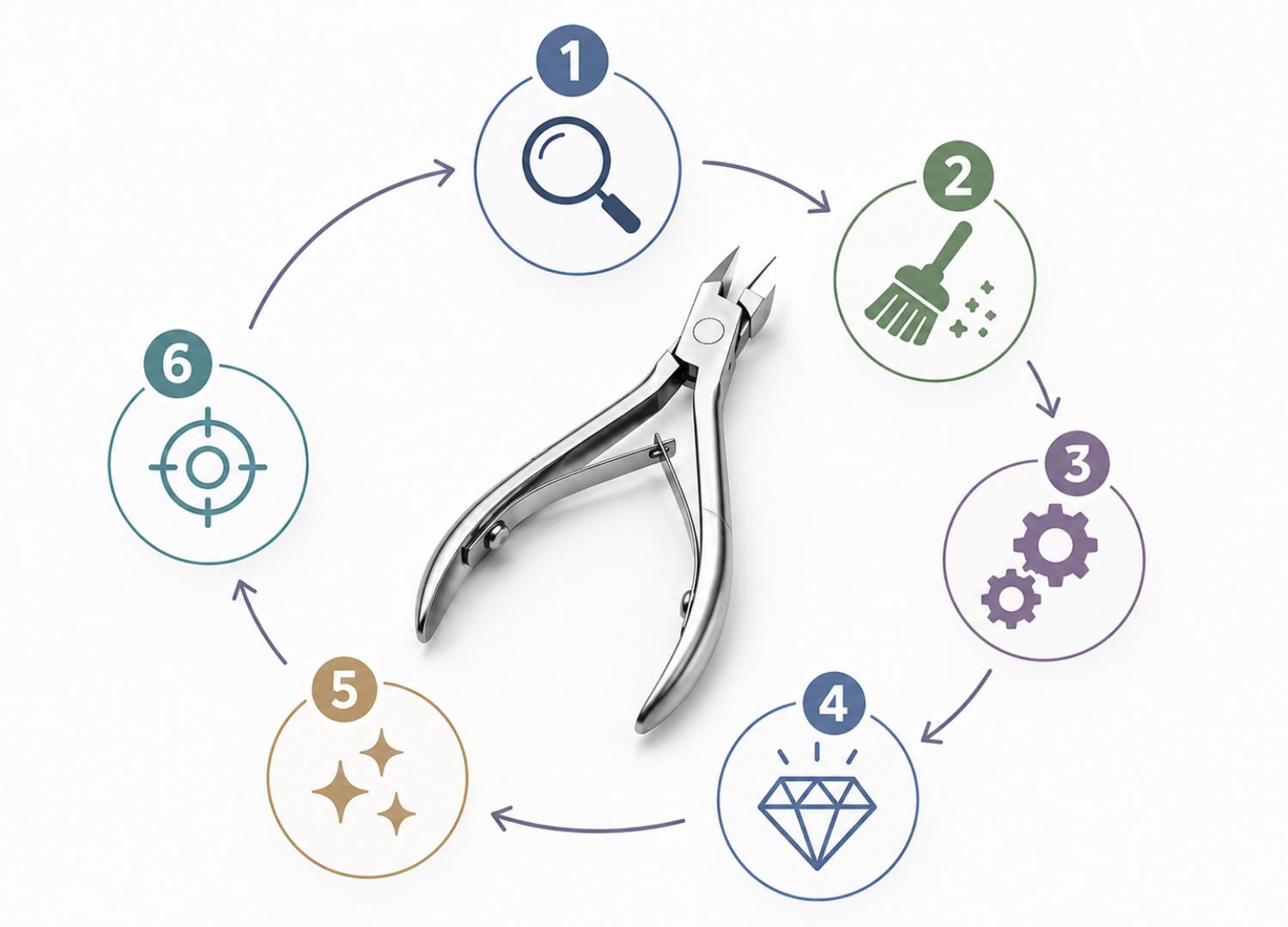
1 — Inspection • 2 — Preparation • 3 — Restoration • 4 — Sharpening • 5 — Finishing • 6 — Fine Adjustment
Inspection and Assessment
The work begins not with sharpening, but with evaluating the condition of the tool.
A specialist checks:
• the
condition of the cutting edges;
• chips and other damage;
• the condition of the joint or pivot;
• smoothness of movement;
• signs of corrosion;
• the overall condition of the tool.
Sometimes poor performance is caused by more than just dullness, which is why a proper assessment helps determine the required scope of work before maintenance begins.
Tool Preparation
Before sharpening, the tool is prepared for service.
Depending on its design, this may include:
• cleaning;
• disassembly (if the design allows it);
• preparation of the working surfaces.
This stage helps evaluate the tool more accurately and ensures that all further work is carried out carefully and precisely.
Restoration of Working Surfaces
This is one of the most important stages of the process.
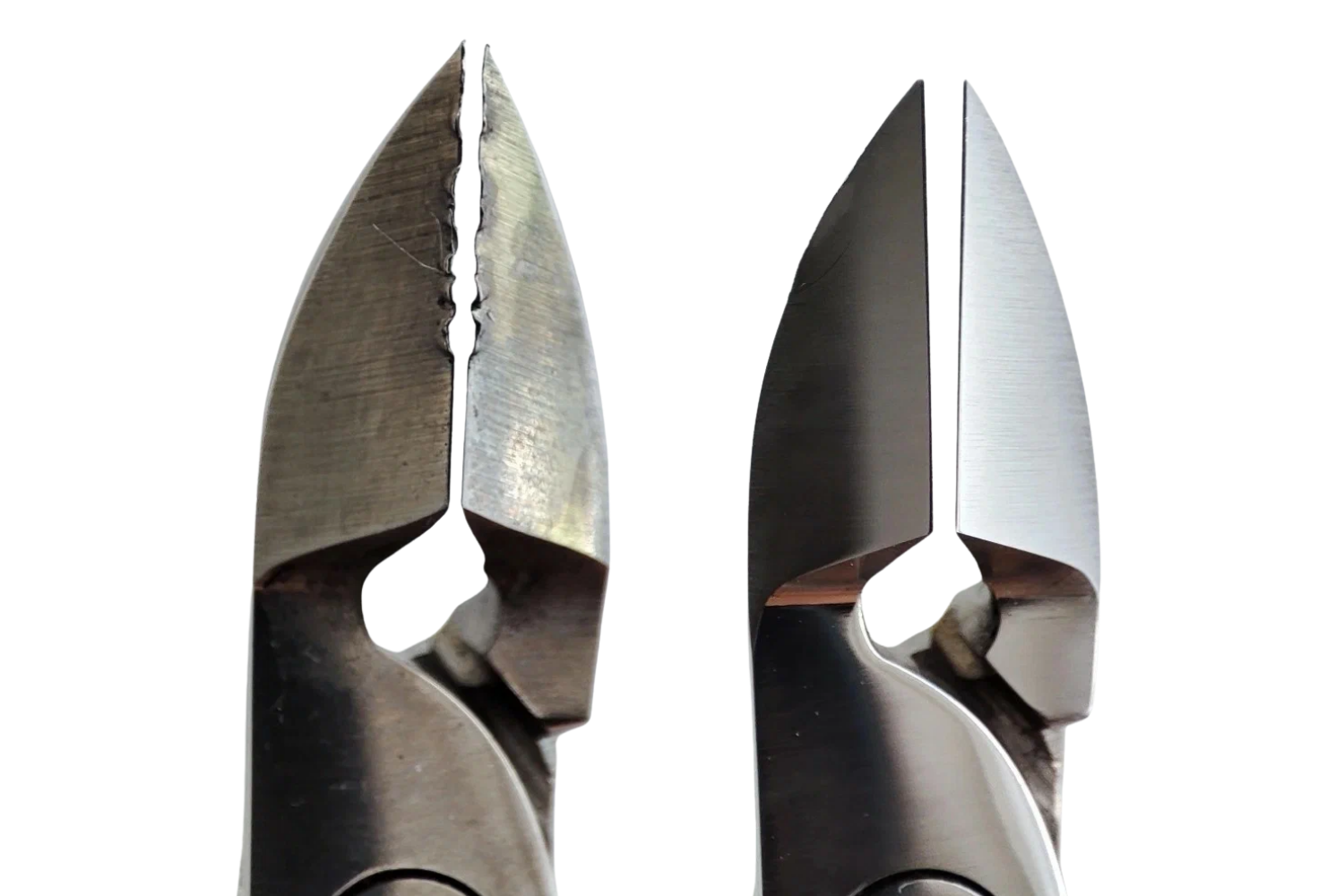
If a tool has been heavily used, dropped, or previously sharpened incorrectly, restoration of the working surfaces may be required.
At this stage, a specialist may:
✔ correct blade alignment;
✔ remove localized damage;
✔ restore stable performance.
Not every tool can be fully restored. Much depends on the degree of wear and the nature of the damage.
Sharpening the Cutting Edges
Once the preparation work is complete, the sharpening itself is performed.
The goal is not to make the tool as sharp as possible, but to restore its intended cutting performance.
The specialist takes into account:
• the type
of tool;
• design characteristics;
• current condition;
• intended use.
Removing excessive amounts of metal can shorten a tool’s lifespan, which is why professional sharpening requires precision and restraint.
Honing and Final Finishing
After sharpening, the tool undergoes final honing and finishing.
This helps:
✔ improve cutting quality;
✔ make the tool operate more
smoothly;
✔ reduce microscopic surface
irregularities.
This stage often has the greatest influence on how light, precise, and controlled the tool feels during work.
Adjustment and Performance Testing
Once maintenance is complete, the tool is checked again.
The specialist evaluates:
•
smoothness of movement;
• quality of blade contact;
• consistency of performance;
• overall feel of the tool.
If necessary, additional adjustments are made.
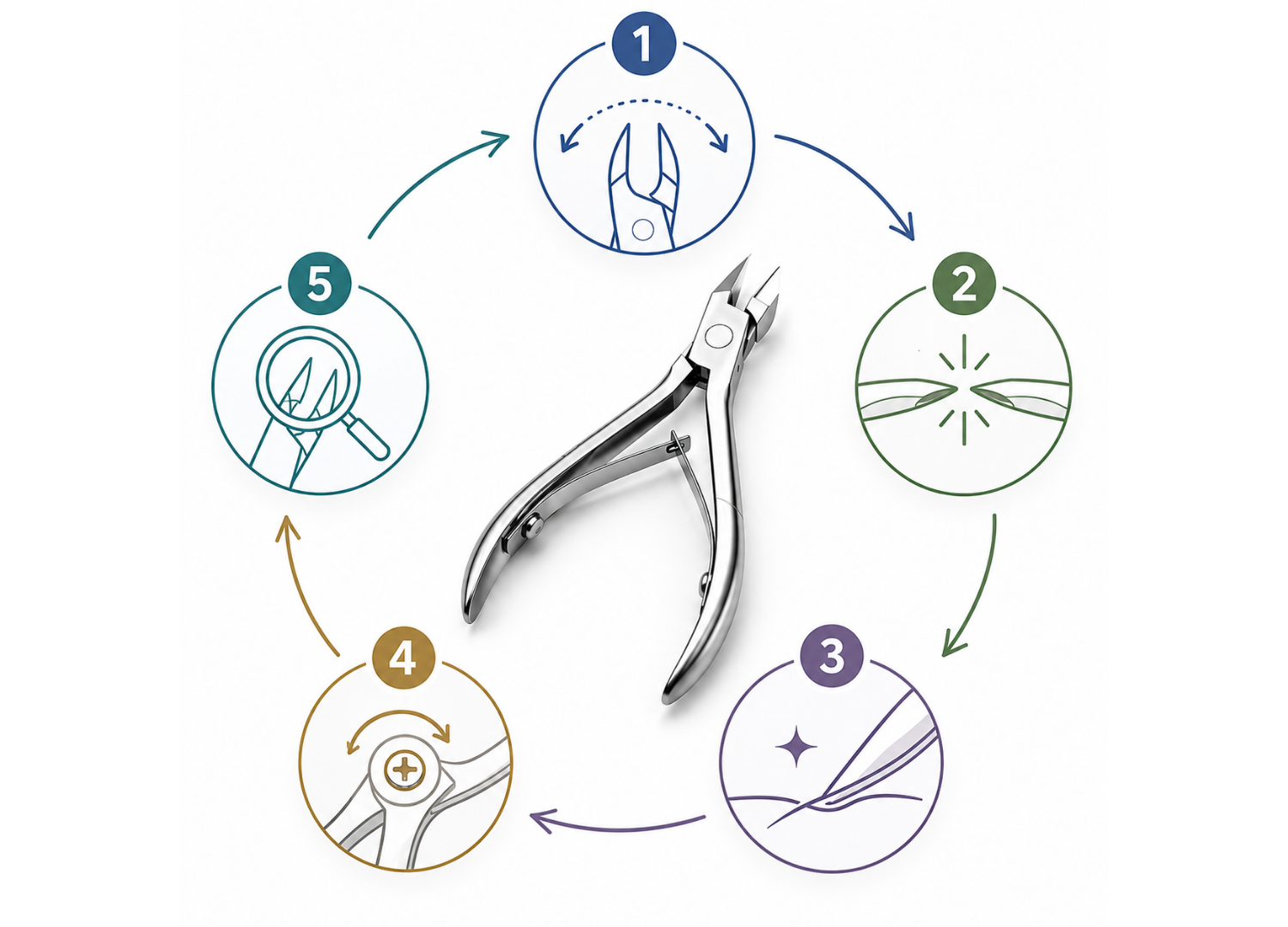
1 — Smooth Movement • 2 —
Blade Alignment • 3 — Cut Quality •
4 — Joint Adjustment • 5 — Overall Tool
Performance
What Is Important to Understand
Professional sharpening does not automatically mean that every tool can be fully restored.
Sometimes the damage is too severe:
• heavy
wear;
• deep chips;
• significant corrosion;
• critical distortion of the tool geometry.
In such cases, more extensive restoration work or replacement of the tool may be necessary.
✔ Conclusion
Professional sharpening is not just about restoring sharpness.
It is a comprehensive service that helps:
✔ maintain cutting quality;
✔ extend tool lifespan;
✔ restore working comfort;
✔ reduce further wear.
A good result depends not only on equipment but also on an understanding of tool design, professional experience, and careful workmanship.
💬 Professional Tip
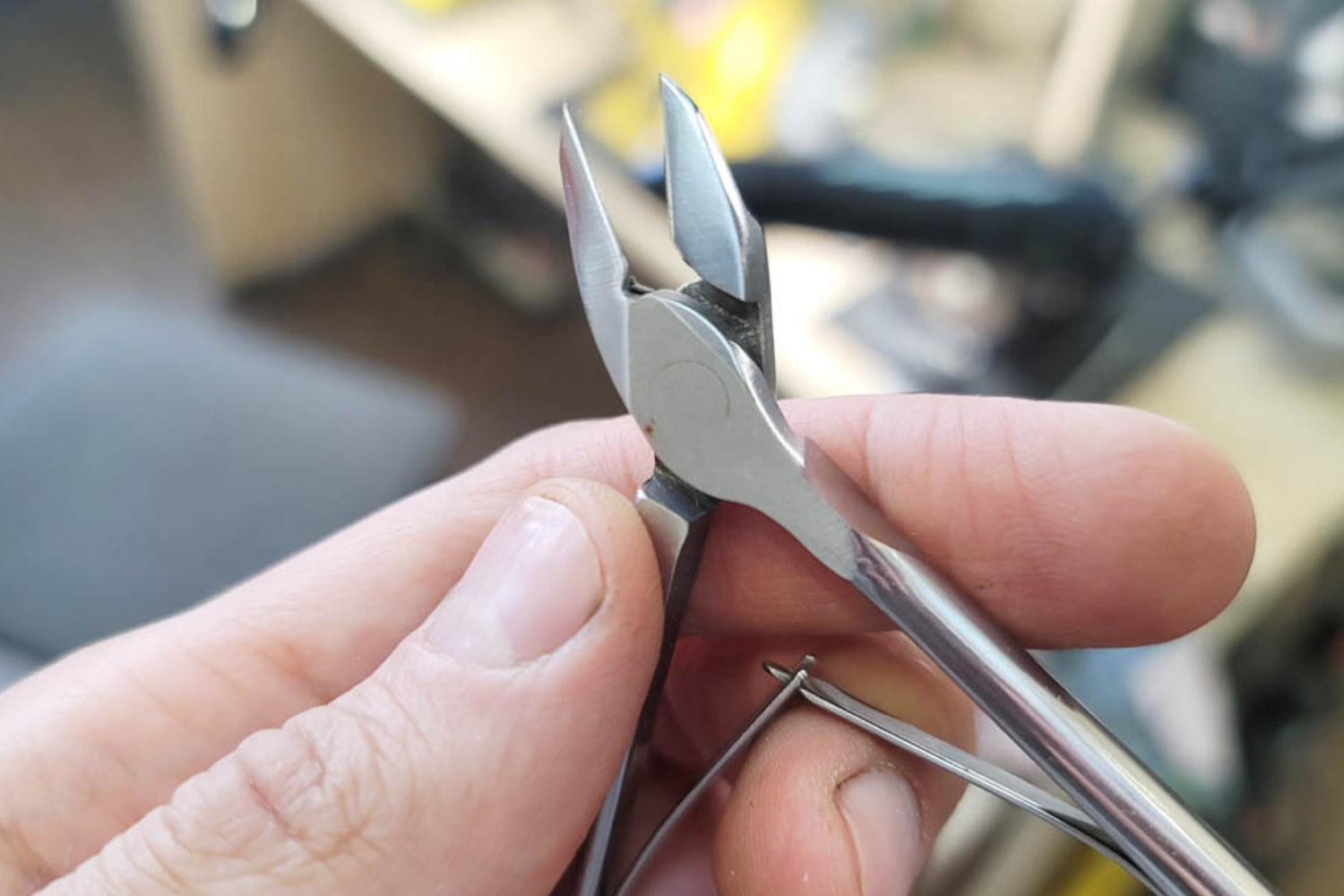
Do not wait until a tool stops working properly.
In many cases, timely maintenance helps preserve more of the original geometry and prevents the need for more complex and costly restoration work later.
📩 Not sure whether your tool only needs sharpening or already requires restoration?
Helpful Articles for Manicure and Pedicure Professionals
→ How to
Choose a Manicure Tool: Essential Guidelines
→ What Steel Is Best for Manicure Tools?
→ How to Identify a Properly Sharpened Manicure Tool
→ How to Maintain the Sharpness of Manicure Tools
→ How Long Does a Manicure Tool Last?
→ When Is It Time to Have a Manicure Tool Sharpened?
→ Tips for Manicure and Pedicure Professionals