
A well-sharpened tool is not necessarily a new tool.
Even a brand-new tool may perform worse than expected: pull the skin, leave an uneven cut, or require unnecessary effort.
That is why it is useful to know what signs really matter when purchasing a tool and during everyday work.
Signs That Should Raise Concern
Sharpening issues or general tool wear often become noticeable before any visible damage appears.
Pay attention if the tool:
• starts pulling the skin
or material;
• produces a less clean cut;
• requires more effort to use;
• no longer works confidently with the tips;
• feels different from what you are used to.
This does not always mean poor sharpening. Sometimes the cause may be wear, adjustment issues, or the need for maintenance.
Cuticle Scissors
Well-sharpened scissors work smoothly, predictably, and allow precise control of every movement.
Check the following:
✔ the scissors make a
clean cut without a “chewing” sensation;
✔ the tips work accurately
and confidently;
✔ the blades appear
symmetrical;
✔ the movement is smooth,
without clicking or sticking;
✔ the closing resistance
feels even throughout the stroke;
✔ there is no excessive
resistance or sudden loss of tension.
If the scissors cut effectively only along part of the blade or force you to change your usual technique, it may be time to check their condition.
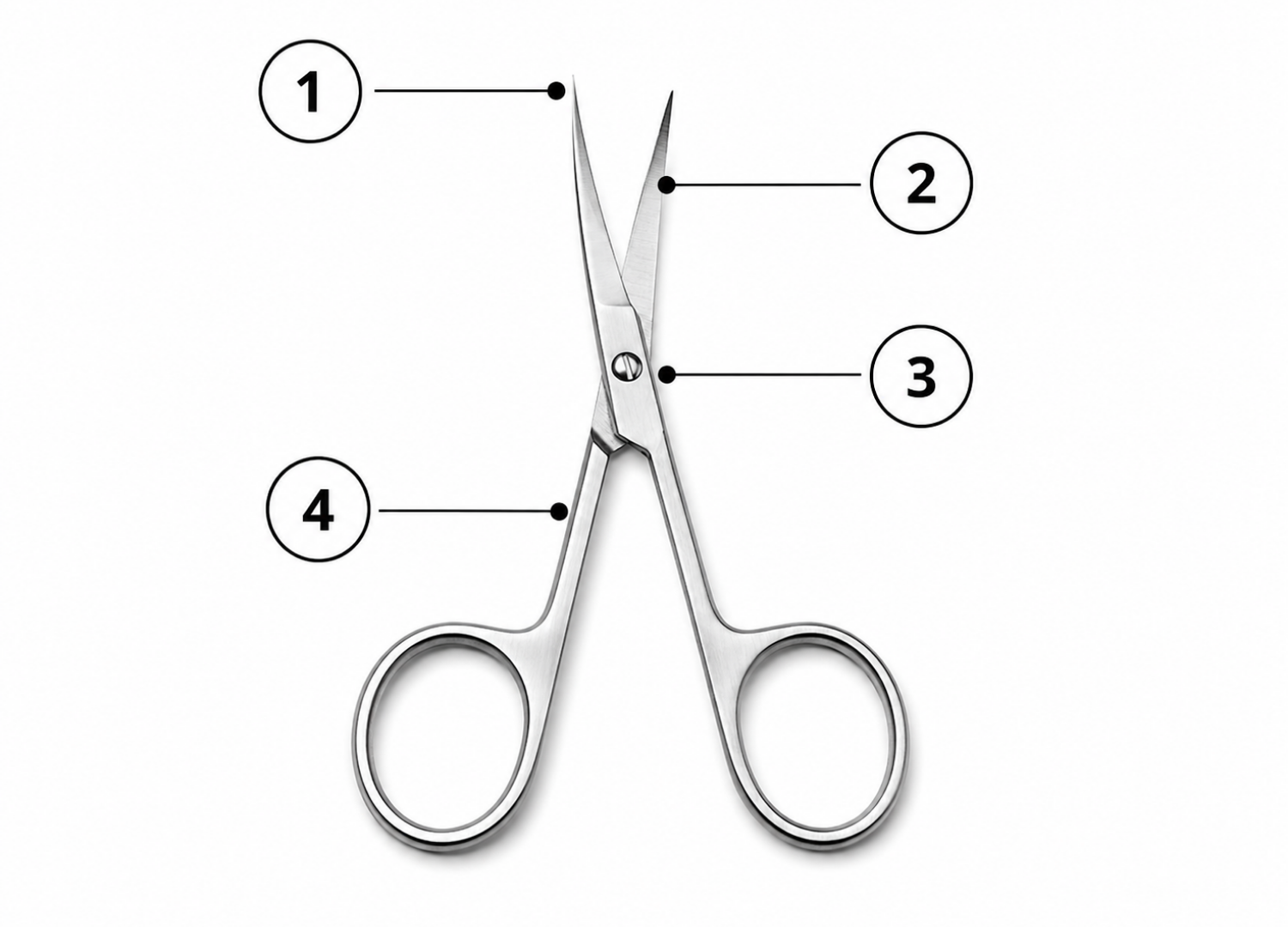
What to Check on Scissors
1 — Tips • 2 — Cutting Blades • 3 — Joint • 4 — Smooth Movement
Nail Scissors
Properly sharpened nail scissors should provide a smooth and controlled cut along the entire length of the blades.
Check the following:
✔ the scissors cut
effectively from the tips to the base of the blades;
✔ the cut is clean and
even;
✔ the blades meet evenly
along their entire length;
✔ the movement remains
smooth and predictable;
✔ there is no clicking,
sticking, or side play;
✔ the tool does not
require additional effort during use.
Pay attention if the scissors begin to crush the nail, leave an uneven edge, or cut effectively only in certain sections of the blades.
These signs may indicate the need for sharpening, adjustment, or general maintenance.
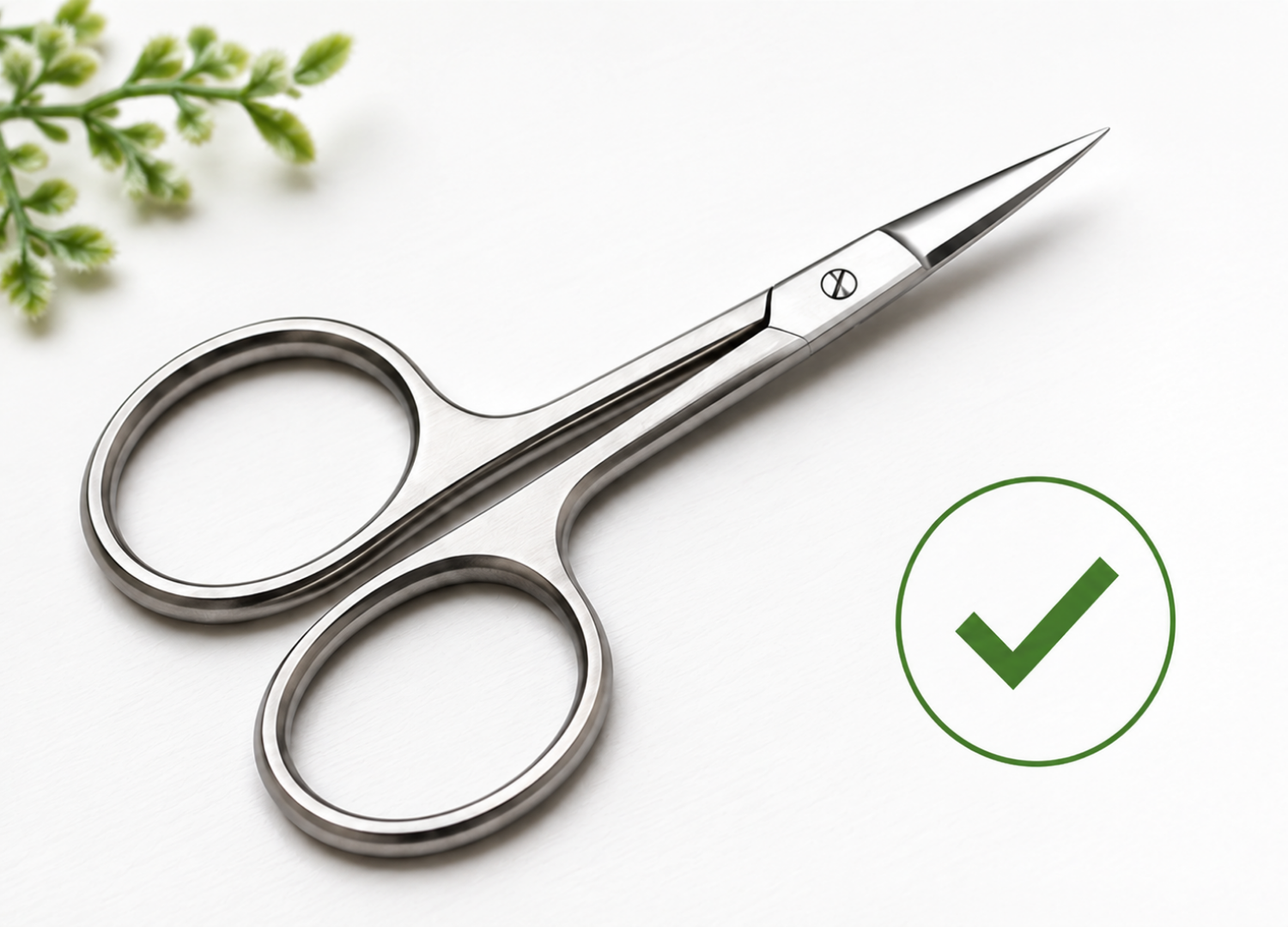
Signs of a Well-Sharpened Tool
Clean Cut • Smooth Movement • Precise Performance • No Play • Full Control
Cuticle Nippers
Properly sharpened nippers should provide a clean and controlled cut.
Pay attention to the following:
✔ the nippers do not pull
or pinch the skin or cuticle;
✔ the blades align evenly;
✔ the two halves do not
shift against each other;
✔ there is no play in the
joint;
✔ the movement feels light
and predictable;
✔ the tool does not bind
when closing.
Changes in tension, looseness in the joint, or reduced spring performance can affect the working experience just as much as the sharpening itself.
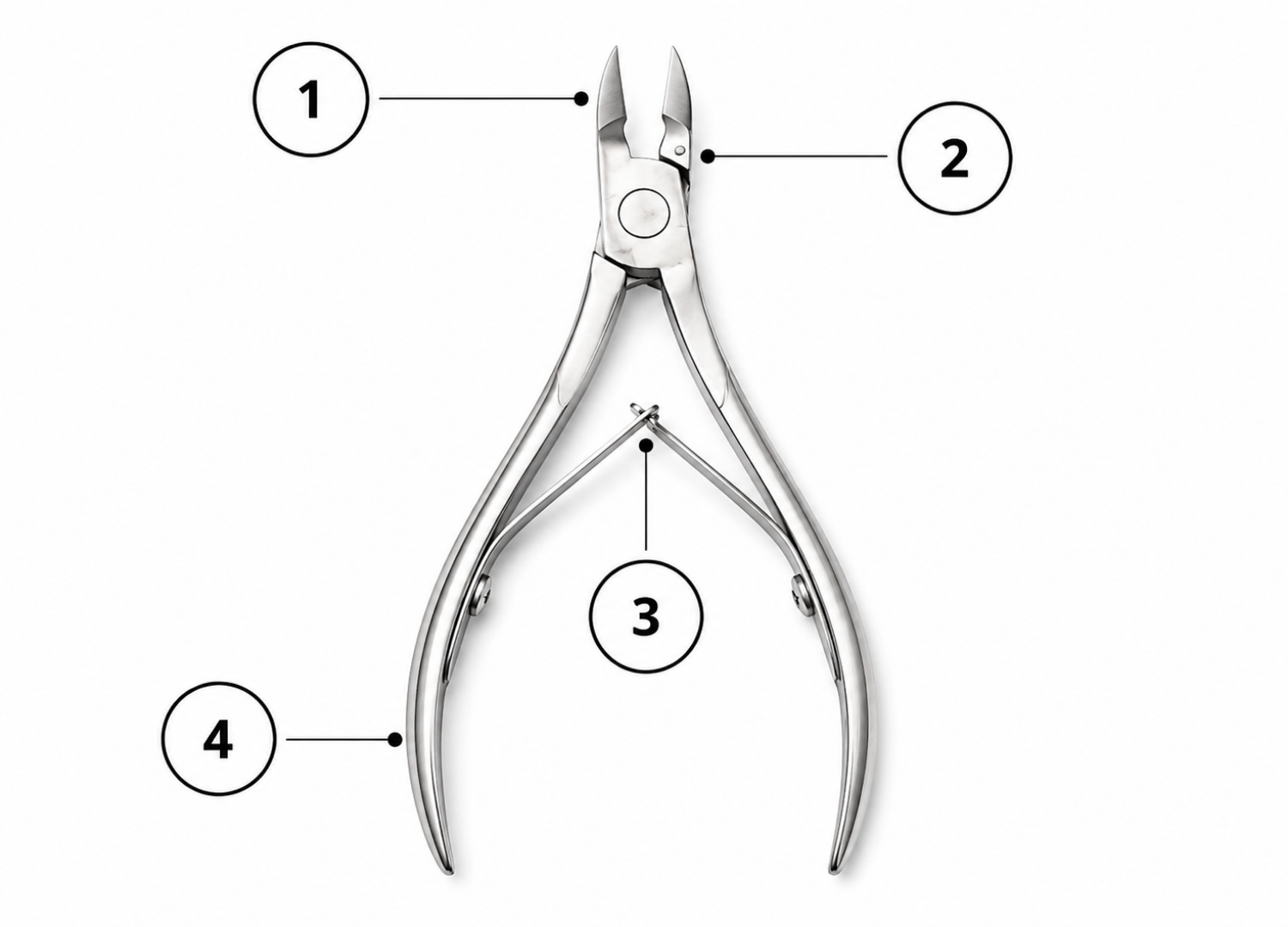
What to Check on Nippers
1 — Blade Alignment • 2 — No Play • 3 — Spring Action • 4 — Smooth Operation
What Is Not Always Visible
Even a tool that looks good may perform worse than expected.
The quality of work depends not only on the cutting edges but also on:
• the condition of the
joint;
• tool adjustment;
• smoothness of movement;
• spring condition;
• overall tool wear.
That is why appearance alone should never be the only criterion.
✔ Conclusion
A properly sharpened tool usually:
✔ cuts smoothly and
cleanly;
✔ does not require
unnecessary effort;
✔ performs predictably;
✔ maintains smooth
movement;
✔ allows full control
during work.
If the tool feels different than before, it does not always need to be replaced. In many cases, timely maintenance can restore comfortable performance and help extend the service life of the tool.
💬 Professional Tip
Do not rely on appearance alone.
Whenever possible, test the tool in actual use.
And remember: even a brand-new tool may require adjustment, maintenance, or additional sharpening before it performs at its best.
📩 Not Sure Whether the Problem Is Sharpening or the Tool’s Condition?
View our contact options and service information.
Helpful Articles for Manicure and Pedicure Professionals
→ How to Choose a Manicure Tool: Essential Guidelines
→ What Steel Is Best for Manicure Tools
→ How to Maintain the Sharpness of Manicure Tools
→ How Long Does a Manicure Tool Last
→ When Is It Time to Sharpen Your Manicure Tools