
“Same as last time, please”
For a client, this may seem like a perfectly ordinary request. They remember a result that was easy to live with and made them feel good about how they looked. Sometimes the phrase also expresses trust: everything worked well last time, so there seems to be no need to explain every detail again.
The stylist may also remember the previous appointment — the shape, length, characteristics of the hair and the decisions made during the process. Yet the stylist and the client may remember the same result differently.
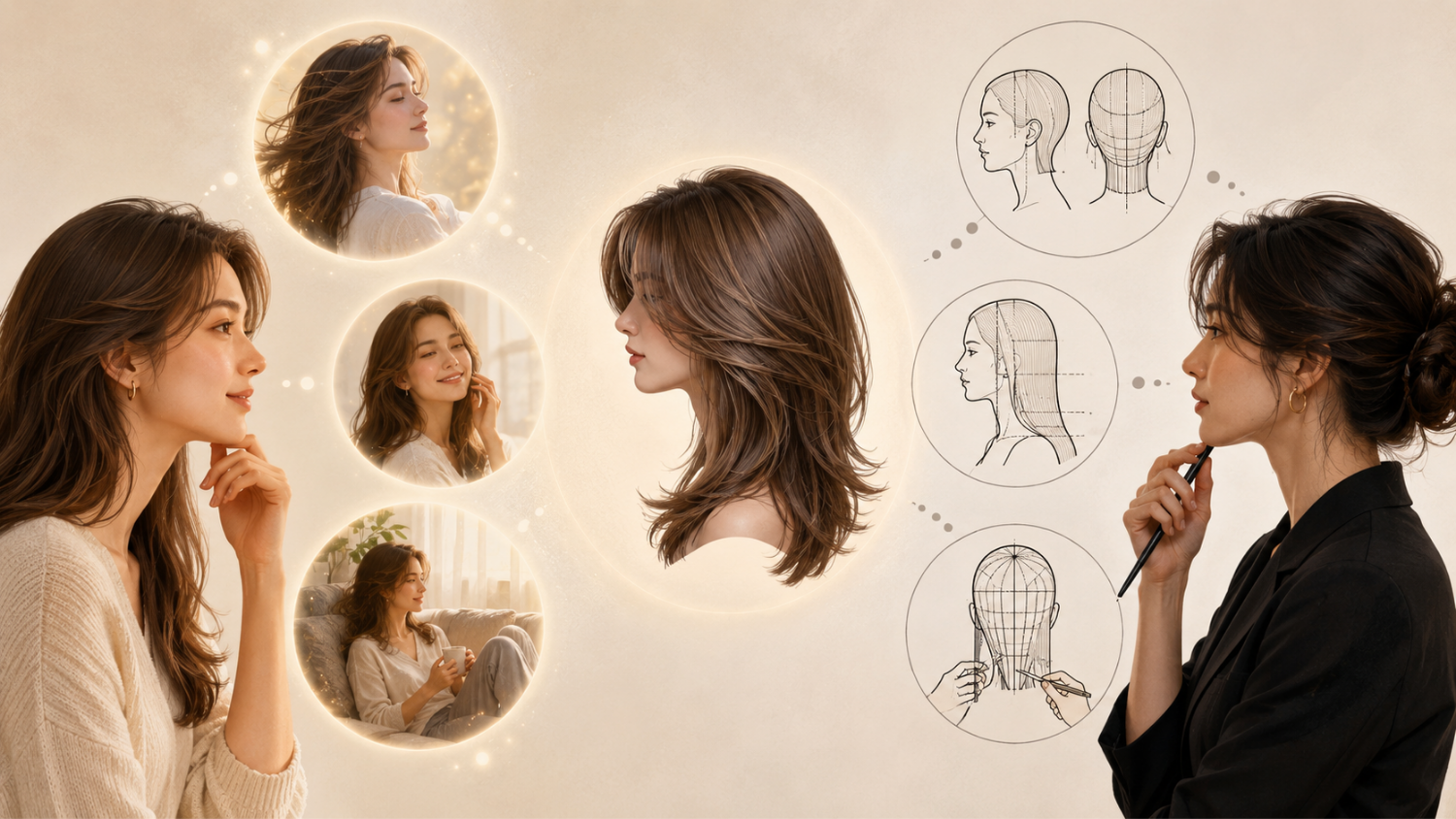
The client remembers the impression
A client is more likely to remember the result through personal experience:
- the hair fell into place naturally;
- the length felt comfortable;
- styling did not take much time;
- they liked the overall look;
- other people gave them compliments.
So “same as last time” may not mean an exact repetition of the haircut. It may simply mean wanting to feel the same way again.
The stylist remembers the work
A stylist is more likely to remember the shape, length, growth patterns and technical decisions.
But they may not know which part of the result mattered most to the client. Perhaps it was not the shape itself, but how easy the hair was to style. Not the length, but the sense of lightness. Not one particular detail, but the overall look.
Both remember the same appointment, but focus on different aspects of it.
Which “last time” does the client mean?
The stylist usually pictures the result immediately after the appointment.
The client may remember how the haircut looked a few days later, once the hair had settled and started to fall more naturally. Sometimes “last time” does not even refer to the most recent visit, but to a particularly successful result from several months earlier.
The length and condition of the hair, the client’s care routine and usual styling habits may also change between appointments. This means that even a similar shape can look and feel different.
The stylist may repeat the previous haircut almost exactly, yet the client still notices:
It was a little different last time.
This does not necessarily mean that either of them is mistaken. The starting conditions may have changed — or the client’s idea of the desired result may no longer be quite the same.
What does the client really want to repeat?
The words “same as last time” can express very different expectations:
- keeping the familiar length;
- getting the same manageable shape;
- avoiding a dramatic change;
- making the hair easy to style again;
- returning to a look in which the client felt confident.
Sometimes one question is enough:
What did you like most about the result last time?
The answer makes it easier to understand what truly matters to the client and what should be preserved.
When memories do not match
Sometimes the client is certain that the hair was longer, the shape was softer or the hair fell differently. The stylist remembers the previous result another way.
Arguing about who remembers it more accurately usually only increases the tension. It is more useful to ask:
What feels different to you now?
Would you like to keep more length or change the shape?
How would you like your hair to fall and behave at home?
These questions help turn the general feeling that “it was better last time” into a specific request.
When an adjustment can be made immediately, it is often better to proceed in small steps: show the intended length, refine the shape and then assess the result together. Photographs and the mirror can also help clarify expectations.
The familiar look does not always require repeating the same technique. The hair may have grown out differently or changed in condition, so a similar result may now need to be achieved.
A final thought
“Same as last time” is not a complete instruction, but the beginning of a conversation. Behind it is often a simple wish to return to a predictable result that made the client feel good.
A similar misunderstanding can arise when a client simply asks the stylist to “make it look beautiful.” Words that appear clear at first may hide very different expectations.