
A professional tool is rarely just an object for a hairdresser.
Scissors are chosen for the hand, the usual technique and the rhythm of work. Sometimes it takes weeks to get used to them. That is why the thought of handing them over to an unfamiliar sharpening specialist can naturally create tension.
Even if the tool is already cutting worse, a hairdresser may continue working with it — not because the problem goes unnoticed, but because they fear getting the scissors back in even worse condition.
Trusting someone with your working tool is not easy
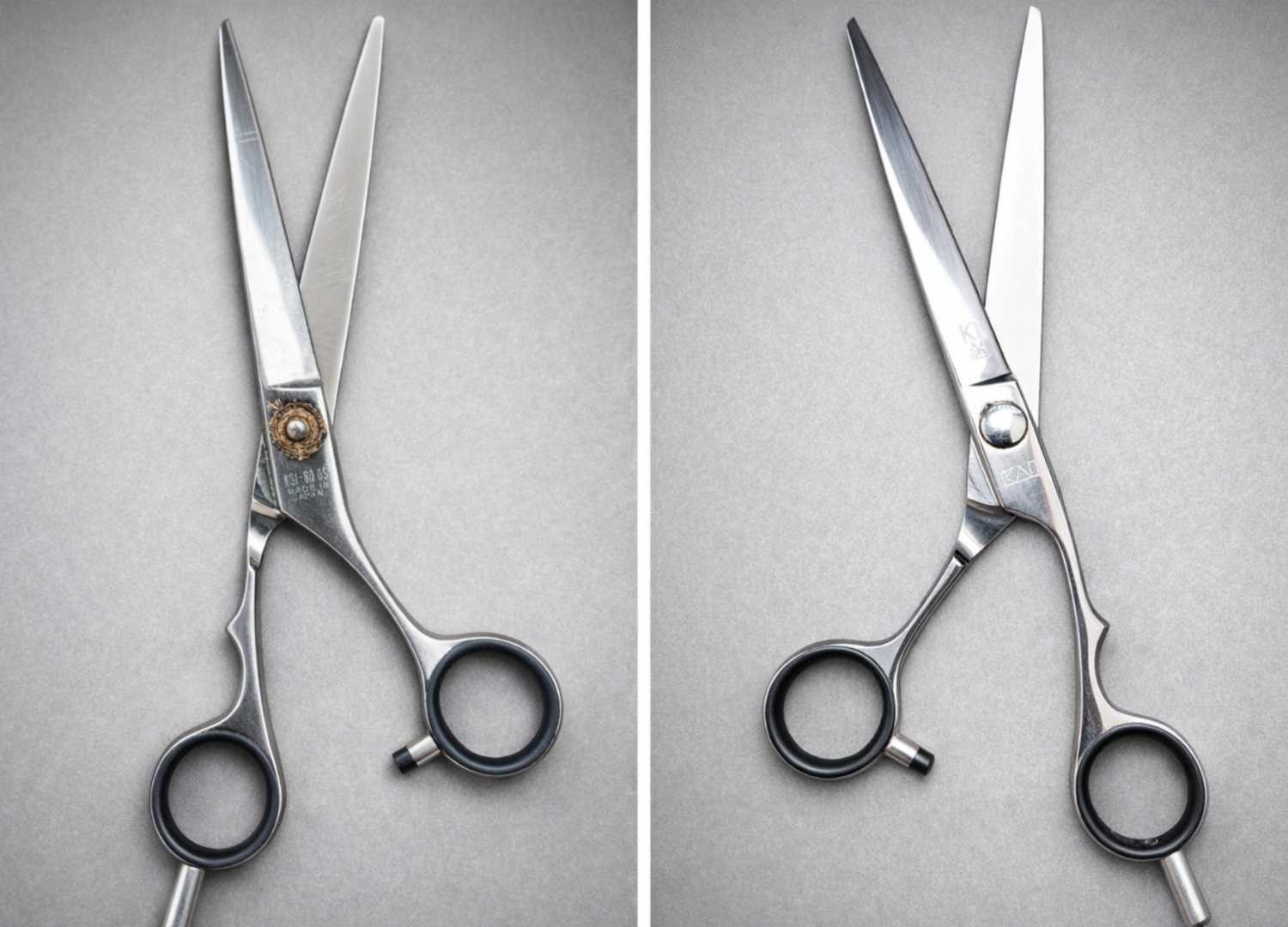
Before and after: restoring precision without changing the tool’s character
Price is not the only reason for concern
The value of the tool matters, but the concern is usually not only about money.
A hairdresser worries about other things too:
- whether the familiar feeling in the hand will remain;
- whether the geometry will be changed;
- whether too much metal will be removed;
- whether the movement will become too tight or too loose;
- whether the balance will be preserved;
- whether the tool will work as predictably as before.
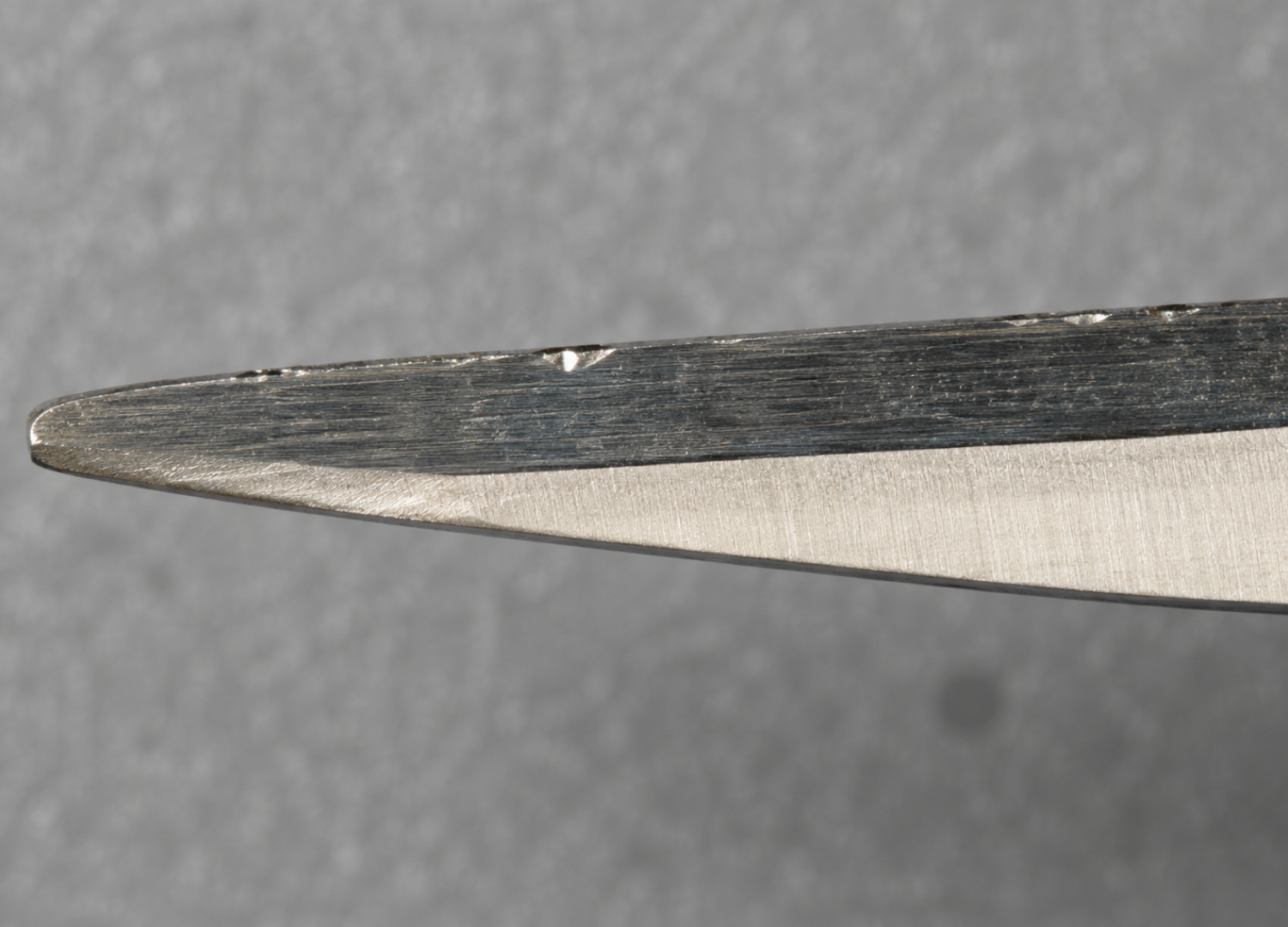
Even small edge damage affects the cut and blade movement
It is especially difficult to decide after a negative experience. If the scissors have once returned from sharpening with a changed movement, a rough cut or damaged geometry, trust in a new specialist forms much more carefully.
And that is completely normal. A professional tool directly affects the quality of work, speed, hand strain and the confidence of the hairdresser.
Why a hairdresser may postpone sharpening
Sometimes the scissors are already working worse, but the hairdresser still postpones maintenance.
The reasons may be different:
- there is no time between appointments;
- there is no spare pair of scissors;
- there has been a negative experience before;
- there is fear of damaging an expensive tool;
- it seems that the scissors “can still work a little longer”;
- there is no confidence that the sharpening specialist will understand the specifics of the tool.
If the scissors start pulling or chewing the hair, require more effort or no longer move as smoothly as before, these are already signs that the tool may need sharpening or professional diagnostics.
The longer a hairdresser works through extra effort, the more it affects the quality of the cut, working speed and hand strain — that is why timely sharpening of hairdressing scissors is important not only for the tool, but also for the professional using it.
Trust starts not with promises, but with diagnostics
Good work with a tool does not begin with the phrase “we will make them sharp”. It begins with a careful inspection.
Before sharpening, it is important to understand:
- the condition of the cutting edge;
- whether there are damages or chips;
- whether the blade geometry has been preserved;
- whether the screw mechanism works correctly;
- whether there is any looseness;
- whether the tension is correct;
- whether the tool matches its purpose and the hairdresser’s technique.
Sometimes the problem is not only sharpness. Scissors may work poorly because of incorrect tension, dirt, wear in the screw mechanism, a fall or previous unsuccessful sharpening.
That is why diagnostics helps to choose the right amount of work: where maintenance and adjustment are enough, and where full sharpening or restoration is truly needed.
Precision is a choice.
Why it is important to preserve the character of the tool
Good professional scissors have their own character.
Some work softly and smoothly. Others give stronger control. Some are comfortable for precise cutting, others for sliding cuts, texturising or a specific technique.
The task of a sharpening specialist is not to “remake” the tool according to personal preference, but to restore its working properties while taking into account the construction, steel, purpose and original geometry.
It is especially important to preserve:
- the shape of the cutting edge;
- the correct sharpening angle;
- the balance of the blades;
- smooth movement;
- proper blade contact;
- the comfortable feeling in the hand.
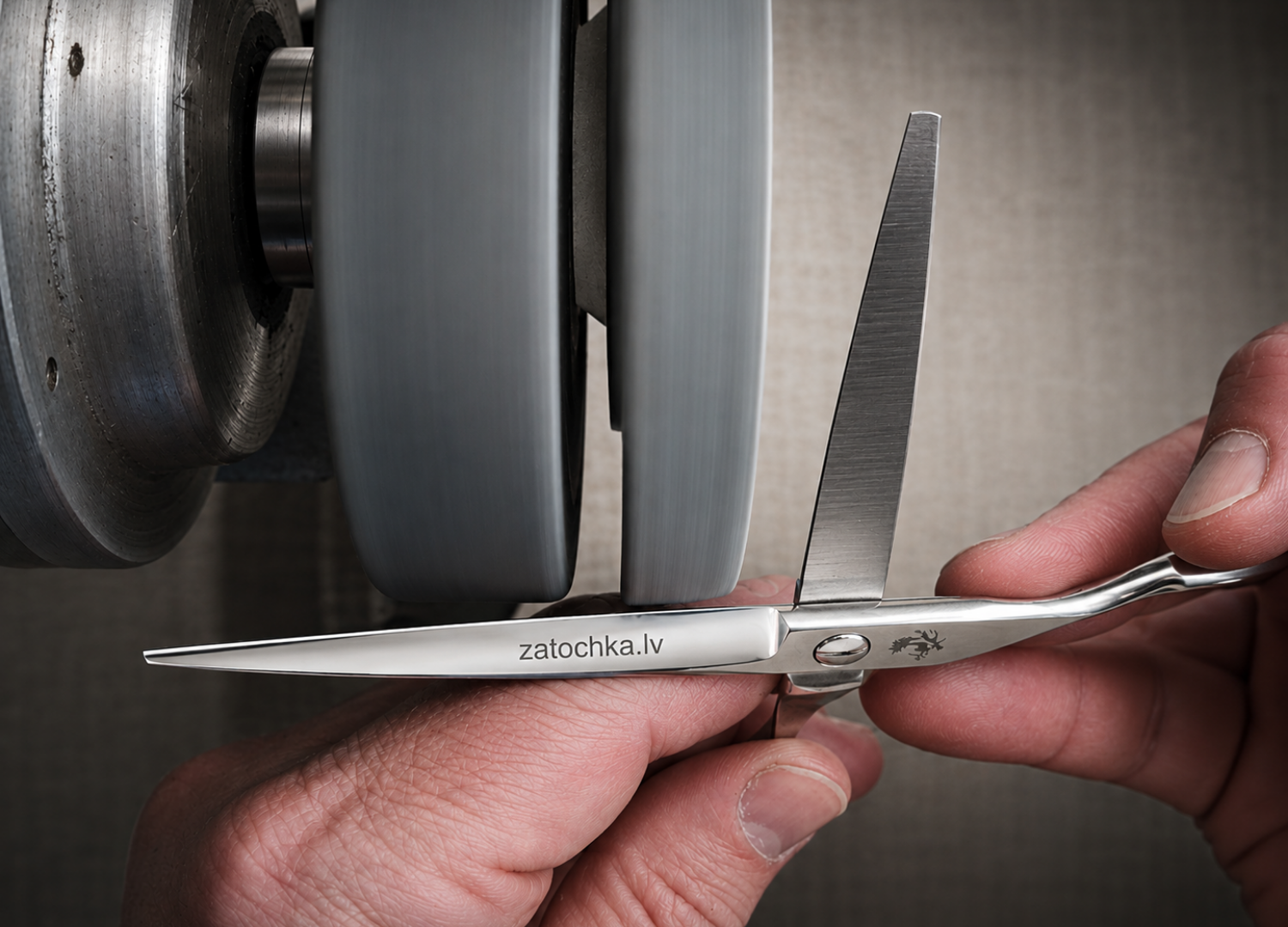
Precise control — without removing excess metal
That is why professional sharpening is not simply making a tool sharp. It is precise work with geometry, movement and the way the scissors behave in use. You can read more about this in the article Professional sharpening of hairdressing scissors.
Every tool needs its own approach.
Why “removing a little more” is not harmless
One of the main concerns of a hairdresser is that too much metal will be removed from the tool.
And this concern is understandable. With professional scissors, sharpness and appearance are not the only things that matter. The precision of the geometry is just as important. Sometimes even a small change can affect blade movement, contact, balance and the quality of the cut.
There is no “approximately” in sharpening. Fractions of a millimetre matter here.
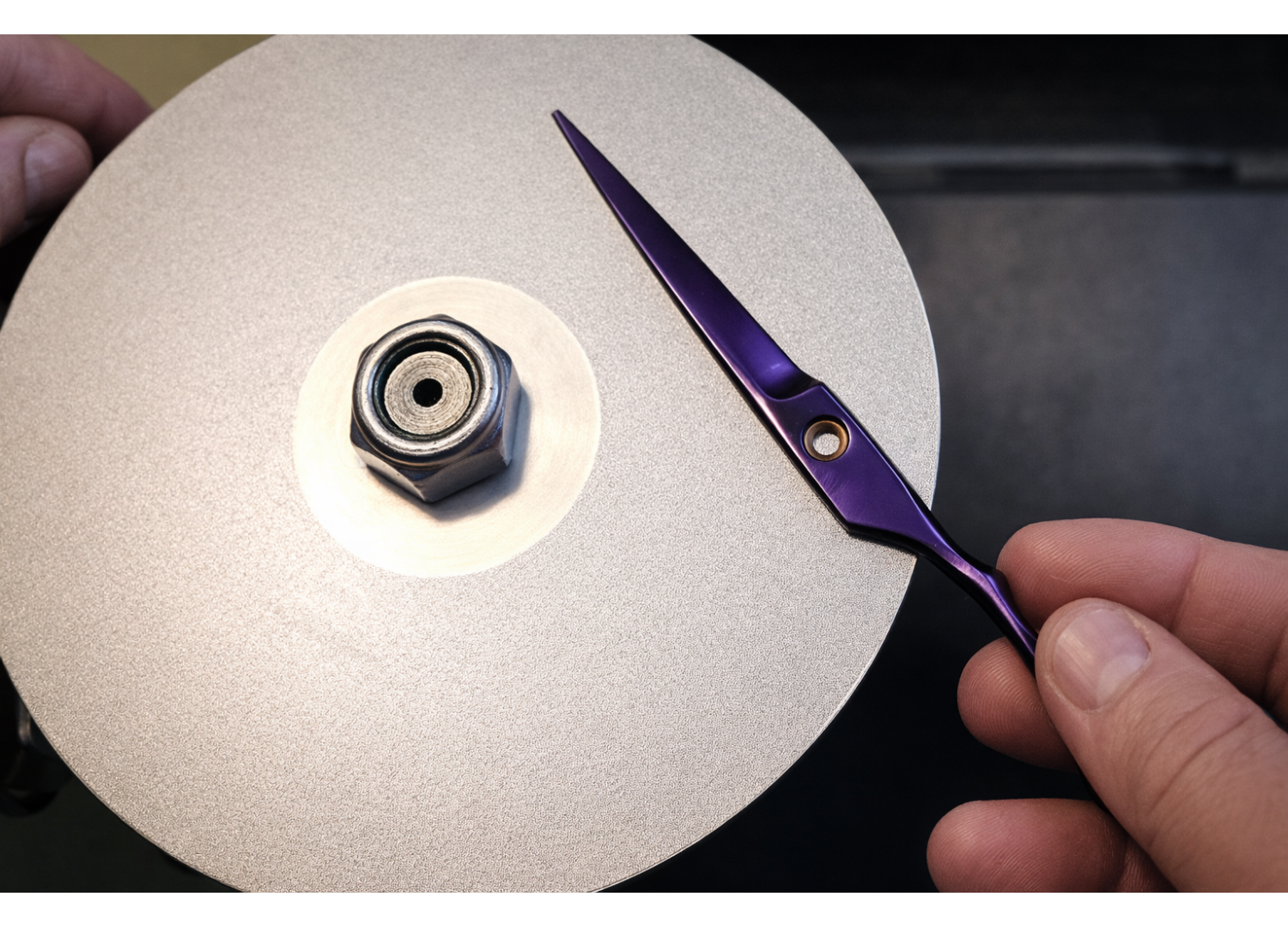
Restoring working properties while preserving geometry
That is why a careful approach means preserving as much metal as possible and intervening only where it is truly necessary.
Fractions of a millimetre matter.
If the tool has already been damaged
After unsuccessful sharpening or incorrect handling, the tool is not always lost.
In many cases scissors can be restored: the movement can be corrected, blade contact improved, the consequences of minor damage removed and the cutting edge returned to working condition.
However, it is important to understand that restoration depends on the degree of damage. If the geometry has been seriously altered, there are deep chips, heavy wear or the tool has already been processed incorrectly several times, the possibilities of restoration may be limited.
That is why it is better not to try to fix scissors yourself and not to hand them over “just for a quick touch-up” without diagnostics.
Related articles:
→ Can a damaged tool be restored?
What helps a hairdresser decide the first time
Trust does not appear instantly. Especially when it comes to an expensive or favourite tool.
But the first step becomes easier when it is clear:
- who will work with the tool;
- how diagnostics are carried out;
- what exactly will be done;
- whether questions can be asked before sending the tool;
- how to pack the tool correctly;
- how it will be returned;
- whether the geometry and individual features of the scissors will be treated carefully.
If you are sending your tool for the first time, you can start with a consultation: describe the problem, send a photo or video of how the scissors work, and clarify whether sharpening, adjustment, maintenance or restoration is needed.
If you cannot bring the tool in person, you can send it through any convenient parcel locker. Instructions are available here: How to send a tool for sharpening via parcel locker.
What to pay attention to when choosing a sharpening specialist
Before trusting someone with your tool, it is worth looking beyond the price.
It is more important to understand:
- whether the specialist works with professional tools;
- whether they sharpen hairdressing scissors, not only household knives;
- whether they take the tool’s geometry and purpose into account;
- whether a diagnosis is carried out before the work begins;
- whether they explain what can be done and what can no longer be restored;
- whether they avoid promising to make every tool “like new” in any situation;
- whether they understand the difference between sharpening, adjustment, maintenance and restoration.
A good sign is when the specialist does not rush to promise a result, but first evaluates the condition of the tool.
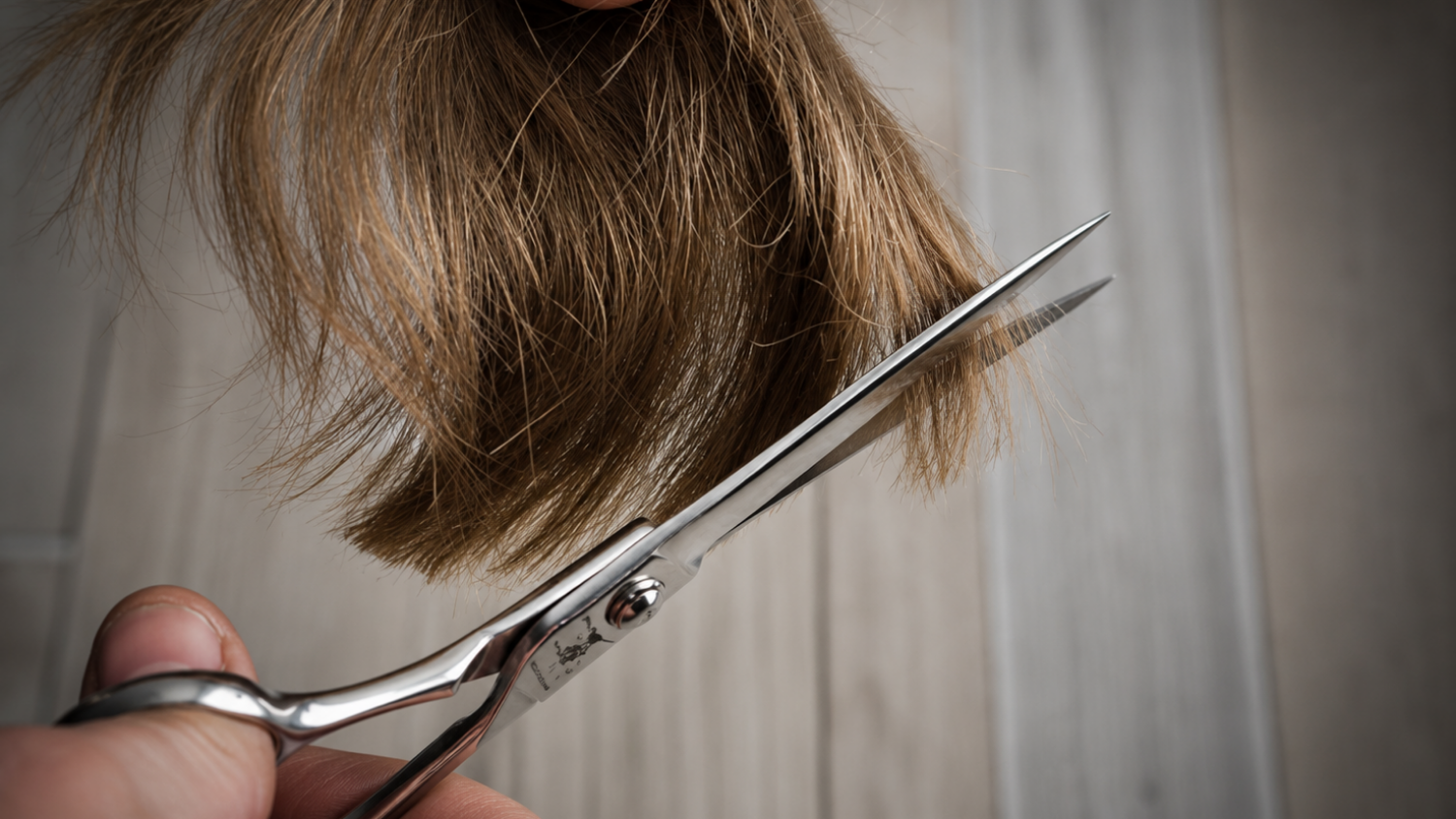
Testing in a real cut
Trust is a professional process
Trusting your working tool to an unfamiliar specialist is truly not easy.
But doubts in this case are not distrust for the sake of distrust. They are professional caution from someone who understands the value of the tool and is responsible for the result in front of the client.
Proper sharpening should not change the tool beyond recognition. It should restore precision, smooth movement and working comfort.
That is why, when working with professional scissors, it is not only the specialist’s hands that matter, but also the approach: diagnostics, attention to detail, respect for geometry and an understanding of how the tool should behave in work.
The art of understanding the tool.