
“Make me look good” is one of those requests that sounds perfectly clear only at first.
The client wants to look better, fresher or more interesting and may feel that they have explained their wishes clearly enough. Yet the hairstylist may picture a completely different result from the very same words.
The problem is not that the client cannot explain themselves or that the hairstylist fails to understand. “Looking good” describes a feeling rather than a precise result, and everyone has a different picture of what that result should look like.

What “make me look good” can actually mean
A short request like this can hide many different expectations:
• keeping the client’s
familiar look while making it neater and more polished;
• looking fresher or younger;
• adding volume or removing excess weight;
• bringing out the client’s facial features;
• trying something new without making a drastic change;
• getting a shape that is easy to style at home;
• recreating a look they liked in a photograph;
• leaving the decision to the hairstylist instead of choosing for themselves.
One client may want a soft, natural shape. Another may be looking for a noticeable transformation. A third may want almost nothing changed and simply hopes to make their hair look well cared for again.
Yet all three may use exactly the same phrase: “Make me look good.”
Why a hairstylist cannot simply guess
A hairstylist assesses the client’s face shape, hair texture and condition, growth patterns, usual styling habits and what can realistically be achieved.
Even so, professional experience cannot reveal exactly what a particular client considers attractive.
A modern, expressive look may feel too bold. A natural result may seem too subtle. A major transformation may feel unfamiliar or uncomfortable.
This means that even technically excellent work may not match the result the client had pictured in their mind.
A hairstylist’s job is not to guess. It is to help the client put their expectations into words.
From a feeling to a clear request
Not every client can immediately name the length, shape or technique they want. It is often easier for them to describe the feeling they are looking for:
- “I want to look fresher.”
- “I feel like trying something new.”
- “I want it to look good and be easy to manage.”
- “I just don’t want it to look the way it does now.”
To turn a general wish into a clear plan, it helps to establish:
• how much length the
client wants to keep;
• whether they want to retain their familiar shape;
• whether they would like additional volume;
• how noticeable the changes may be;
• how much time they are willing to spend styling their hair;
• what they like and dislike about their current look.
A few calm, focused questions are often enough to turn a vague wish into something much more specific.
Questions that help a hairstylist understand the client
Instead of asking the broad question, “What exactly do you want?”, the hairstylist can ask:
- “Would you prefer to keep your usual look or make a noticeable change?”
- “What matters most to you: keeping the length, adding volume or making the hair easier to style?”
- “Are there any changes you definitely do not want?”
- “How do you normally style your hair at home?”
- “What do you like and dislike about your current shape?”
- “Would you prefer a natural result or something more defined?”
These questions do not restrict the client. They help the client describe their wishes more accurately.
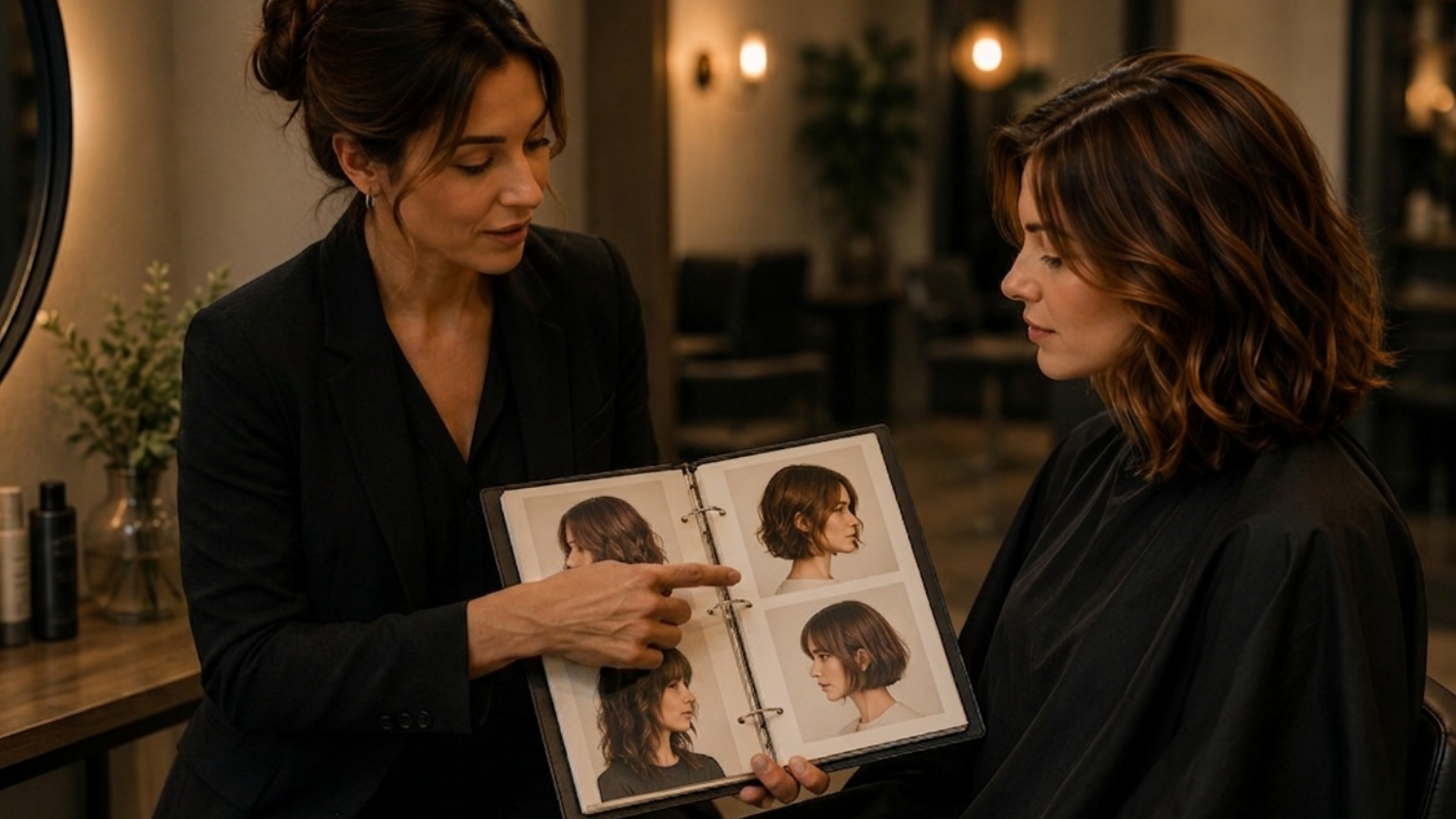
A photograph is a reference, not a set of instructions
A photograph can make the conversation much easier, particularly when the client finds it difficult to describe the desired look in words.
However, the person in the photograph may have a different hair texture and density, a different face shape and different styling habits. Their hair may also have been professionally styled before the photograph was taken, while the image itself may have been retouched or shot from a particularly flattering angle.
It is therefore important to clarify exactly what the client likes about the photograph:
• the shape;
• the length;
• the volume;
• the texture;
• the way the hair frames the face;
• the overall mood of the look.
Sometimes it is not the haircut itself that appeals to the client, but the impression created by the photograph.
It is important to know what the client does not want
A client may struggle to describe the desired result but find it much easier to name the things they want to avoid:
• losing too much length;
• leaving the face feeling completely exposed;
• having a haircut that requires complicated daily styling;
• creating too much volume;
• changing the look too dramatically;
• repeating a previous disappointing experience.
These limits help the hairstylist narrow down the options and suggest a more suitable solution.
Is “I trust you” enough?
The phrase “Do whatever you think is best” may express genuine trust in the hairstylist. However, it does not always mean that the client is comfortable with any possible change.
The client may have unspoken boundaries: keeping a familiar length, not wanting the face to feel too exposed, fearing a noticeable transformation or needing to style the hair quickly at home.
It is therefore better to agree on the general direction before beginning:
“I suggest keeping most of the length, removing some weight from the shape and adding volume at the crown. Would that work for you?”
The client then understands what to expect, while the hairstylist receives confirmation that they are picturing approximately the same result.
Clarify first, then begin
The consultation before the service does not have to be long. It only needs to establish a few key points:
- What should stay the same?
- What should change?
- How noticeable should the change be?
- How should the haircut look and feel in everyday life?
A few questions before the work begins can prevent misunderstandings after it has been completed.
“Make me look good” is the start of a conversation
“Make me look good” is not a complete instruction. It is the beginning of a conversation.
Behind this phrase may be a desire for change, a wish to preserve a familiar look or the hope of being able to trust a professional. A general feeling can be translated into clear details: length, shape, volume, ease of everyday styling and an acceptable degree of change.
However, even when a client says they want something new, this does not always mean they are ready for a noticeable transformation. Sometimes the desire to change clashes with the fear of losing a familiar image of themselves.
That is the subject of the next article: → why a client may be afraid of change even when they are the one asking for it.