
In the previous articles, we covered:
Now one thing becomes clear:
👉 there is no truly universal pair of thinning scissors.
The right choice is always a combination of features matched to specific tasks, hair types, and the stylist’s working style.
Where the choice starts
Choosing thinning scissors is not only about the brand or the percentage.
👉 First, answer 3 key questions:
- What hair type do you work with most often?
- What task do you perform most often with thinning scissors?
- What result do you want to achieve?
Step 1. Choosing by hair type
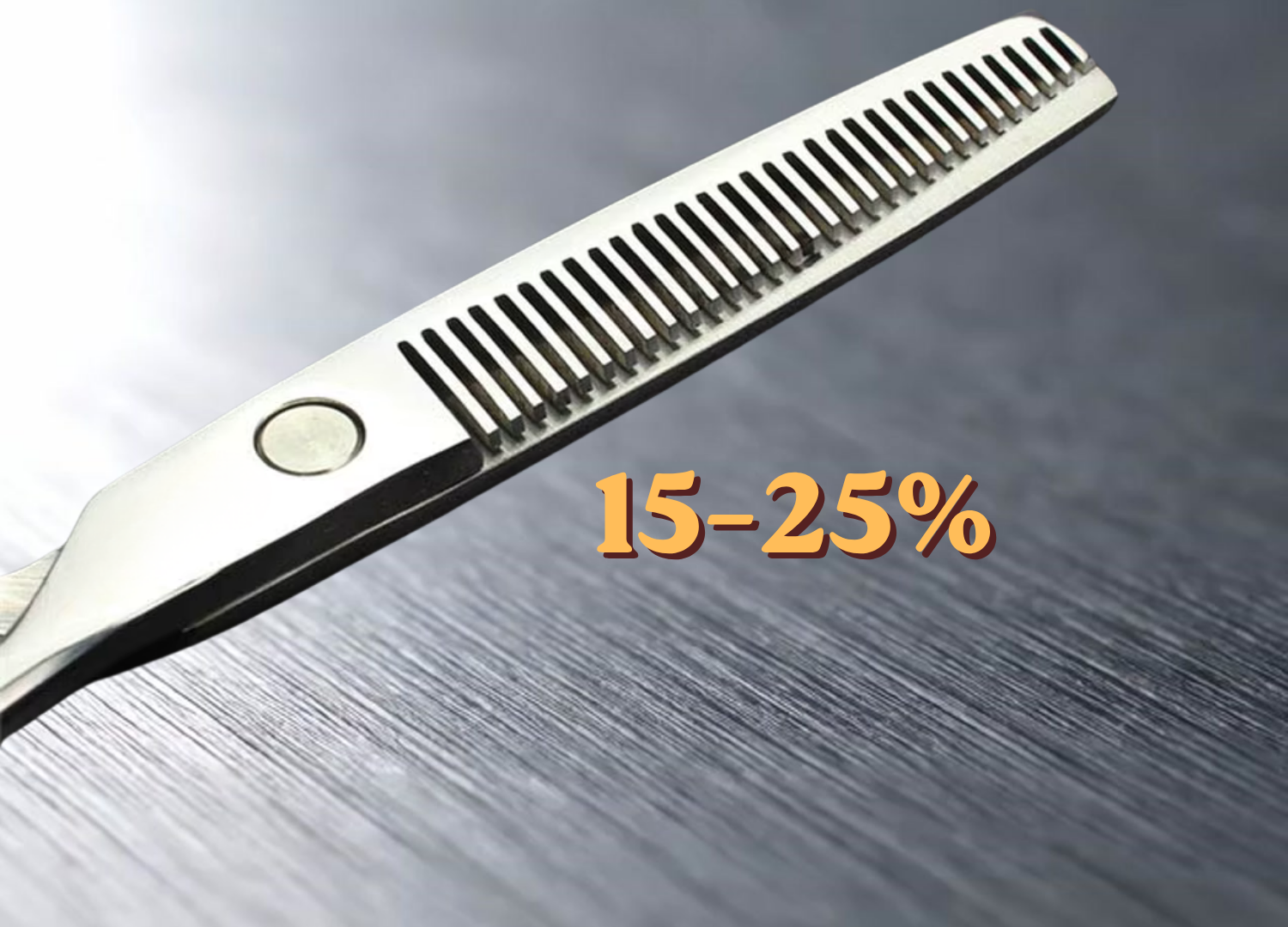
Fine and soft hair
👉 Requires a delicate approach.
Best suited:
- 15–25%
- fine, closely spaced teeth
- softer geometry
- minimal or no micro-serration
📌 Result:
- light texture
- preserved shape
- soft cutting effect
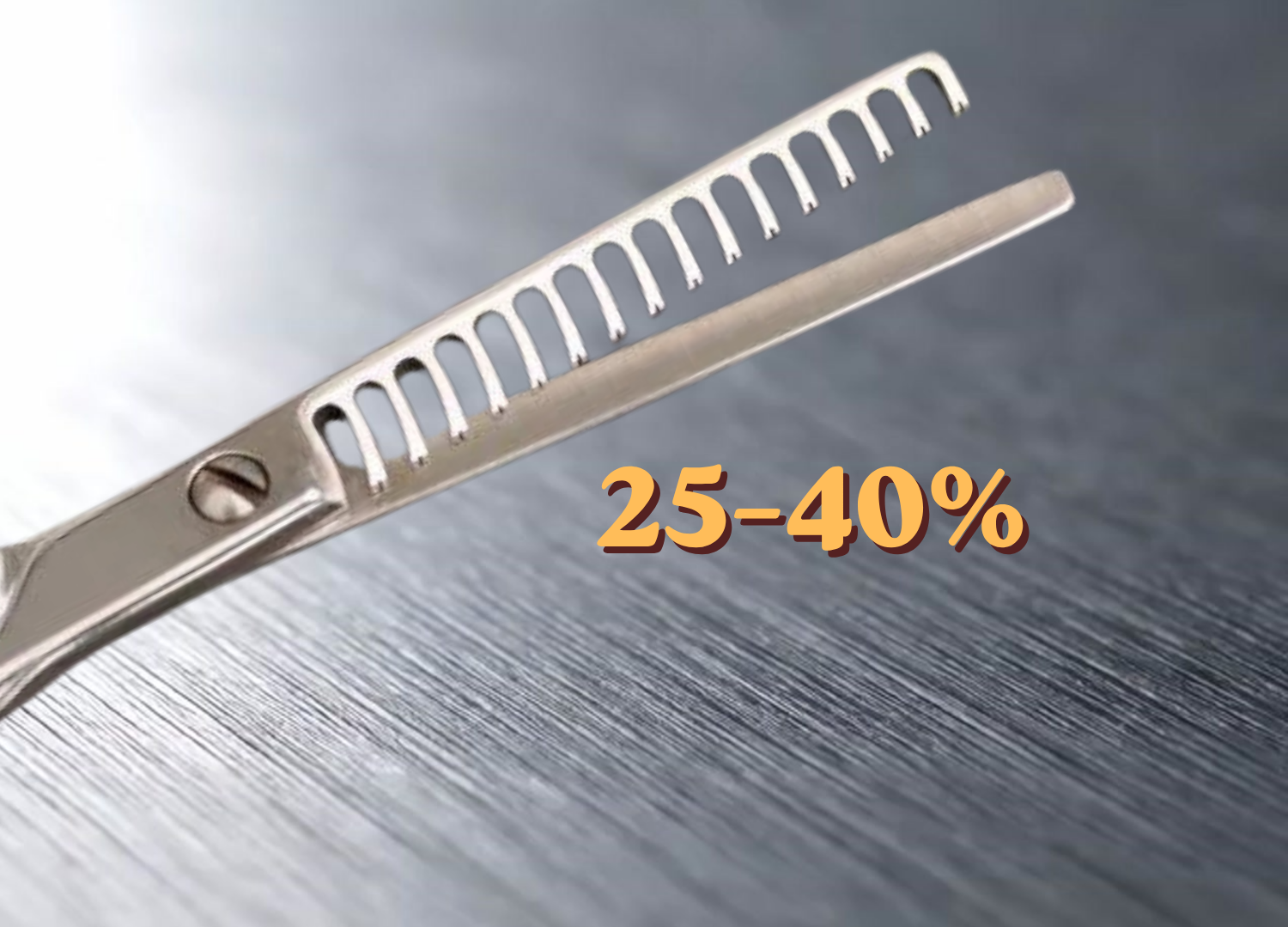
Normal hair
👉 A versatile option for everyday salon work.
Best suited:
- 25–40%
- medium tooth density
- flag-shaped teeth
📌 This is the main working tool for many hair professionals.
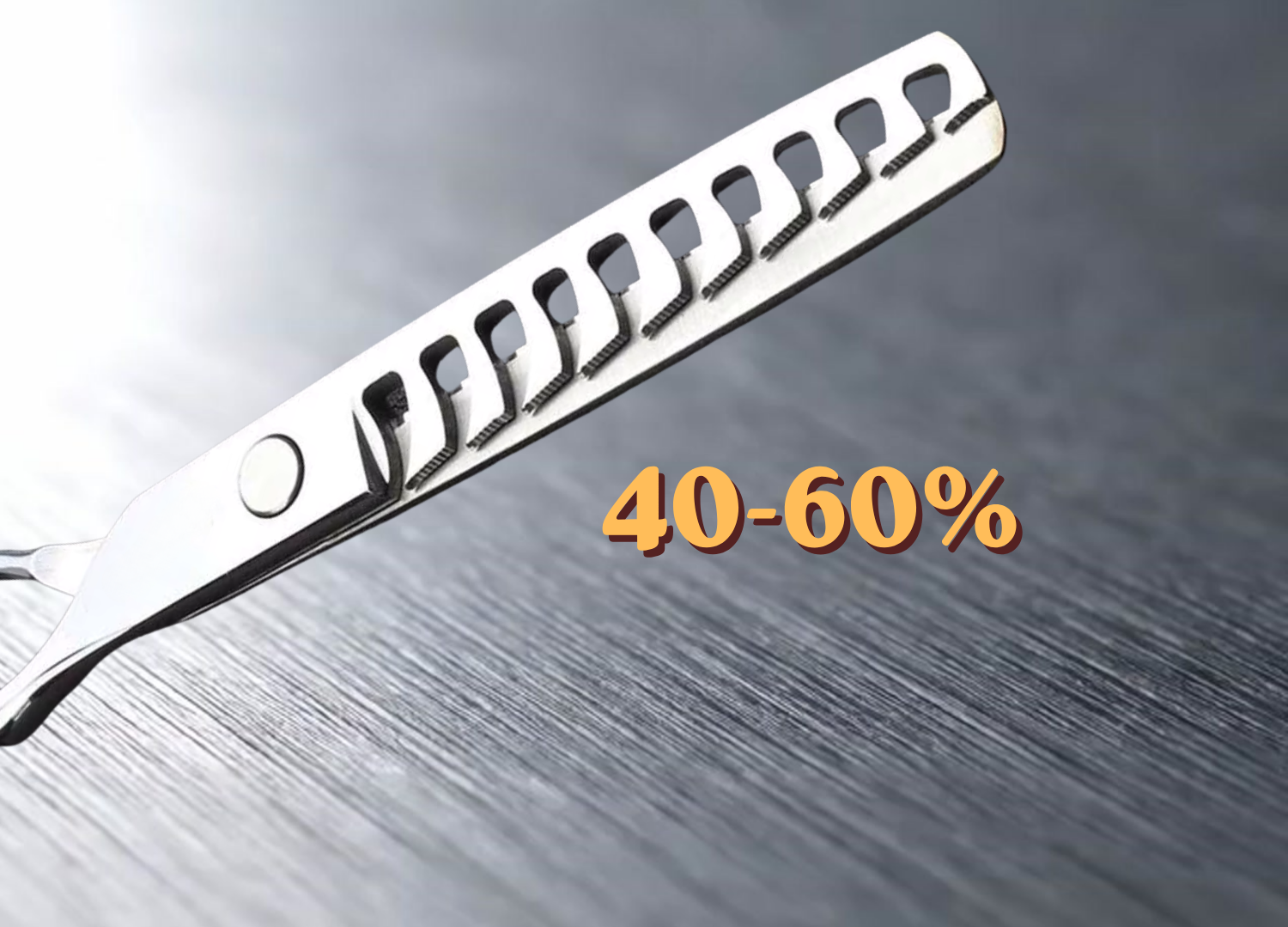
Thick and coarse hair
👉 Requires efficiency and control.
Best suited:
- 40–60%
- wider teeth
- micro-serration
📌 Helps remove bulk faster while maintaining control over the cut.
Step 2. Choosing by task
Soft texture and finishing work
- 10–20%
- fine, closely spaced teeth
- double-sided thinning scissors may also work well
👉 Maximum delicacy and control.
Versatile everyday work
- 30–40%
- flag-shaped teeth
- single-sided construction
👉 A good balance between control and softness.
Fast bulk removal
- 40–60%
- wider teeth
- micro-serration
👉 More active, but efficient.
Blending and soft transitions
- double-sided thinning scissors
- no micro-serration
👉 A softer, more natural result.
Step 3. Construction matters
Blade position
- straight blade on the bottom → more control
- straight blade on top → softer cutting feel
👉 Even the position of the scissors can change the result.
Tooth shape
- flag-shaped / M-shaped teeth → stability and control
- straight teeth → more active, less controlled cutting
- combined tooth design → more versatile use
Micro-serration
- present → hair slips less, cut is more precise
- absent → smoother glide and softer feel
Tooth count and tooth width
It is important to understand:
👉 more teeth do not always mean a higher thinning
percentage.
Tooth width also has a major influence on the result.
If you are buying your first thinning scissors
If you are just starting
to work with thinning scissors and want one versatile option:
👉 a 30–40% single-sided pair with flag-shaped teeth is often the best
starting choice.
📌 It is one of the most predictable options for everyday salon work.
A common mistake among hair professionals
Choosing thinning scissors only by the thinning percentage.
👉 As a result:
- the scissors behave unpredictably
- control is reduced
- the final result is not what was expected
Practical advice
An optimal set for a hair professional:
1. Versatile thinning scissors
30–40%
→ for main everyday work
2. Soft / finishing scissors
15–20% or double-sided
→ for texture and finishing
3. Bulk-removal scissors
40–50%+
→ for thick and dense hair
When the problem is not the choice
If the scissors:
- pull the hair
- catch or snag
- leave an uneven cut
👉 the problem is often not the model, but the technical condition of the tool.
Professional sharpening of thinning scissors
- sharpening of thinning scissors
- geometry adjustment
- tension and movement adjustment
- testing on hair
👉 After servicing, the tool works accurately and predictably again.
We work across Latvia, Lithuania, and Estonia
Conclusion
Correctly chosen thinning scissors are not a random choice.
👉 It is important to consider:
- thinning percentage
- tooth shape
- construction
- hair type
- working tasks
When these parameters match:
- the tool works predictably
- the cut becomes stable
- the work becomes faster and more confident