
Thinning shears differ not only by thinning percentage, but also by tooth shape.
The tooth shape determines how the shear grips the hair and what kind of result you get while cutting.
Main types of thinning shear teeth
There are several main tooth designs used in thinning shears.
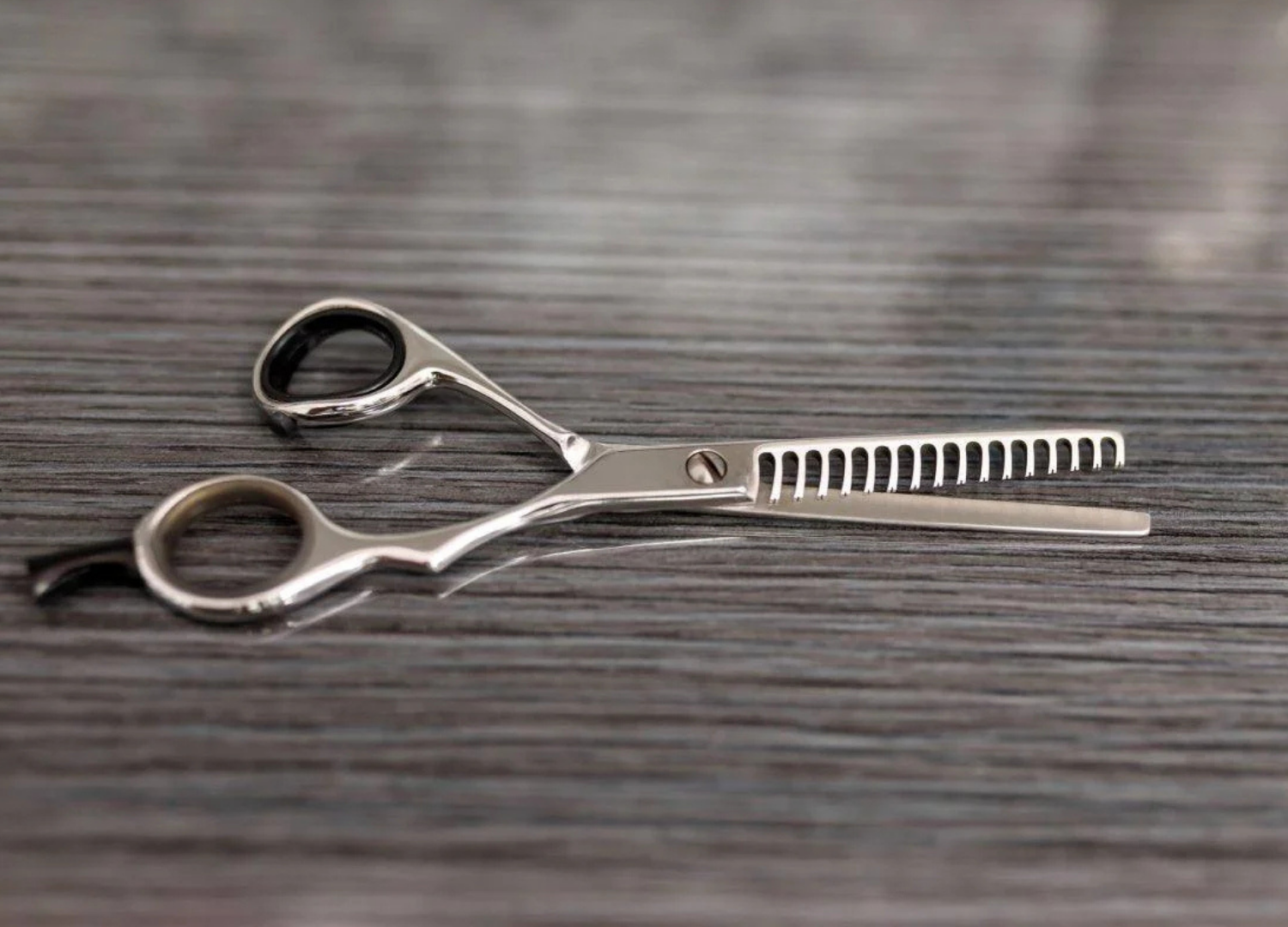
Flag-shaped teeth
The most common and professional option.
✔ M-shaped tooth
design
✔ provides stable hair grip and high
control
👉 Result:
• clean and even cut
• stable performance
• high control
👉 Suitable for:
• everyday salon work
• women’s and men’s haircuts
• soft and medium thinning
📌 This is the type most commonly used by professional stylists.
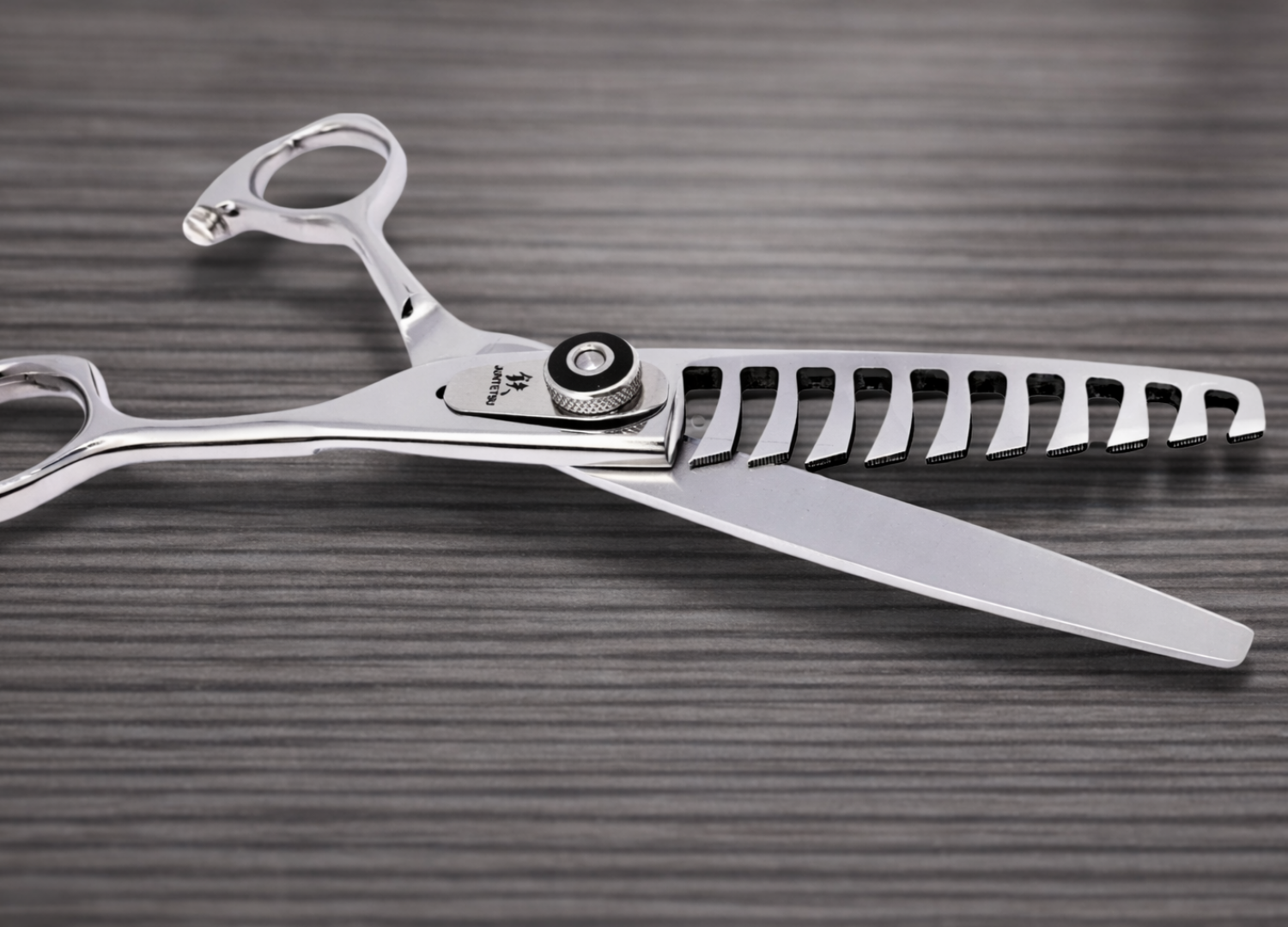
Straight teeth (without flag design)
✔ rectangular
tooth shape
✔ provides less control during
cutting
👉 Result:
• less stable cut
• hair may slip
• more difficult to control the result
⚠ These teeth are more common in simpler models or after poor-quality sharpening that has damaged the geometry.
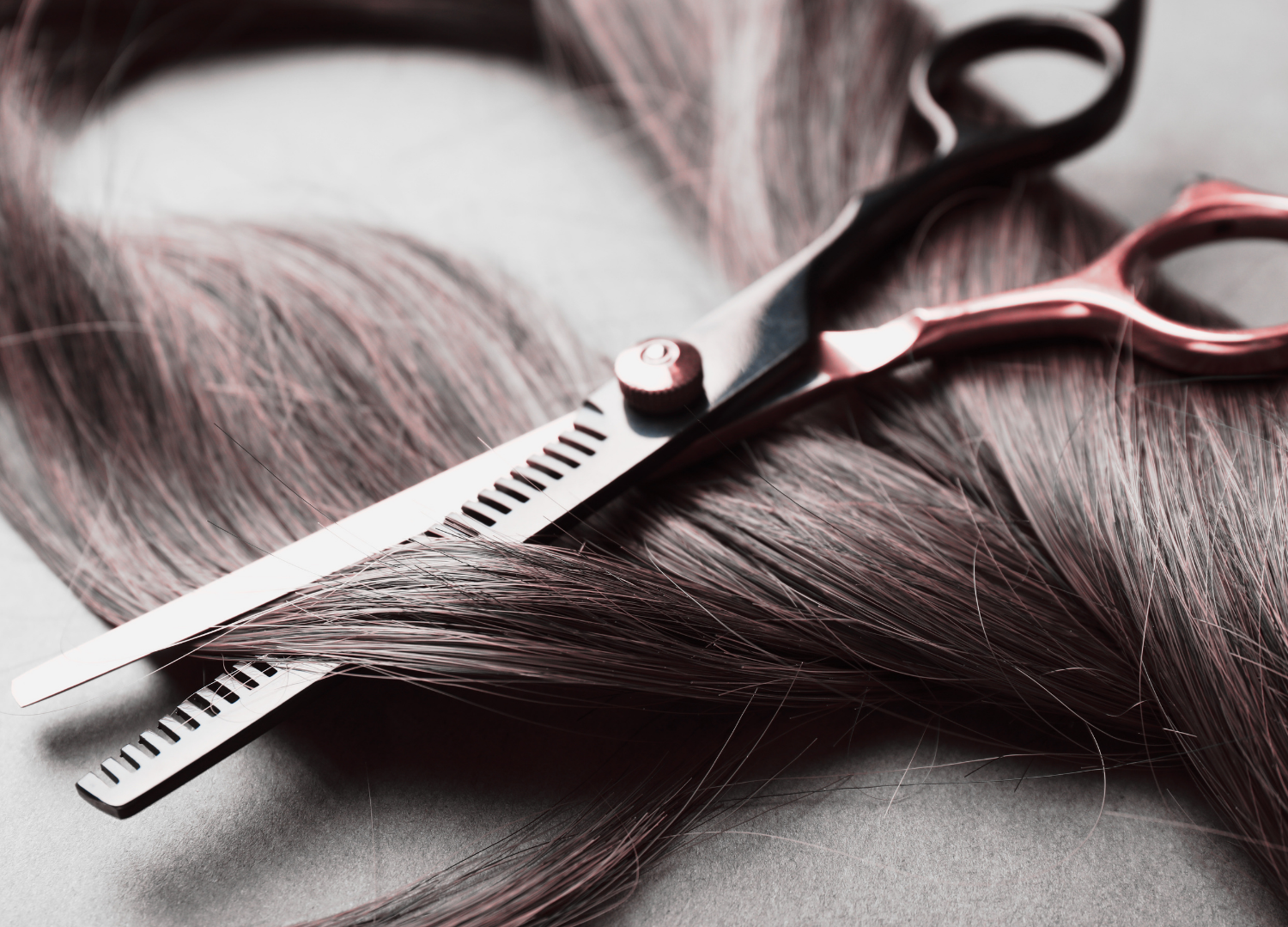
Teeth with micro-serration
✔ fine
serrations on the teeth
✔ improve hair grip during cutting
👉 Result:
• less slipping
• more precise control while working
👉 Features:
• the cut feels less soft
• require more frequent maintenance
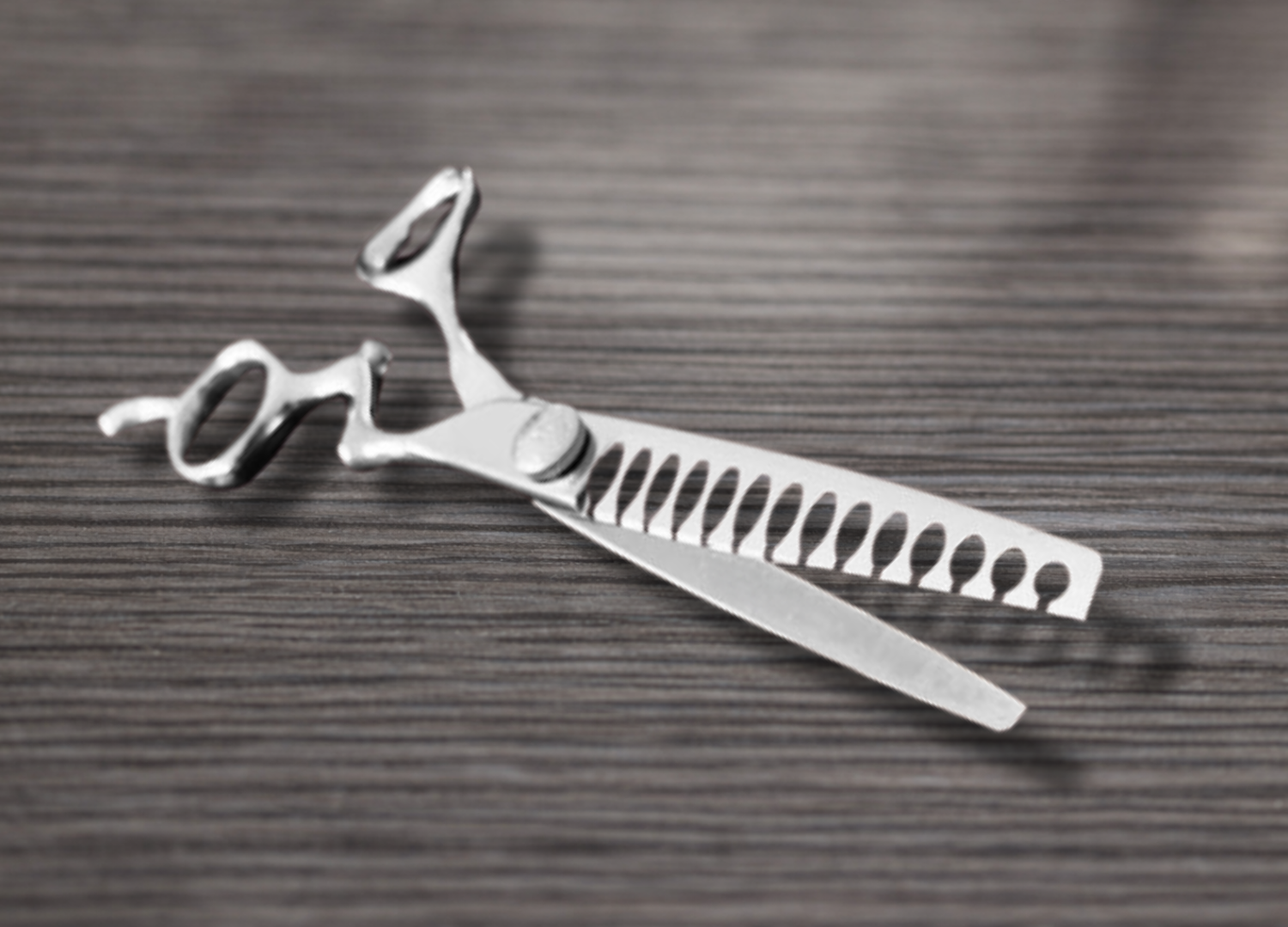
Combination teeth
✔ combination of
different tooth shapes
✔ mixed geometry
👉 Result:
• balance between control and softness
• more versatile performance
How tooth shape affects the result
• flag-shaped teeth → control and clean cut
• straight teeth → less control during cutting
• micro-serration → precise cut without slipping
👉 Even with the same thinning percentage, the result can be completely different.
A common mistake stylists make
Many stylists focus only on the thinning percentage (for example 30% or 40%).
But:
👉 same percentage + different tooth shape = completely different result
Sharpening thinning shears and tooth shape
The tooth design is the most sensitive part of thinning shears.
Improper sharpening can:
• alter tooth geometry
• reduce hair grip
• create a “chewing” effect on the hair
👉 This is especially important for flag-shaped teeth, which require very precise adjustment.
Important for stylists
If your shears:
• pull hair
• snag hair
• do not produce a clean cut
👉 the issue is usually related to adjustment or sharpening, not your cutting technique.
👉 We work throughout Latvia, Lithuania and Estonia. We accept tools via parcel lockers.
📌
Instructions: How to send tools for sharpening via parcel lockers
Professional thinning shear sharpening
We provide:
• thinning shear sharpening
• tooth geometry adjustment
• hair testing after sharpening
👉 After sharpening, the shears work accurately again without “chewing” the hair.
📌 Conclusion
Thinning shears are not just about thinning percentage.
The tooth shape:
• determines how the shears behave during cutting
• affects the haircut result
• requires precise sharpening