
Thinning
scissors differ not only in tooth shape and thinning percentage.
Another important parameter is the number of teeth.
👉 The number of teeth directly affects how the scissors behave: how softly bulk is removed, how the texture looks, and how easy it is to control the result.
Why the Number of Teeth Matters
The number of teeth affects how hair is distributed during the cut.
• more
teeth → softer and more even thinning
• fewer teeth → more aggressive bulk removal
👉 However, it is important to understand that the number of teeth is only one part of the construction.
The result
also depends on:
• tooth width
• spacing between the teeth
• tooth shape
• the presence of micro-serrations
👉 That is why two scissors can feel completely different even with a similar thinning percentage.
📌 Learn more about the types of thinning scissors and thinning percentages:
Types of Thinning Scissors by Number of Teeth
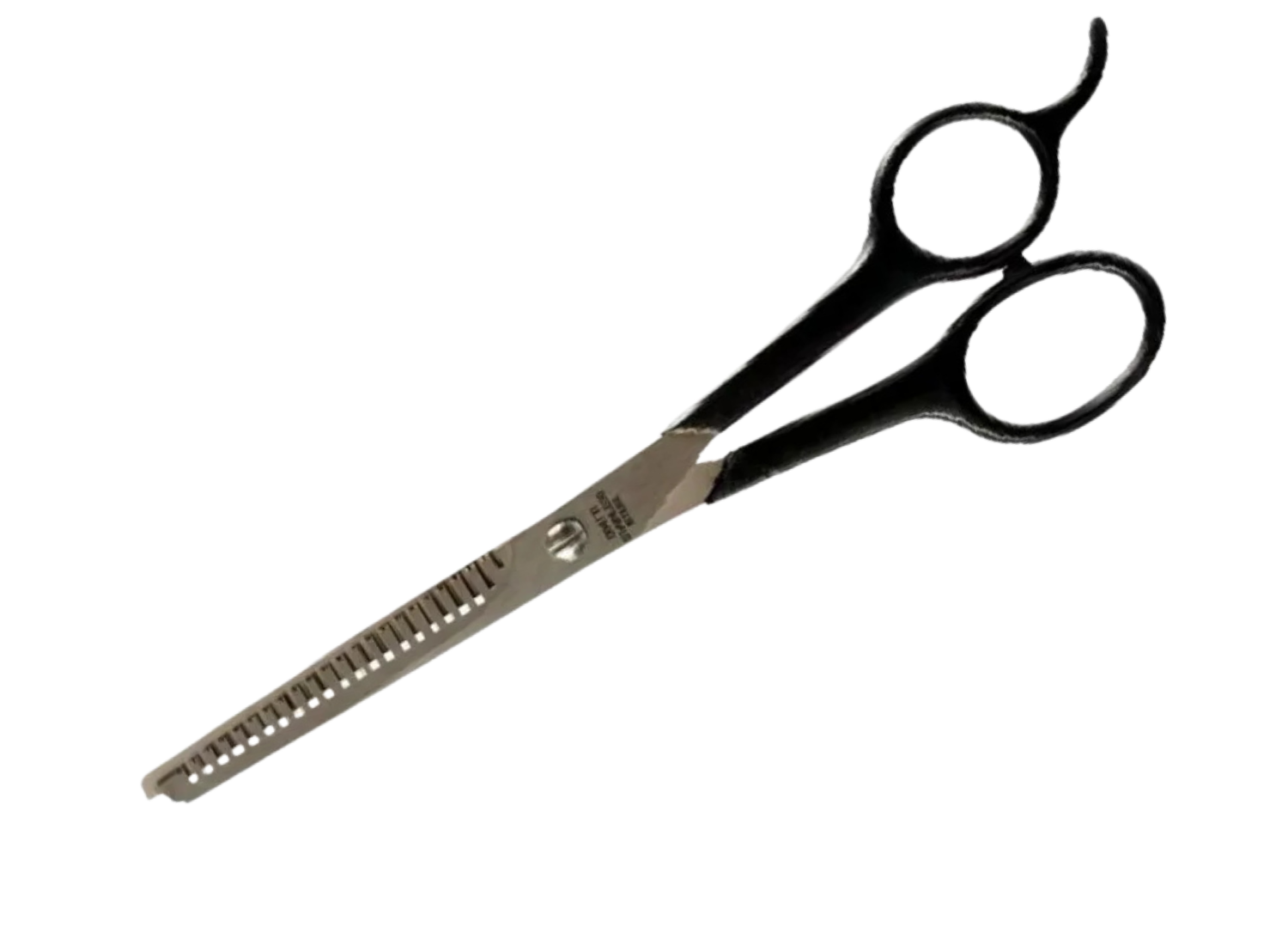
Classic
thinning scissors most commonly range from approximately 28 to 42 teeth.
This is the main working range for professional hairdressers.
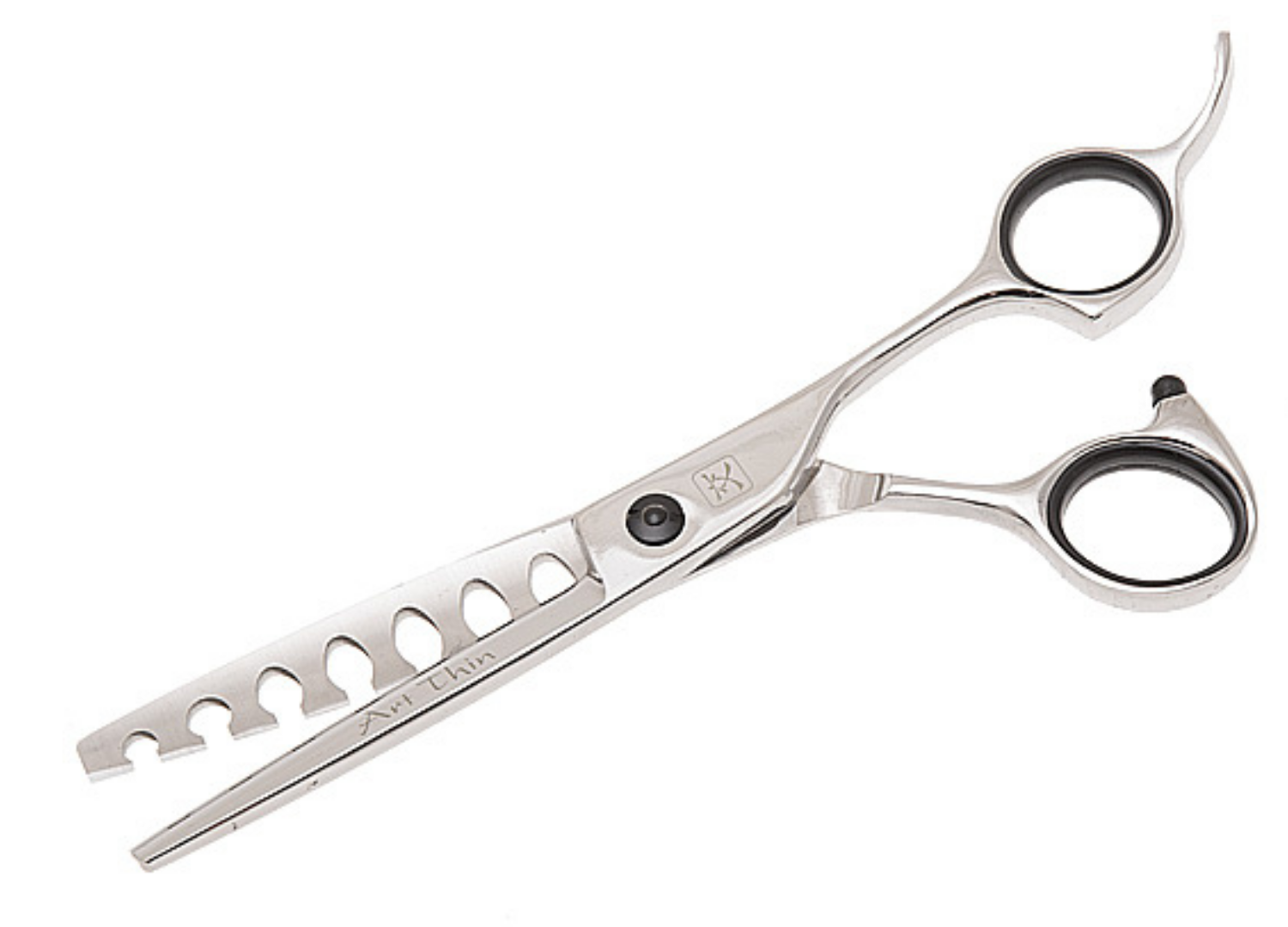
Texturizing scissors are a separate category and may have significantly fewer teeth
✂ 28–32 Teeth — More Pronounced Thinning
Scissors with fewer teeth work more aggressively.
👉 Result:
• noticeable bulk removal
• more visible texture
• faster effect
✔ suitable for thick hair
✔ ideal for active texturizing and
shape work
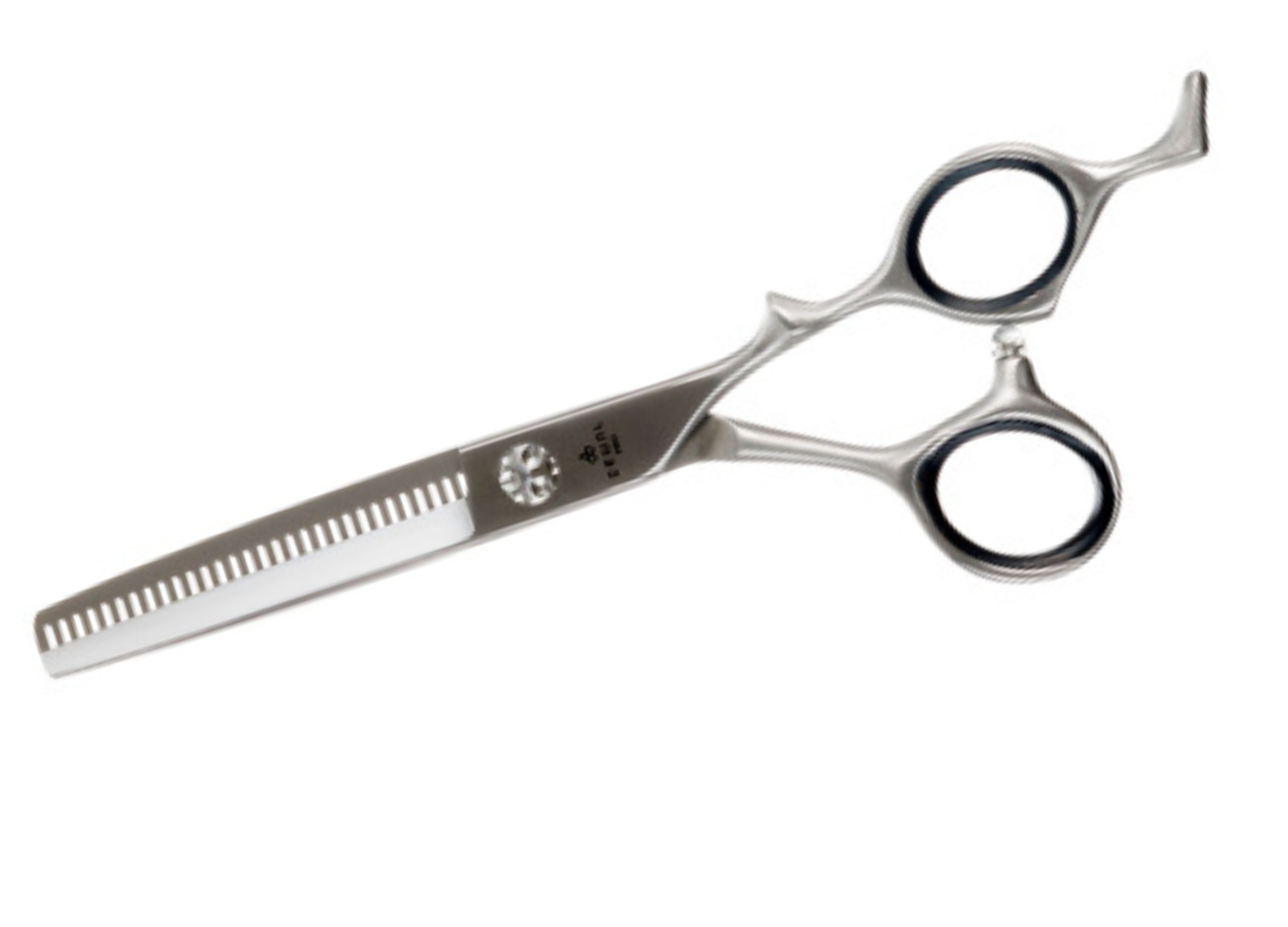
✂ 30–40 Teeth — Universal Range
The most common option for everyday salon work.
👉 Result:
• natural-looking thinning
• smooth transitions
• good control
✔ suitable for most hair types
✔ versatile all-purpose tool
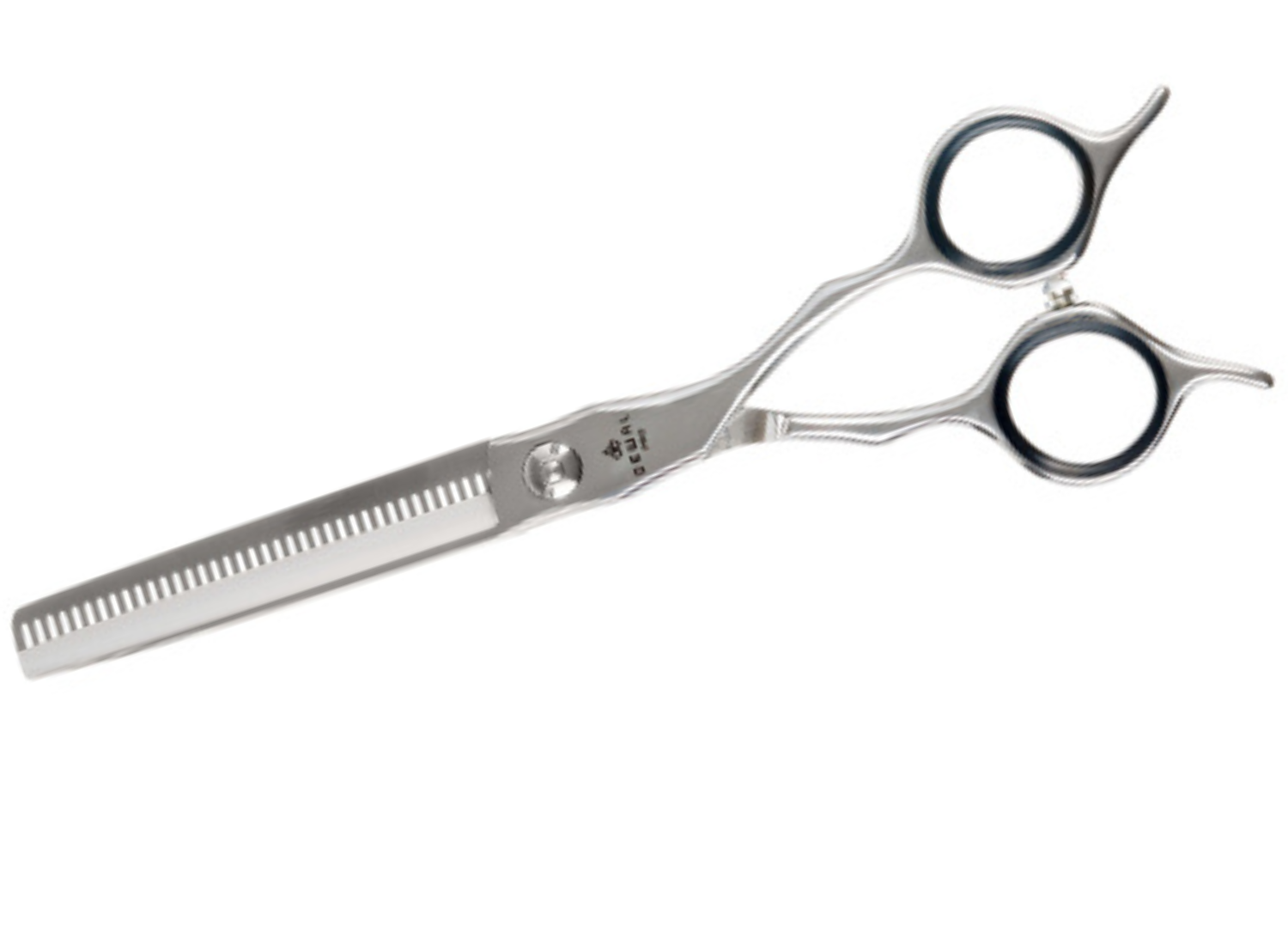
✂ 40–42+ Teeth — Soft Thinning
A higher tooth count provides more delicate performance.
👉 Result:
• soft bulk removal
• smooth blending
• natural appearance
✔ suitable for fine hair
✔ ideal for finishing work
✂ 5–25 Teeth — Texturizing Scissors
This is a separate type of tool.
👉 Result:
• strong texture
• “chunky” effect
• noticeable shape changes
✔ suitable for creative haircuts
✔ suitable for thick hair
What Determines the Hair Removal Percentage
The thinning percentage is determined not by a single parameter, but by the overall geometry of the scissors.
It depends
on:
• number of teeth
• tooth width and spacing
• tooth shape
• micro-serrations
How It Works
Number of
teeth
• affects the softness and evenness of thinning
Tooth width
• determines how much hair is captured in one pass
Micro-serrations
• hold the hair in place
• reduce slipping
• improve cutting precision
👉 The final result comes from the combination of all these factors.
A Common Mistake Among Hairdressers
Many focus only on the thinning percentage.
However:
the thinning percentage is only the final indicator
the actual behavior of the scissors is defined by their construction and geometry
👉 If you focus only on the percentage, the result can become unpredictable.
How to Choose the Number of Teeth
Your choice should depend on the task:
• fine hair
→ more teeth (softer work)
• universal work → 30–40 teeth
• thick hair → fewer teeth (more active bulk removal)
• texture work → texturizing scissors
👉 If you are unsure, choose the universal range.
Sharpening Thinning Scissors
Thinning scissors are especially sensitive to sharpening quality.
Improper
sharpening may:
• damage tooth geometry
• reduce hair grip
• cause hair folding or “chewing”
👉 The more complex the construction of thinning scissors, the more important sharpening precision becomes.
✂ Professional Sharpening of Thinning Scissors
We provide:
• thinning scissors sharpening
• geometry adjustment
• hair testing
👉 After sharpening, the scissors work accurately and predictably again.
📦 Shipping via Parcel Lockers
👉 We work throughout Latvia, Lithuania, and
Estonia.
We accept tools via parcel lockers.
You send the scissors — and receive back a tool that works properly again.
📌
Instructions: How to send tools for sharpening via parcel lockers
Conclusion
The number of teeth is one of the key parameters of thinning scissors:
• affects
the softness and intensity of thinning
• defines the character of the cut
• helps choose the right tool for the task
However, it is important to remember:
👉 the final result always depends on the entire construction of the scissors, not on just one parameter.