
A tool rarely stops working properly all at once.
More often, its condition gets worse gradually: scissors start gripping the section less cleanly, require more pressure, begin to pull the hair, or no longer cut through it with the first movement.
The stylist adapts: slightly changes the cutting angle, squeezes the finger rings harder, repeats the cut. The result is still possible to achieve — so it feels like the scissors “can still work a little longer”.
But at that point, part of the work is no longer being done by the tool — it is being done by the stylist’s hand.
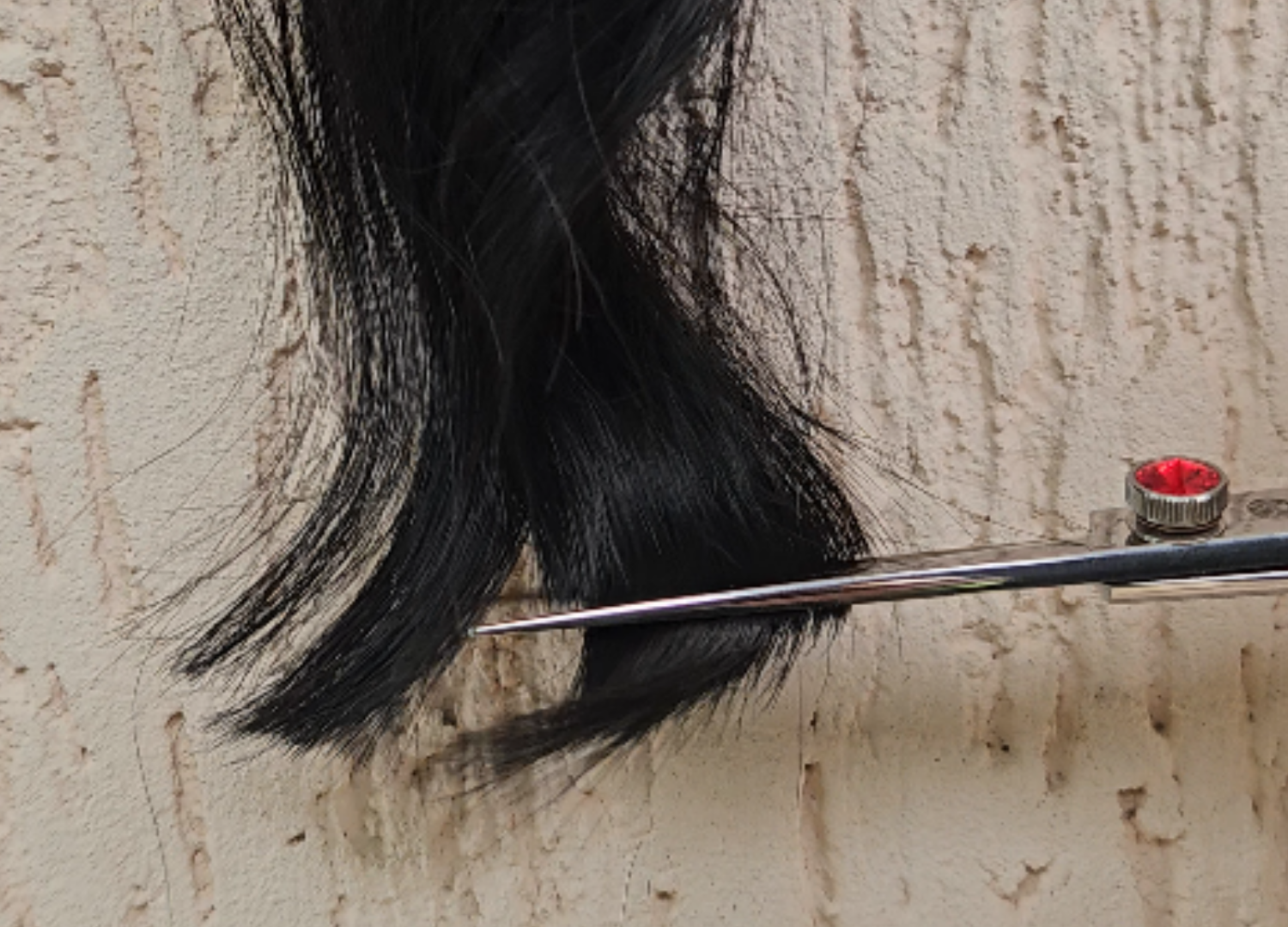
When scissors lose their sharpness, the hair may no longer be cut cleanly — it can bend, slip, or be pulled
When the Hand Starts Helping the Tool
A professional hand can compensate for small imperfections in the scissors. An experienced stylist may not even notice right away that they have started working differently: applying more pressure, searching more carefully for the right cutting angle, or returning to the same section more often.
It is worth paying attention if you:
• squeeze
the scissors harder while cutting;
• go over the same section more than once;
• change the cutting angle more often to “catch” the hair;
• notice that the scissors pull or chew the hair;
• feel tired more quickly in your fingers, wrist, or hand.
An uneven cut is one of the first signs that the tool needs to be checked.
The tool is still doing its job, but it is already slowing down the work and making the stylist adjust to it.
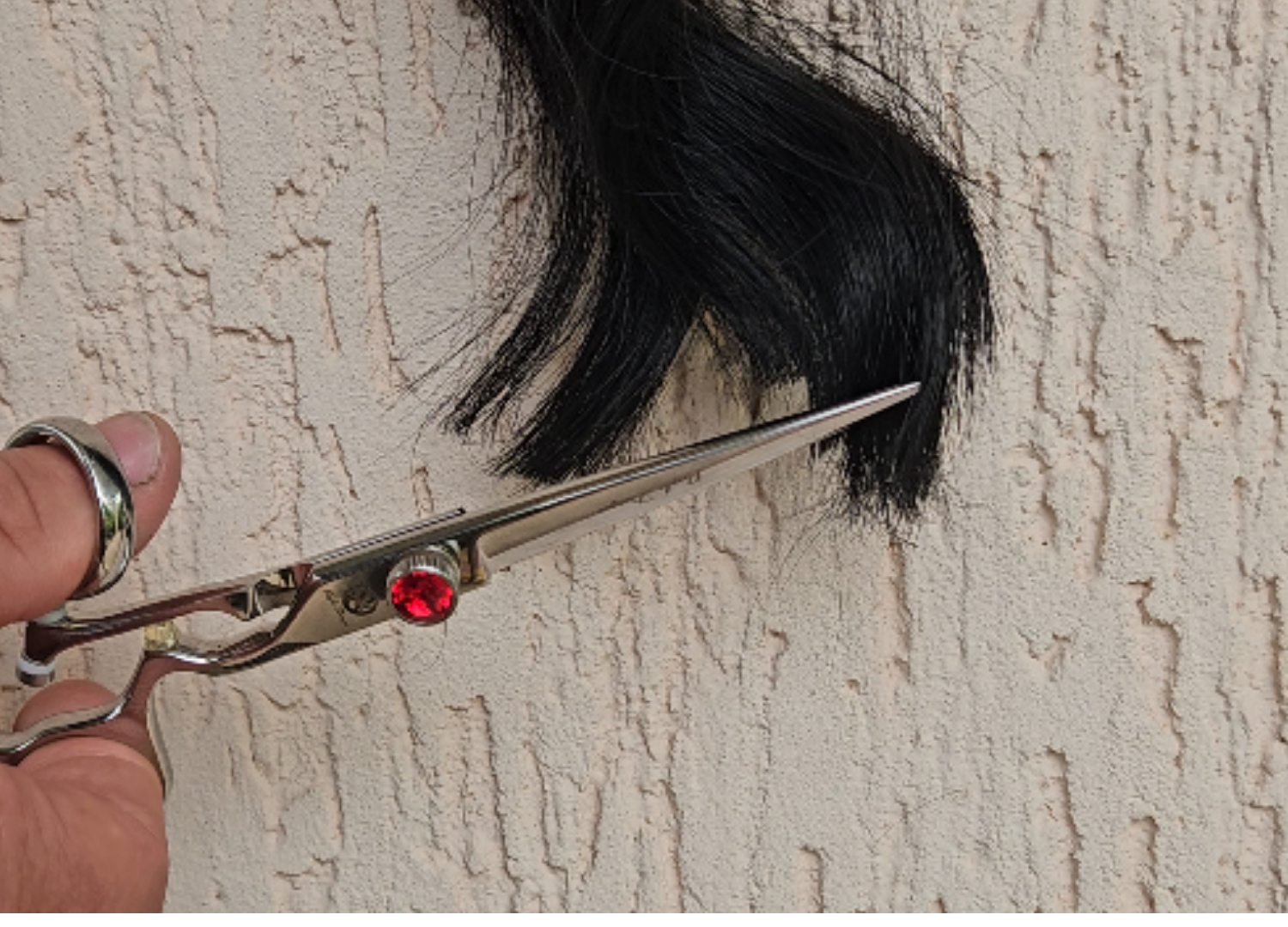
When a familiar cut requires more effort, the hand begins to compensate for the tool
Why Do We Put Off Sharpening?
The reason is not always carelessness.
Main working scissors are needed every day, and there may not be an equivalent spare pair. A stylist may be afraid of being left without a familiar tool for a while, or may worry that after sharpening the scissors will feel different: the movement, geometry, balance, or familiar feeling in the hand may change.
It is especially difficult to decide after a bad experience. If a tool has already been damaged once, trusting it to someone again is not easy.
We talk more about these concerns in the article “Can You Trust Your Working Tool to an Unknown Sharpening Specialist?”.
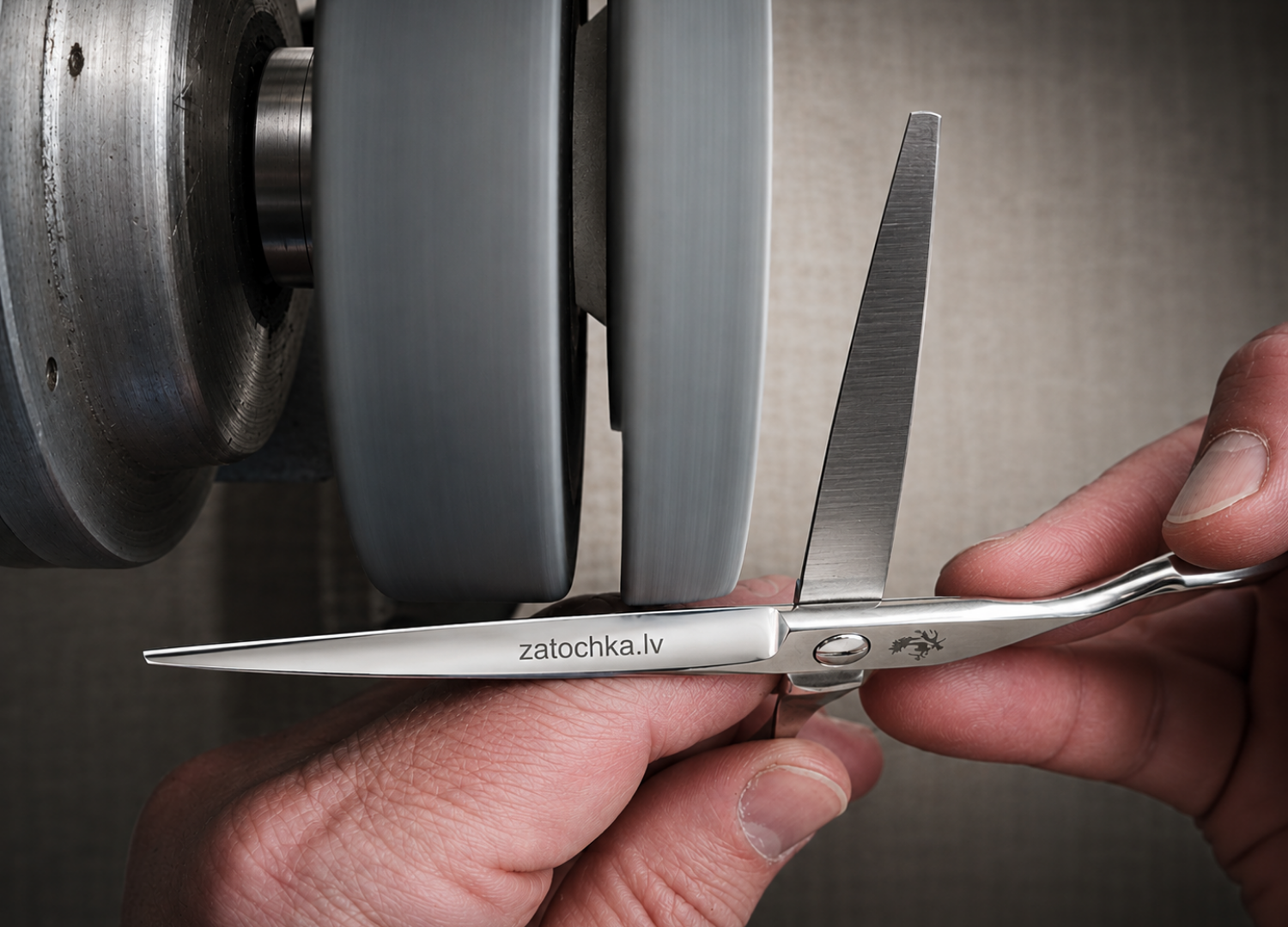
Professional sharpening helps restore the tool’s working properties while preserving its geometry
Do Not Wait Until the Scissors Stop Cutting
It is important to pay attention not only to the result, but also to how much effort that result requires.
If you regularly have to squeeze the scissors harder, change the cutting angle, or repeat the movement, start with the basics: clean the tool, remove hair and dirt residue, and check the movement and adjustment.
If the problem remains after that, it is worth showing the tool to a specialist.
The cause may be dullness, dirt around the screw area, incorrect blade tension, a small cutting-edge defect, or impaired scissor movement. Professional diagnostics help determine what exactly is interfering with the work and what the tool needs: cleaning, adjustment, sharpening, or restoration.
Timely maintenance helps preserve the working properties of the scissors and prevents the hand from getting used to unnecessary strain.
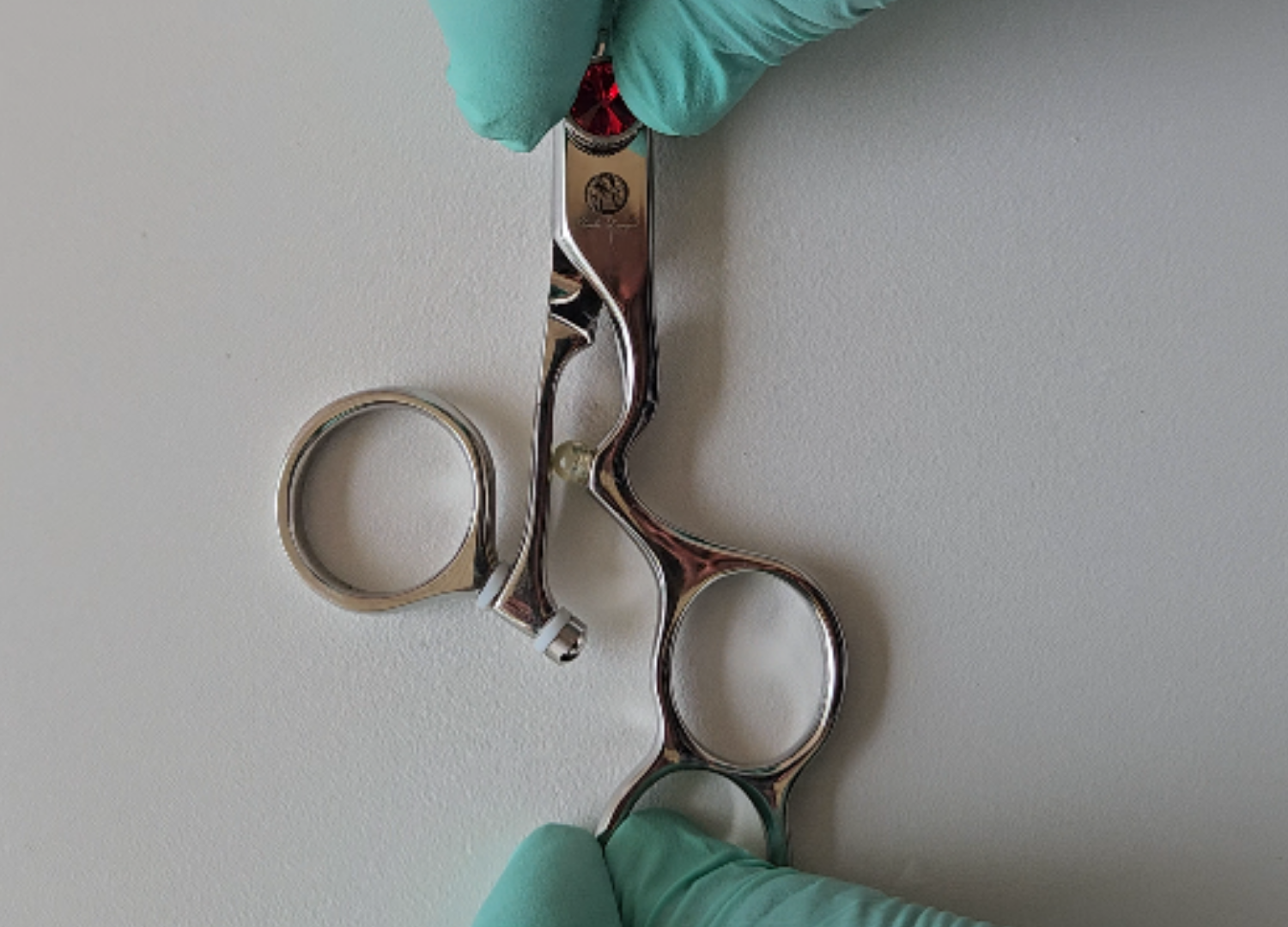
The problem is not always sharpening alone: the tool may need cleaning, movement check, or adjustment
Check the Tool Before the Problem Becomes Critical
ZATOCHKA.LV provides diagnostics and professional sharpening of hairdressing scissors and manicure tools.
We accept tools from Latvia, Lithuania, and Estonia — they can be sent via any parcel locker.
→ How to Send a Tool for Sharpening
The tool should help the hand — not the hand help the tool.
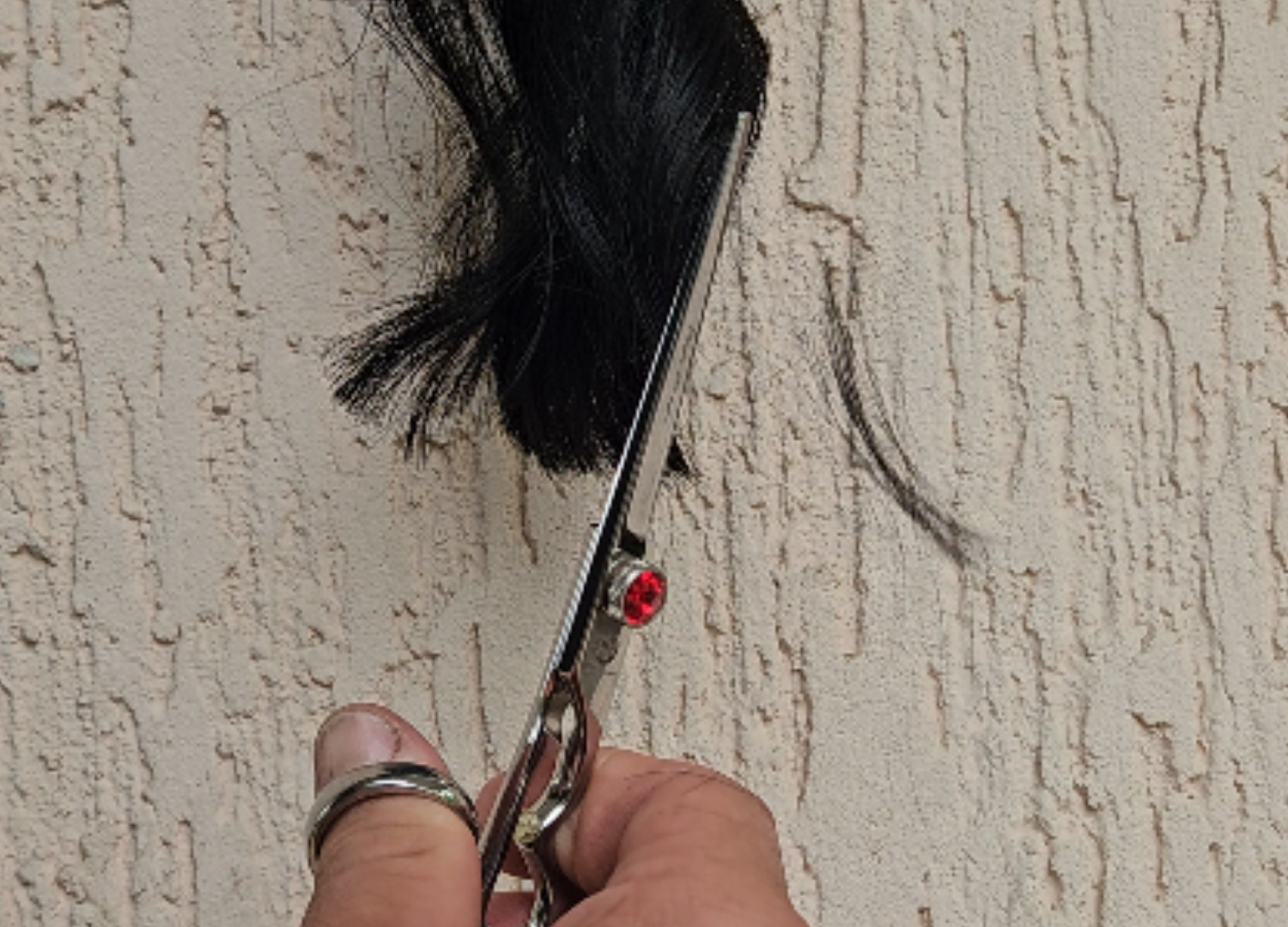
A properly working tool gives a clean cut without unnecessary effort or repeated movements