
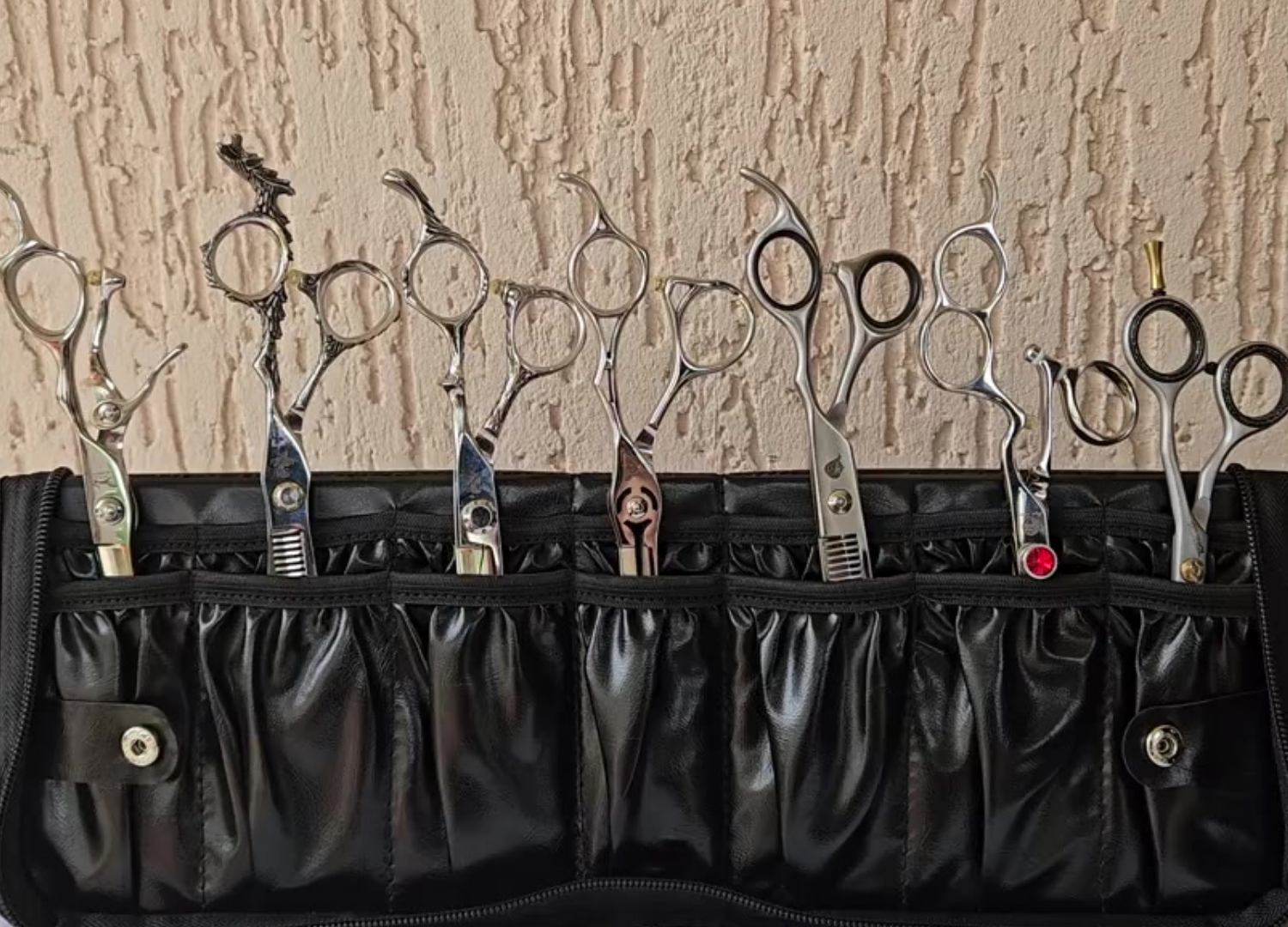
Before going on holiday or taking an extended break from work, it is important to take care not only of your client appointments but also of your professional scissors.
A break from work is a good opportunity to assess the condition of your scissors without rushing. If you already need to apply more pressure when cutting, the scissors catch or pull the hair, their movement has become uneven, or the cut is no longer clean, you can use this time for → inspection, adjustment, maintenance or sharpening — before returning to a busy work schedule.
Even if the scissors are working well, they should be properly prepared for longer-term storage. Tiny hair particles, dust, moisture, cosmetic products and traces of disinfectant accumulate on the tool during daily use. If the scissors are left without care for several weeks, dirt and residual moisture may affect the smoothness of their movement, the condition of the cutting edges and the metal surfaces.
Why you should not simply leave your scissors as they are
When scissors are used every day, a stylist will usually notice quickly if their movement becomes heavier or the quality of the cut changes.
During a longer break, however, the tool remains unused. Dirt may dry around the screw and between the blades, while moisture left after cleaning or disinfection may contribute to corrosion.
Even stainless steel requires proper care. It is especially important to clean and dry the screw area and the inner surfaces of the blades thoroughly.
What to do before your holiday or an extended break
1. Clean the scissors
First, carefully remove any hair, dust and other debris with a soft cloth. Pay particular attention to the screw area and the inner surfaces of the blades.
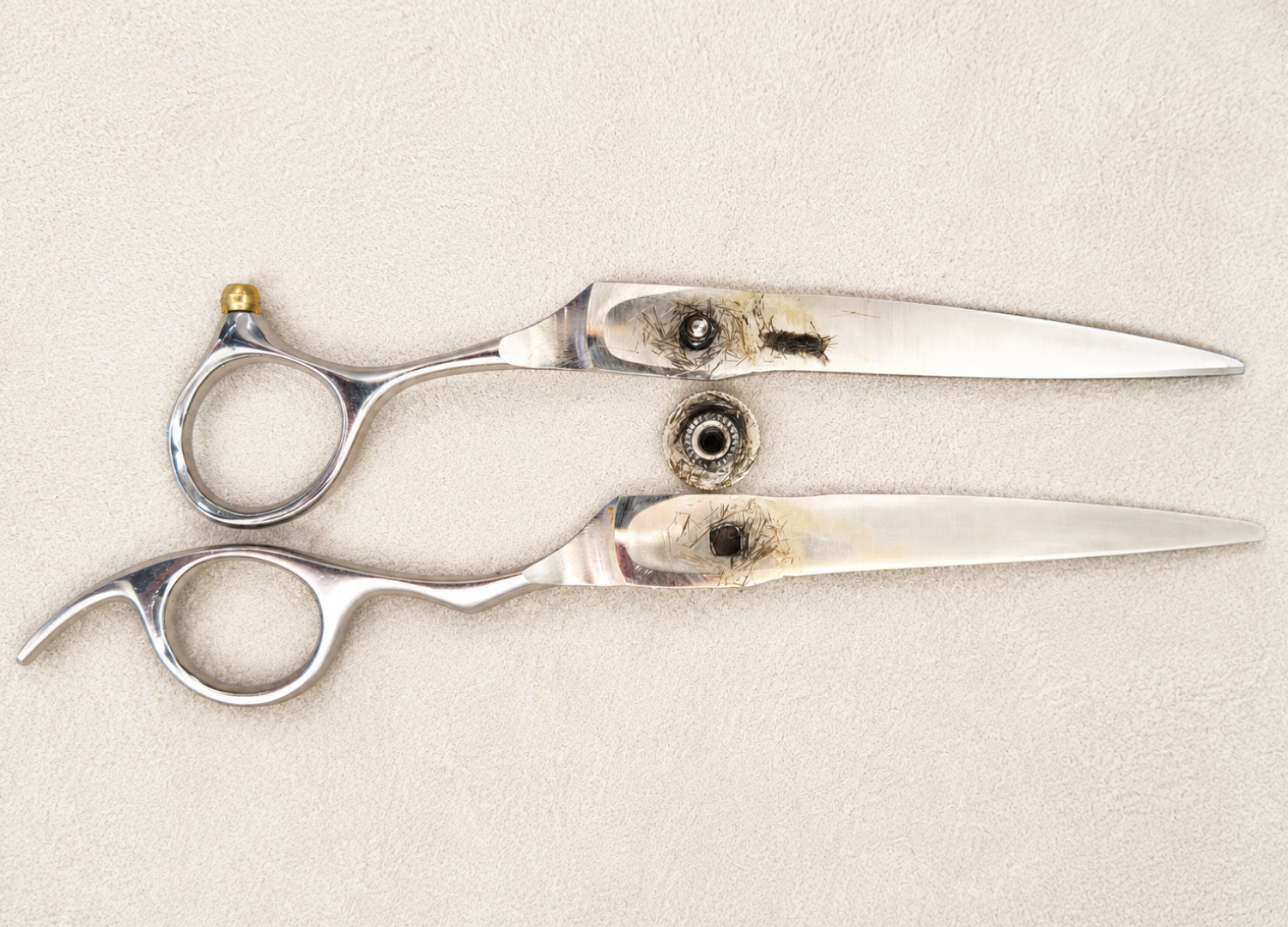
Then wipe the metal surfaces with an alcohol wipe. Do not soak the scissors in alcohol or any other disinfectant solution.
Choose wipes without oils, conditioning ingredients or a strong moisturising effect, as these substances may leave a residue on the metal surface.
Do not use stiff brushes, abrasive materials or aggressive chlorine-based products, as they may damage the coating and the metal surface.
2. Dry them completely
After cleaning, carefully remove any remaining moisture with a clean paper towel or a soft, dry cloth.
Do not place the scissors in their case until they are completely dry. Moisture evaporates more slowly inside a closed case and may remain around the screw or between the blades.
3. Lubricate the moving parts
Apply a small amount of specialist oil to the designated lubrication points.
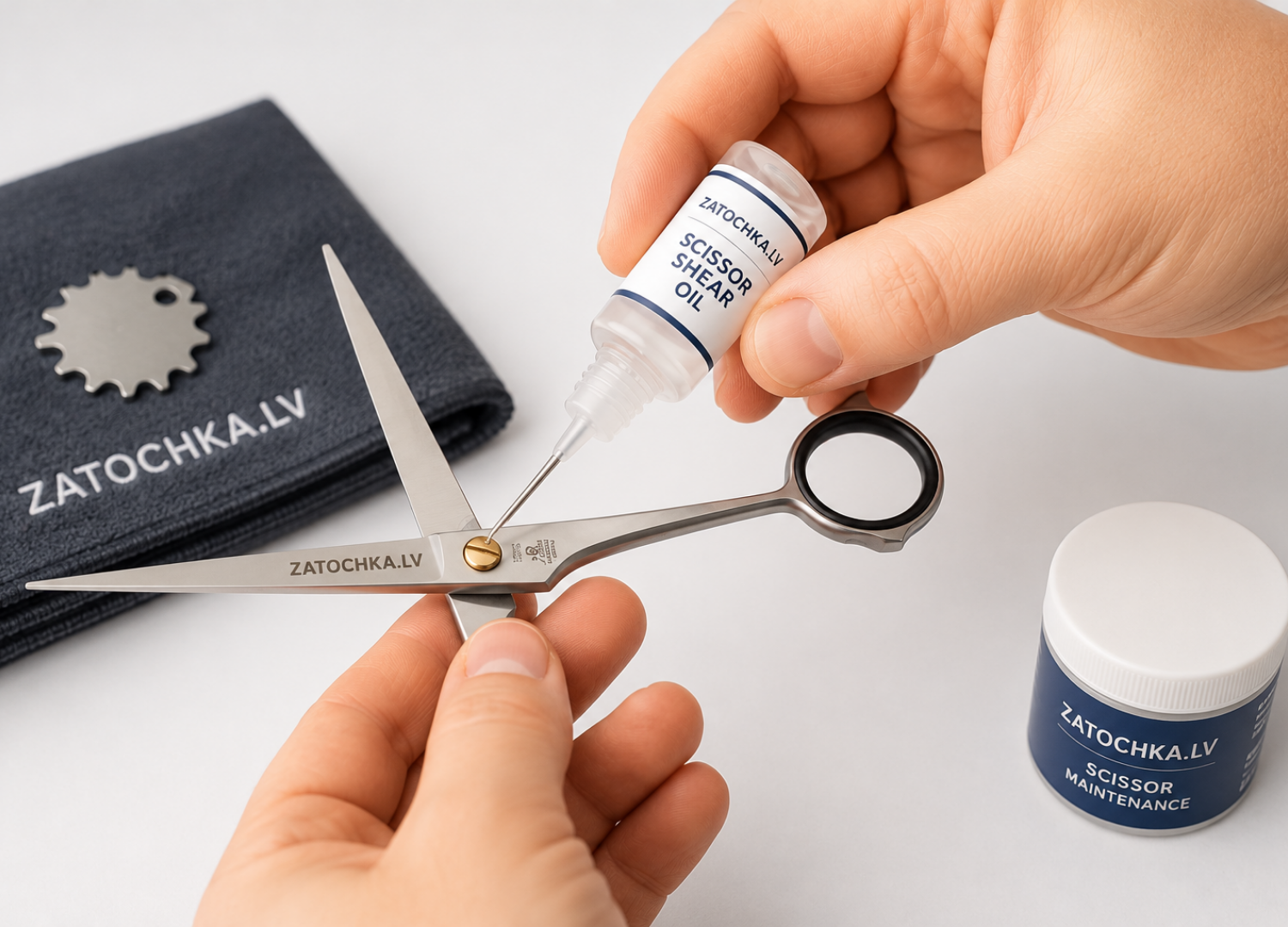
After applying the oil, slowly open and close the scissors several times so that it spreads evenly across the contact surfaces. Carefully remove any excess with a soft cloth.
Use only oil intended for professional scissors. Cooking oils and cosmetic oils are not suitable for this purpose.
4. Check the movement of the scissors
Slowly open and close the scissors several times.
The movement should be smooth and even, without jerking, squeaking or any feeling that the blades are catching against each other.
If the scissors close too tightly, too loosely or unevenly, do not try to compensate by applying more hand pressure. The condition and adjustment of the tool should be checked first.
5. Place the scissors in their case
Scissors should be stored closed, in an individual case or in a separate protected compartment.
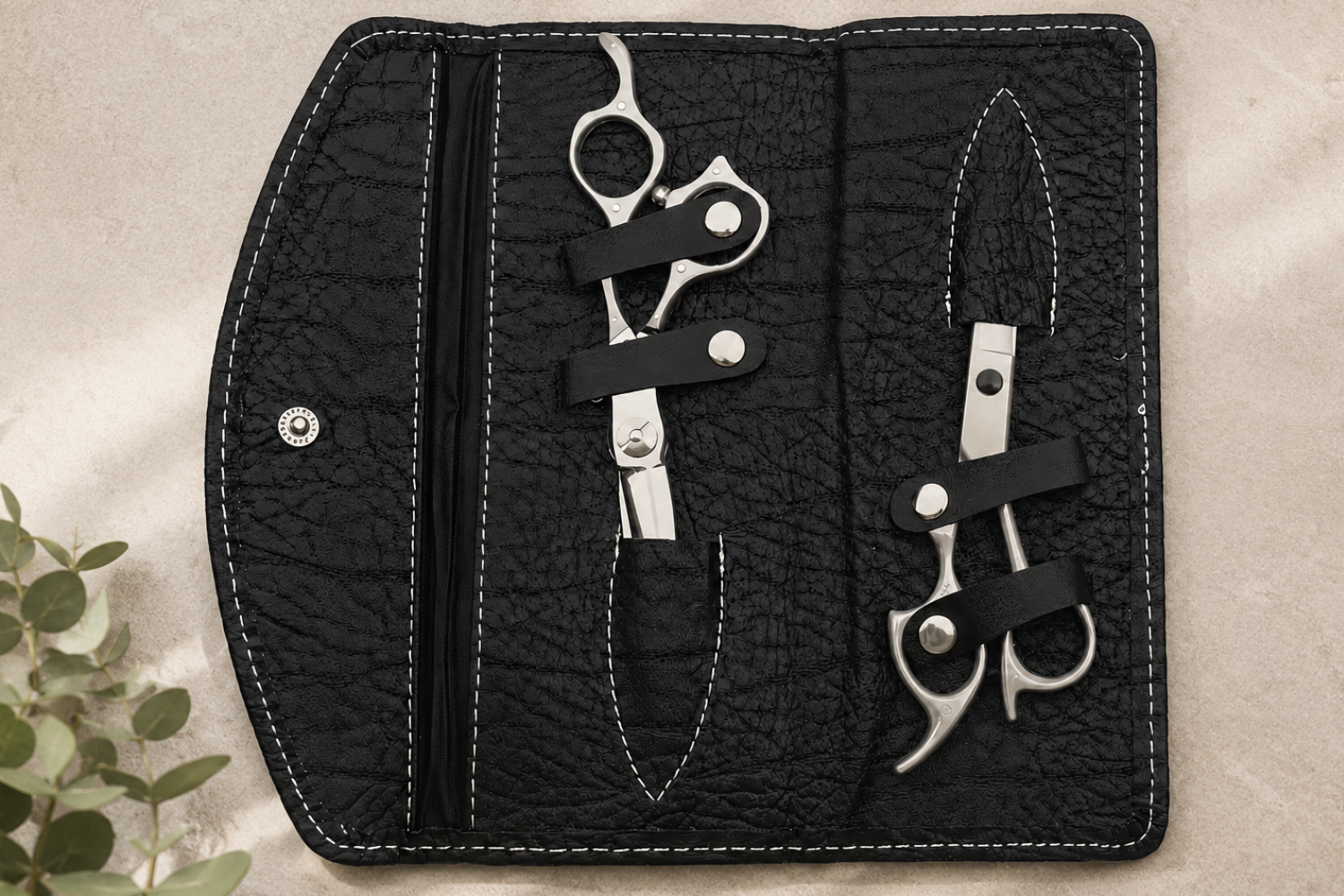
Do not place several tools together unless they are securely fixed in place. Metal surfaces may scratch when they come into contact, and the fine tips of the scissors may become damaged.
The case should also be clean and dry. If there is any hair, dust or moisture inside, clean the case before placing the scissors in it.
Where to store your scissors
Choose a dry location without sudden changes in temperature or humidity.
Do not leave scissors:
• near a sink;
• next to damp towels;
• in a bathroom;
• on a windowsill;
• near heaters or radiators;
• in an open bag together with other items.
Professional scissors are best stored separately in a clean, dry case where they cannot come into contact with other metal objects.
Correct storage is only one part of regular tool care.
→ Learn more about cleaning, lubricating and maintaining your scissors
What to check after the break
After your holiday or an extended break, inspect the scissors before you start working again.
Check:
• whether they open and
close smoothly;
• whether any squeaking or jerking has appeared;
• whether the blades catch against each other;
• whether you need to apply more pressure when closing them;
• whether the scissors feel different in your hand;
• whether there are any signs of corrosion or mechanical damage.
If the scissors have started to work differently, do not get used to applying more and more pressure. To learn how the hand gradually begins to compensate for declining tool performance, read the article →”Why Do We Put Off Sharpening Even When the Tool Is Already Making Our Work More Difficult?”
Sometimes cleaning and adjustment are enough, but in other cases → professional inspection or sharpening may be required.
When to have your scissors checked by a specialist
You should have your scissors checked by a specialist if they:
• do not
cut cleanly on the first stroke;
• pull, bend or push the hair forward;
• require more hand pressure;
• close with a jerking movement;
• catch at a particular point;
• show visible signs of damage;
• were dropped before your holiday or during storage.
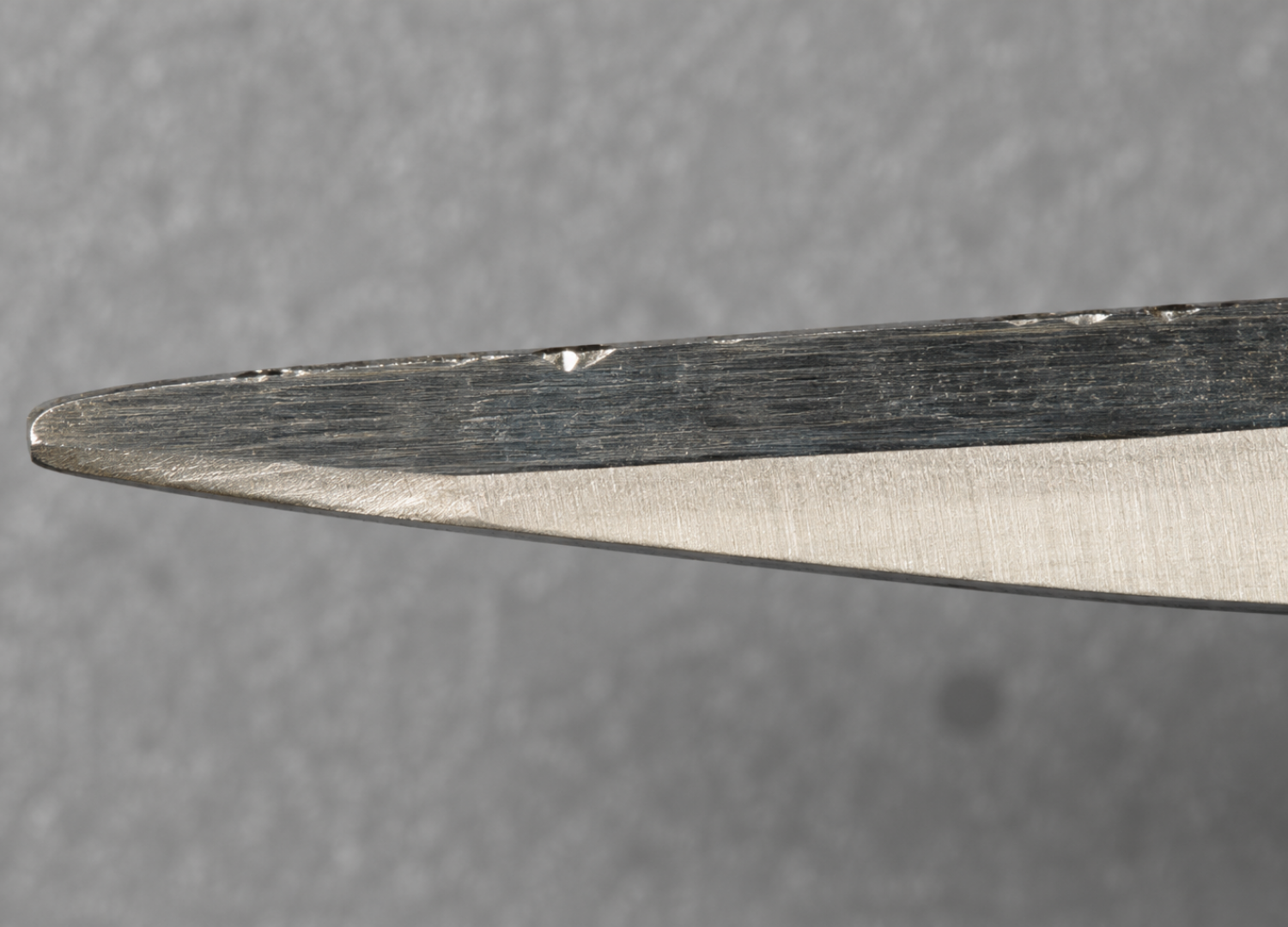
Even if the scissors have started cutting poorly or “chewing” the hair, this does not necessarily mean that they are permanently damaged. In some cases, their performance can be restored after inspection and professional servicing.
If the scissors have been dropped, it is advisable to check the tips, cutting edges and blade geometry even when there is no visible external damage. Read more in the article → “Dropped Scissors: What Should You Do, and Can They Be Restored?”
Poor performance may be caused by dull cutting edges, dirt, incorrect blade tension or damage to the cutting edge. A professional inspection helps determine exactly what is affecting the tool and what type of servicing is required.
A break from work is a good time for preventive maintenance
If the scissors were already difficult to use before your holiday, caught the hair or required a second cutting stroke, the problem will not disappear on its own during the break.
Use this time to inspect your scissors and, if necessary, send them for professional assessment, servicing or sharpening. This way, they will be fully ready for use when you return to work.
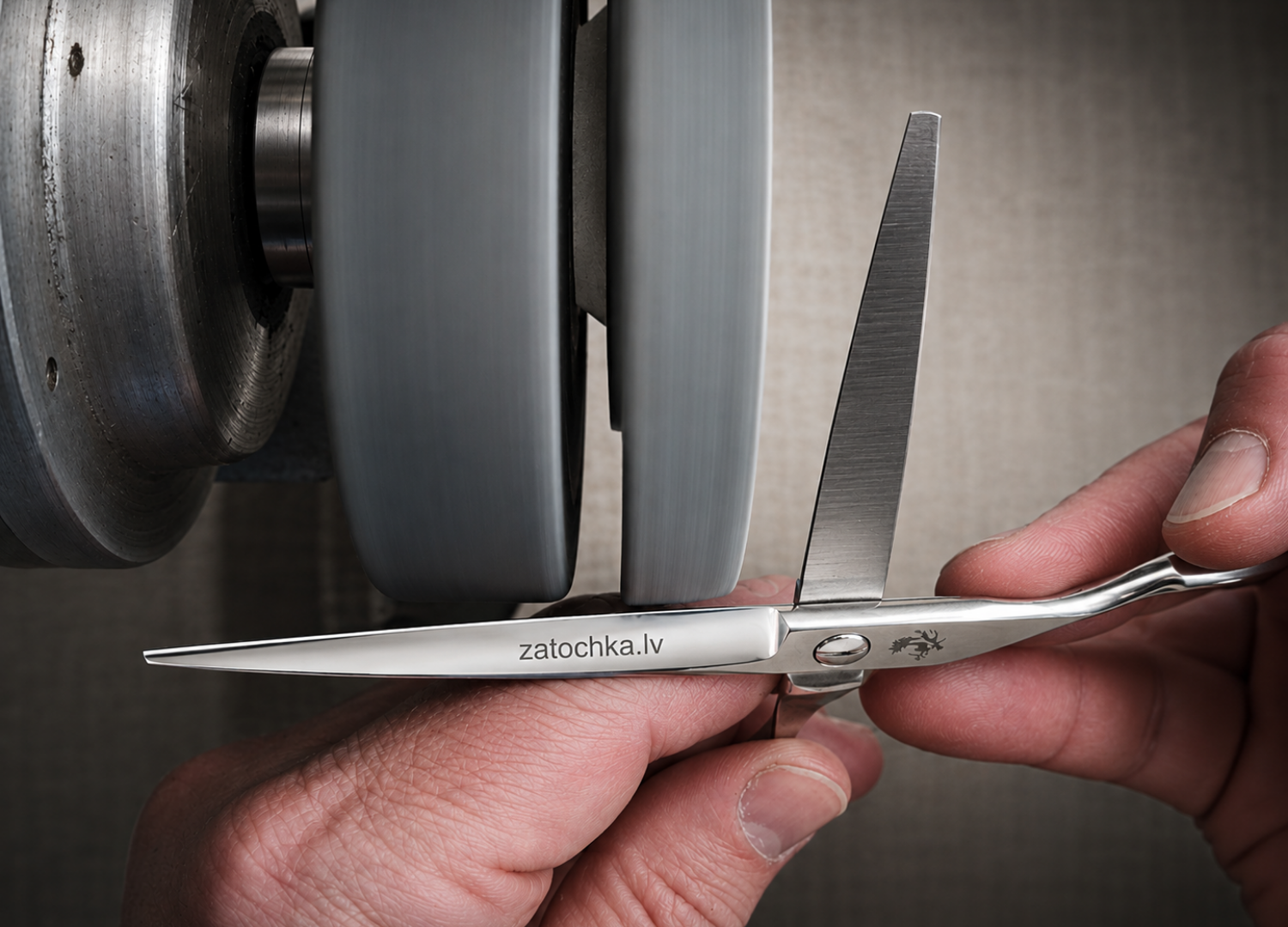
ZATOCHKA.LV provides professional inspection and sharpening services for hairdressing scissors and manicure tools.
Your tools need the right kind of rest too.