
Today, hairdressing scissors seem like a familiar and well-understood tool. However, their history spans more than three thousand years and includes many engineering solutions that gradually made a stylist’s work more precise, comfortable and efficient.
Over the centuries, materials, manufacturing methods, handle designs and steel technologies have changed dramatically. Manufacturers have continuously searched for ways to make scissors more accurate, more comfortable and more durable.
What is particularly interesting is that some solutions disappeared over time, while others proved so successful that they are still used today.
Let’s take a look at how hairdressing scissors evolved and why modern models look the way they do.
Why the First Scissors Remained Almost Unchanged for More Than a Thousand Years
The earliest scissors appeared more than three thousand years ago. They looked very different from modern scissors and consisted of two blades connected by a flexible strip of metal.
These are commonly known as spring scissors.
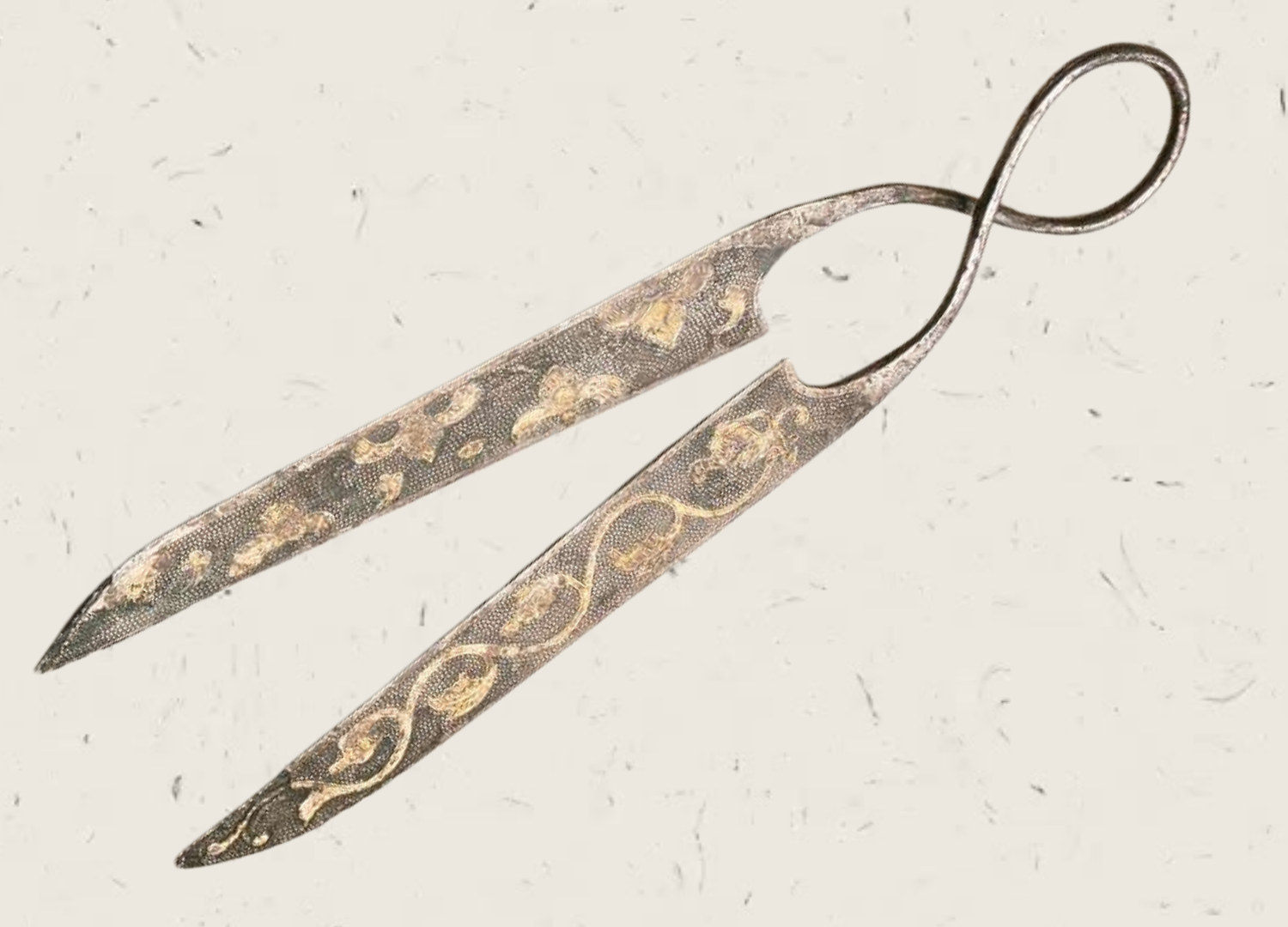
Spring scissors
At first glance, the design appears simple. However, it was so effective for its time that it remained largely unchanged for many centuries.
The reason was straightforward.
Spring scissors were relatively easy to manufacture. They required no complex pivot mechanism, were reliable and performed their task well.
For their time, they were a practical and efficient cutting tool.
The Pivot That Changed Everything
Over time, craftsmen began to encounter the limitations of the spring design.
The tool lacked precision, and blade length was restricted by the construction itself.
The real breakthrough came with the introduction of the pivot joint — the screw or rivet connecting two separate blades.
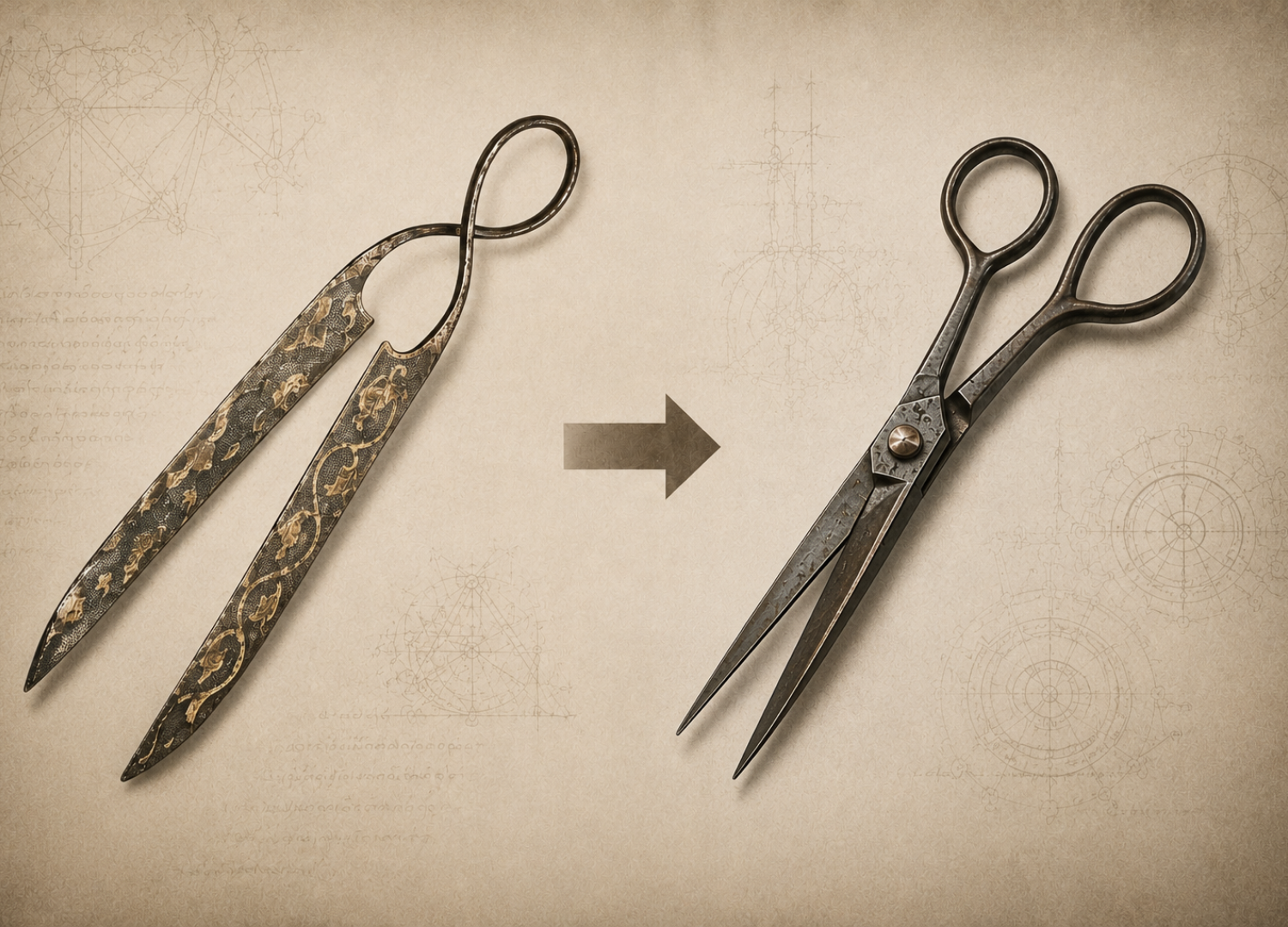
From spring to pivot
At first glance, this may seem like a small change. In reality, it shaped the future development of scissors.
The pivot design made it possible to:
• increase blade length;
• improve cutting control;
• create a smoother cutting action;
• introduce tension adjustment.
That is why the basic principle of modern scissors has remained almost unchanged ever since.
When Scissors Became a Professional Tool
For a long time, scissors were considered a universal tool.
They were used by barbers, tailors, craftsmen and ordinary households alike.
During the nineteenth century, however, things began to change.
Higher-quality steels, adjustable tension screws and more refined manufacturing techniques appeared.
Gradually, scissors became increasingly specialized.
The first scissors designed specifically for cutting hair began to emerge.
This period laid the foundation for the professional hairdressing scissors we know today.
The Twentieth Century: Three Major Revolutions
If the nineteenth century transformed scissors into a professional tool, the twentieth century turned them into highly specialized instruments designed for specific techniques and tasks.
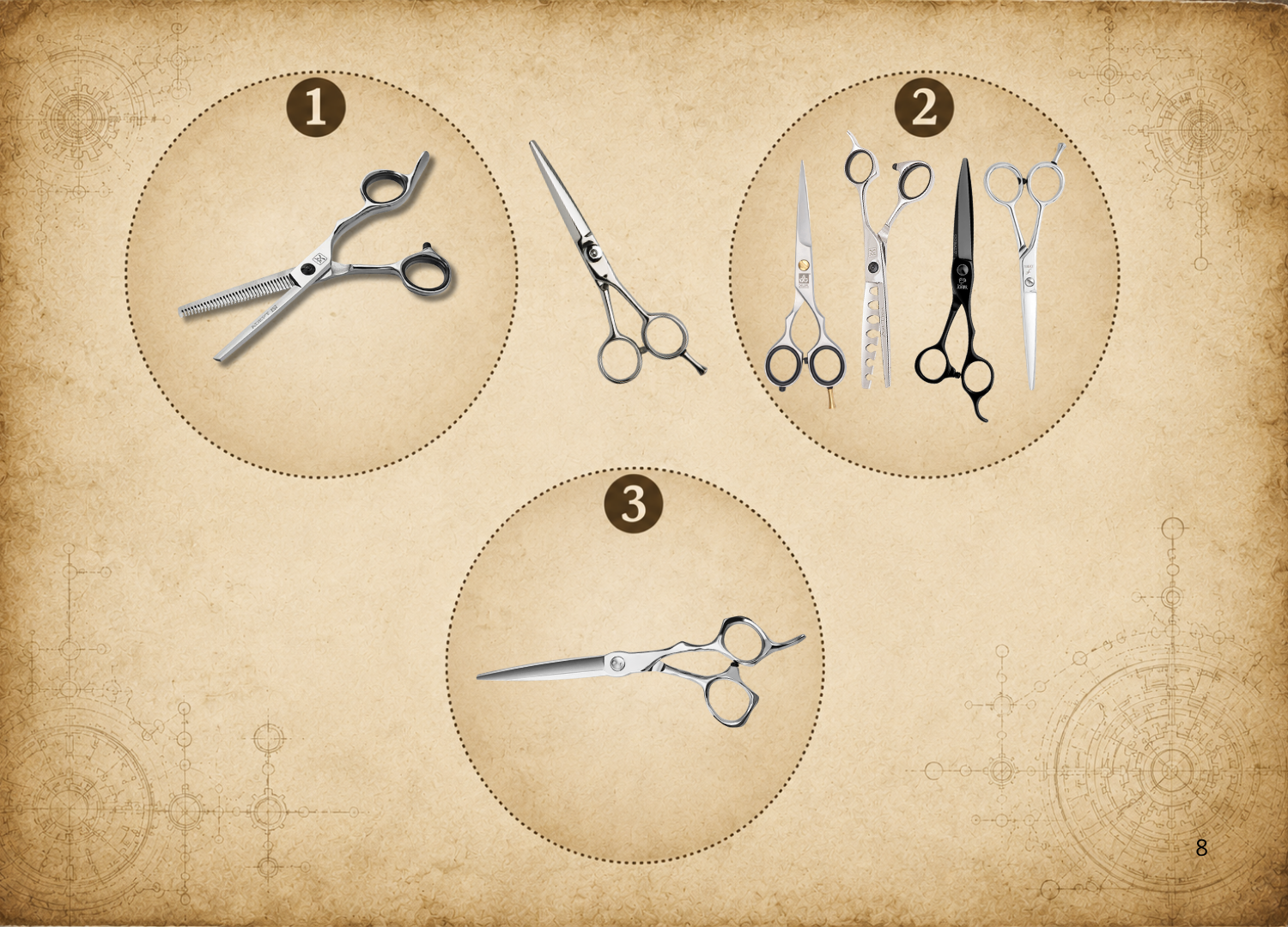
1 — Thinning • 2 — Tool specialization • 3 — Ergonomics
Revolution #1: Thinning Scissors
Although early thinning models existed before, the 1940s marked the beginning of their wider adoption.
Thinning became a distinct cutting technique, and thinning scissors evolved into a separate category of professional tool.
Over time, different tooth designs and varying thinning ratios were developed.
Eventually, thinning scissors became as common in the salon as traditional straight scissors.
→ Read more in our article: How to Choose Thinning Scissors: A Complete Guide for Professionals
Revolution #2: Specialization
Previously, a single pair of scissors was expected to perform nearly every task.
Later, specialized tools appeared for:
• precision cutting;
• thinning;
• texturizing;
• slide cutting;
• left-handed stylists.
Each tool was designed for a specific purpose.
Revolution #3: Ergonomics
Manufacturers began focusing not only on cutting performance but also on the long-term comfort of the stylist.
Why Offset, Crane and Swivel Handles Were Developed
Many stylists assume unusual handle designs are primarily a marketing feature.
In reality, the reason was much more practical.
Hairdressers perform thousands of cutting movements every day. Over time, this can place considerable stress on the hand, wrist, elbow and shoulder.
Manufacturers therefore started searching for ways to reduce strain without sacrificing control.
This led to the development of increasingly ergonomic handle designs.
First came Offset handles, followed by Crane designs and later Swivel systems.
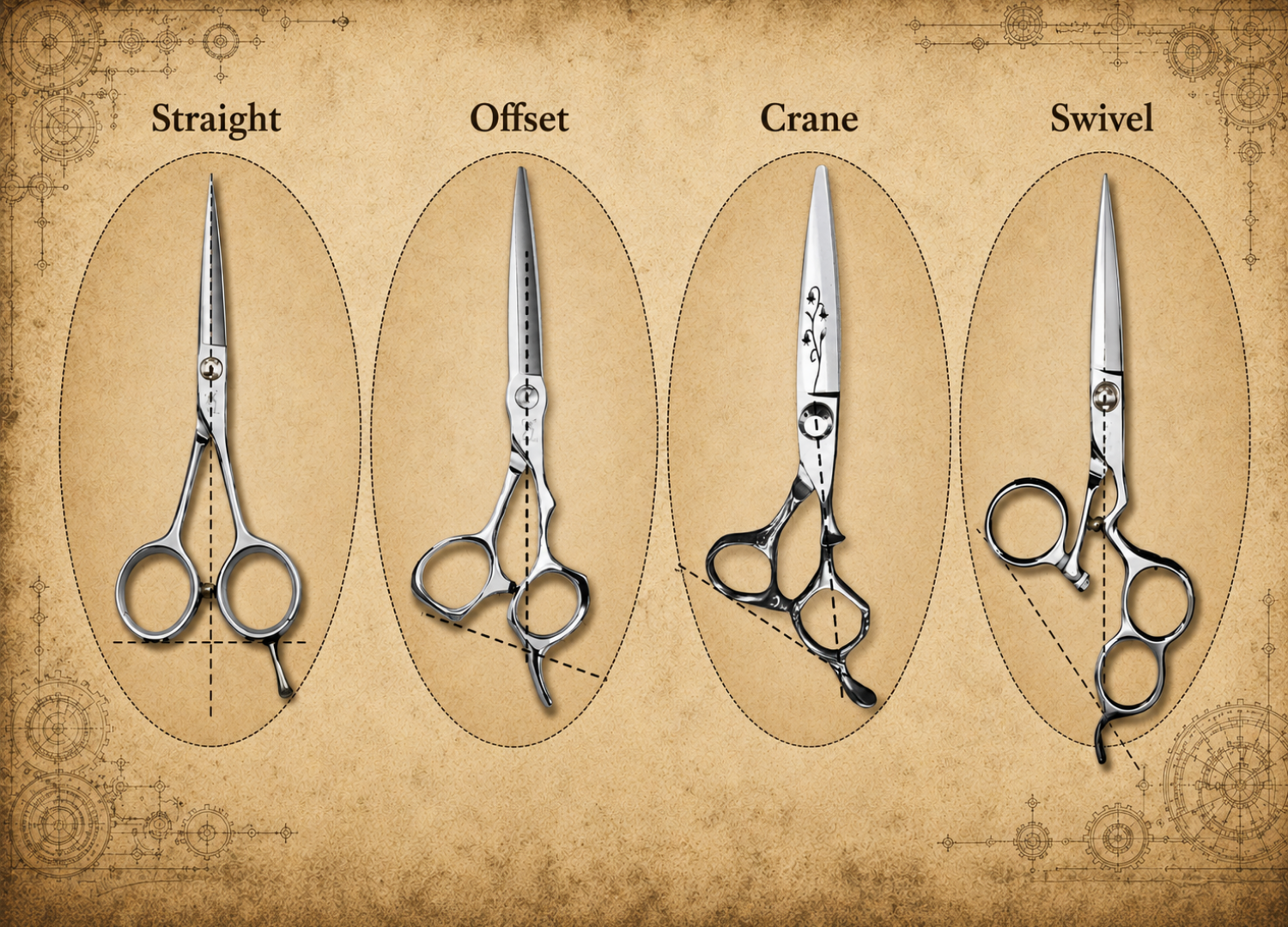
Evolution of handle shape: from a classic design to more ergonomic solutions.
Each of these innovations aimed to solve the same problem: improving comfort while maintaining precision.
→ Learn more in our article: How to Choose the Right Hairdressing Scissor Handle Design
The 21st Century: Precision Measured in Millimetres
If the nineteenth century focused on durability and the twentieth century focused on comfort, the twenty-first century is focused on precision.
Modern scissors are produced using advanced alloys and sophisticated manufacturing processes.
High-performance steels such as VG-10, ATS-314 and other premium materials are widely used to improve durability and edge retention.
Tension systems, bearing-supported assemblies and adjustment mechanisms continue to evolve.
Ergonomic development also continues.
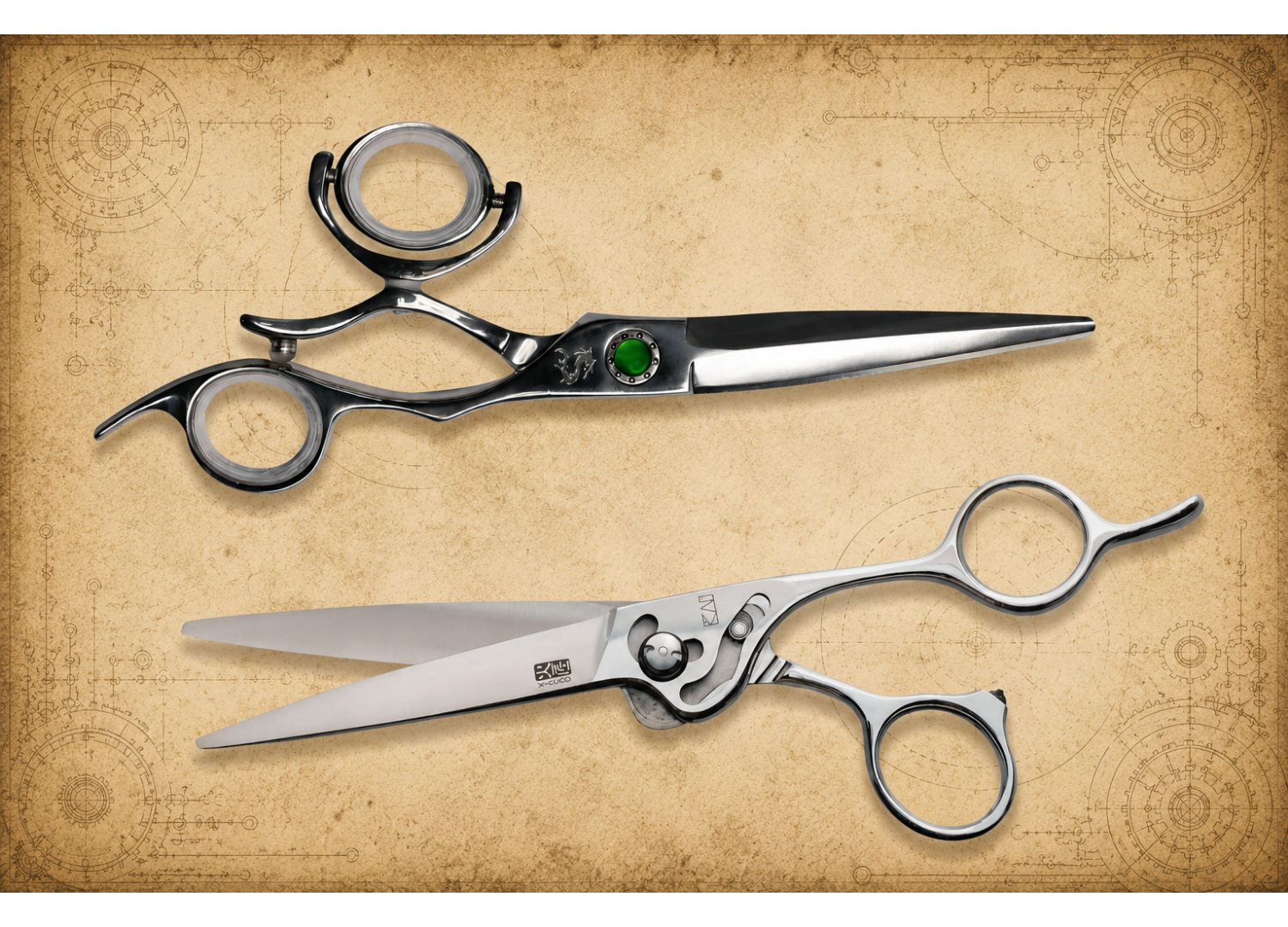
Modern professional scissors: precision, ergonomics, and advanced adjustment systems.
New Offset variations, anatomical handle designs and other innovations are designed to reduce fatigue during long working hours.
Modern scissors are becoming increasingly specialized and increasingly tailored to specific cutting techniques.
Что в ножницах почти не изменилось за 3000 летWhat Has Barely Changed in 3000 Years
Over thousands of years, materials, manufacturing methods, handle designs and ergonomics have changed dramatically.
Yet one fundamental principle remains unchanged.
Two blades must meet precisely to produce a clean and controlled cut.
Regardless of how advanced a pair of scissors may be, cutting performance still depends on blade condition, proper adjustment and high-quality sharpening.
Even the most advanced technology cannot replace the fundamental requirement of any cutting tool: precise blade contact and a clean cut.
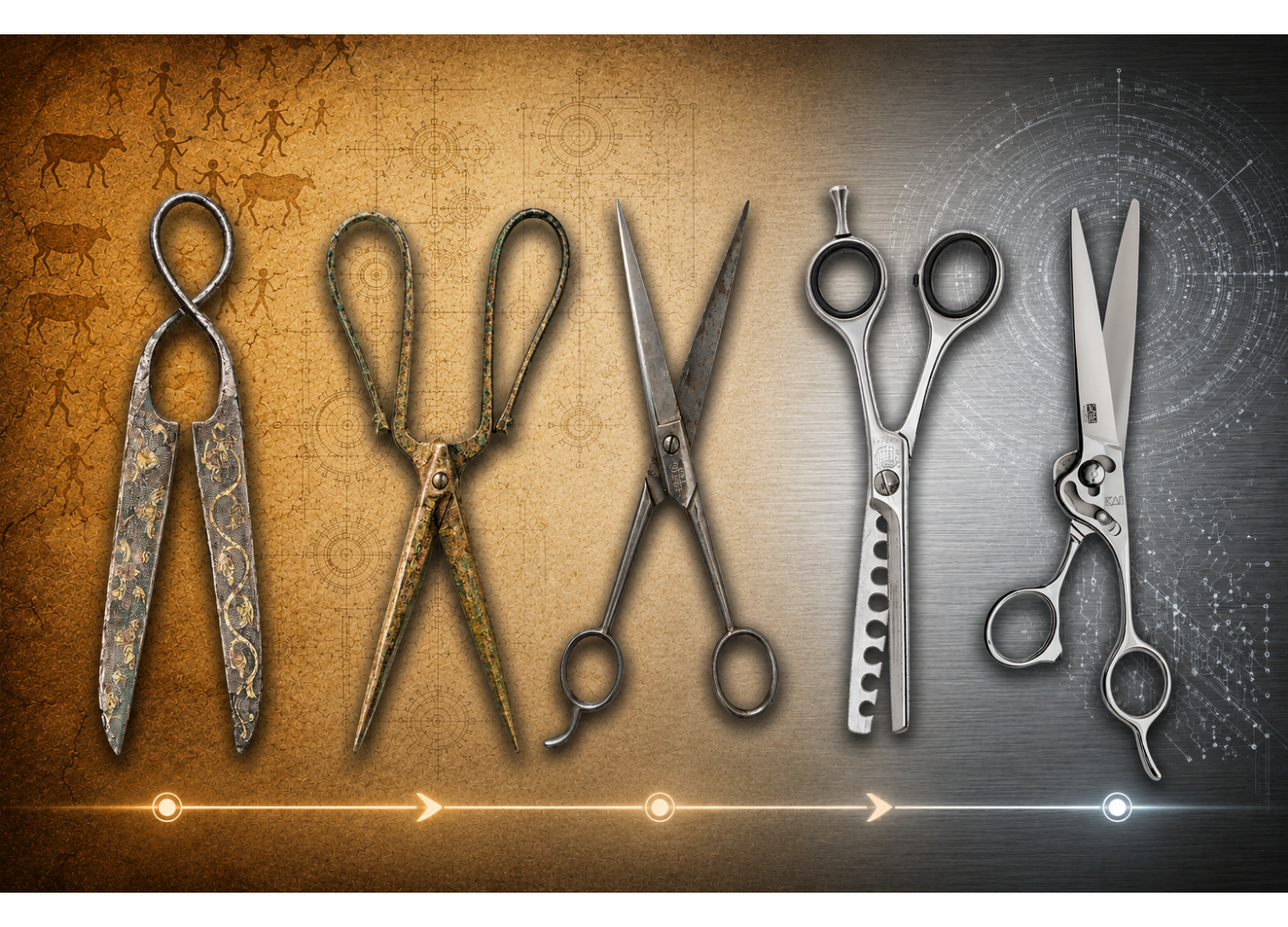
3000 years of development: materials, shapes,
and technologies changed,
but the purpose of scissors remained the same — a
clean, controlled cut.
Conclusion
The history of hairdressing scissors is a story of continuous refinement in search of the perfect balance between precision, comfort and durability.
More than three thousand years separate ancient spring scissors from today’s high-performance professional tools.
Yet the purpose of the instrument remains unchanged: helping the stylist create clean, controlled and precise cuts.
And as scissors become more advanced, proper care, accurate adjustment and professional sharpening become even more important.
From History to Practice: What Helps Your Tools Last Longer
Careful handling, proper use and regular maintenance can significantly extend the service life of a tool.
👉 After professional servicing, the tool performs smoothly, accurately and predictably once again.
→ We serve customers throughout Latvia, Lithuania and Estonia.