
Sometimes a familiar cut suddenly stops working the way it used to.
The scissors seem to behave differently: you change the angle, squeeze the finger rings harder, or repeat the cut.
And the first thought is usually:
“What am I doing wrong?”
The stylist starts correcting their technique
A professional is used to being in control of their technique.
So when the result changes, the first instinct is often to look for the problem in themselves: adjusting the hand position, the angle of the scissors, the pressure or the speed of the movement.
Sometimes the technique really is the problem.
But not always.
If a familiar movement suddenly requires constant adjustment, it is worth checking not only your technique, but the tool itself.
Are you correcting your technique — or is your hand already doing the scissors’ job?
The tool can also change the way you work
Even small changes in scissor performance can make a stylist adapt.
Hair starts slipping between the blades.
You have to repeat the cut.
The scissors require more pressure to close.
Different parts of the blades no longer cut consistently.
For a while, your hand can compensate for these changes.
→ Why a stylist may not notice this compensation right away
That is why it can be difficult to tell where a technique issue ends and a tool problem begins.
How to check
One of the simplest tests is to make the same familiar cut with another pair of scissors that you know is in good working condition.
If the cut immediately feels light, clean and predictable again, the problem may not be your technique at all.
Then it is worth checking:
- the scissor action;
- blade contact;
- tension;
- the condition of the cutting edges.
Sometimes the problem is not sharpness, but scissor adjustment. That is why it is useful to know how to check blade tension and determine whether it needs adjustment.
Sometimes maintenance and adjustment are enough. In other cases, the scissors may already need professional sharpening.
If you are unsure, look for the signs that your scissors are ready for sharpening.
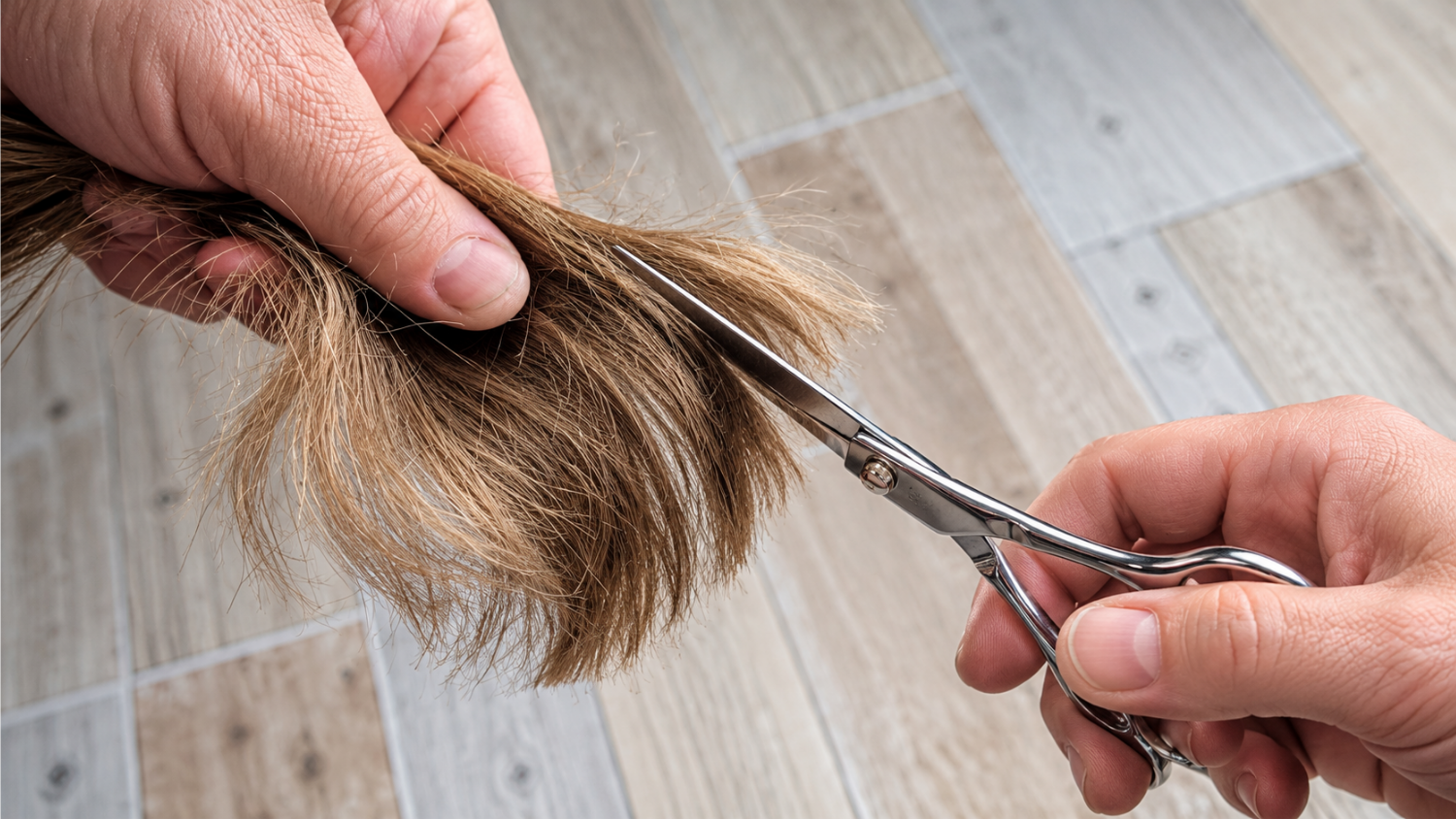
Don’t make your hand do the scissors’ job
A good tool should support your natural working movement, not force you to constantly correct it.
So if your usual technique suddenly stops giving you the usual result, do not rush to change the way you work.
Check the tool first.
The problem may not be your hand.
Or your experience.
It may simply be time to restore the precision of your scissors.
✂️→ Send your tool in for diagnostics.
We will check the condition of the cutting edges, geometry and blade contact, and determine what service the tool needs.
Less compensation. More precision.