
Before buying, servicing, or sharpening scissors, it’s important to identify the correct type.
Left-handed and right-handed scissors may look similar at first glance, but they work differently.
Look at the direction of the upper blade finger ring:
• if the ring points to
the left — these are left-handed scissors
• if it points to the right — they are right-handed scissors
This is one of the quickest ways to identify the type of scissors without disassembling them.
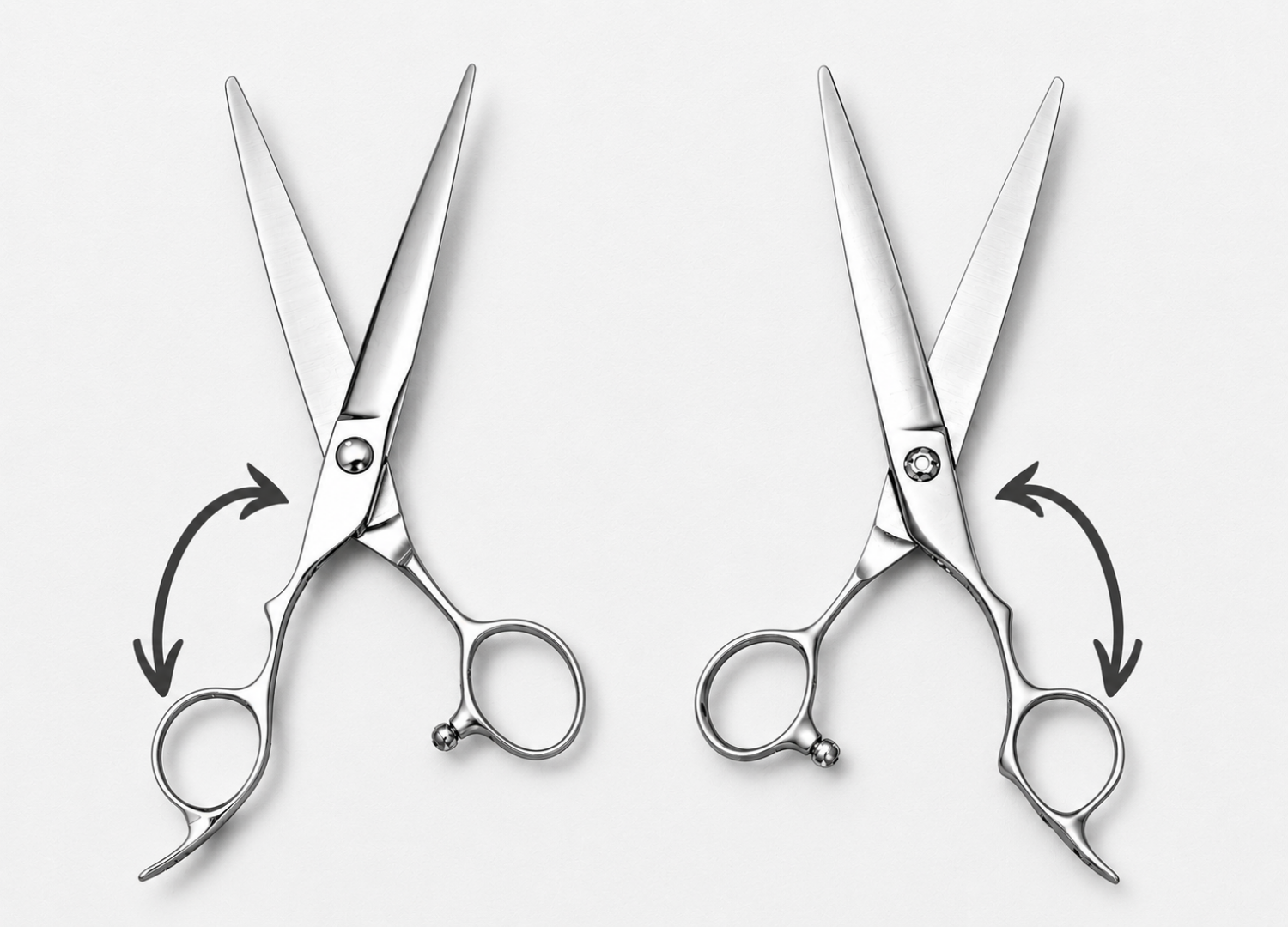
What the Real Difference Is?
Left-handed scissors are not simply a mirrored shape.
The main difference lies in the construction and interaction of the blades:
• the position of the
upper blade is reversed
• the closing force is transferred differently
• proper blade contact is maintained when working with the left hand
This directly affects control, cutting feel, and cutting quality.
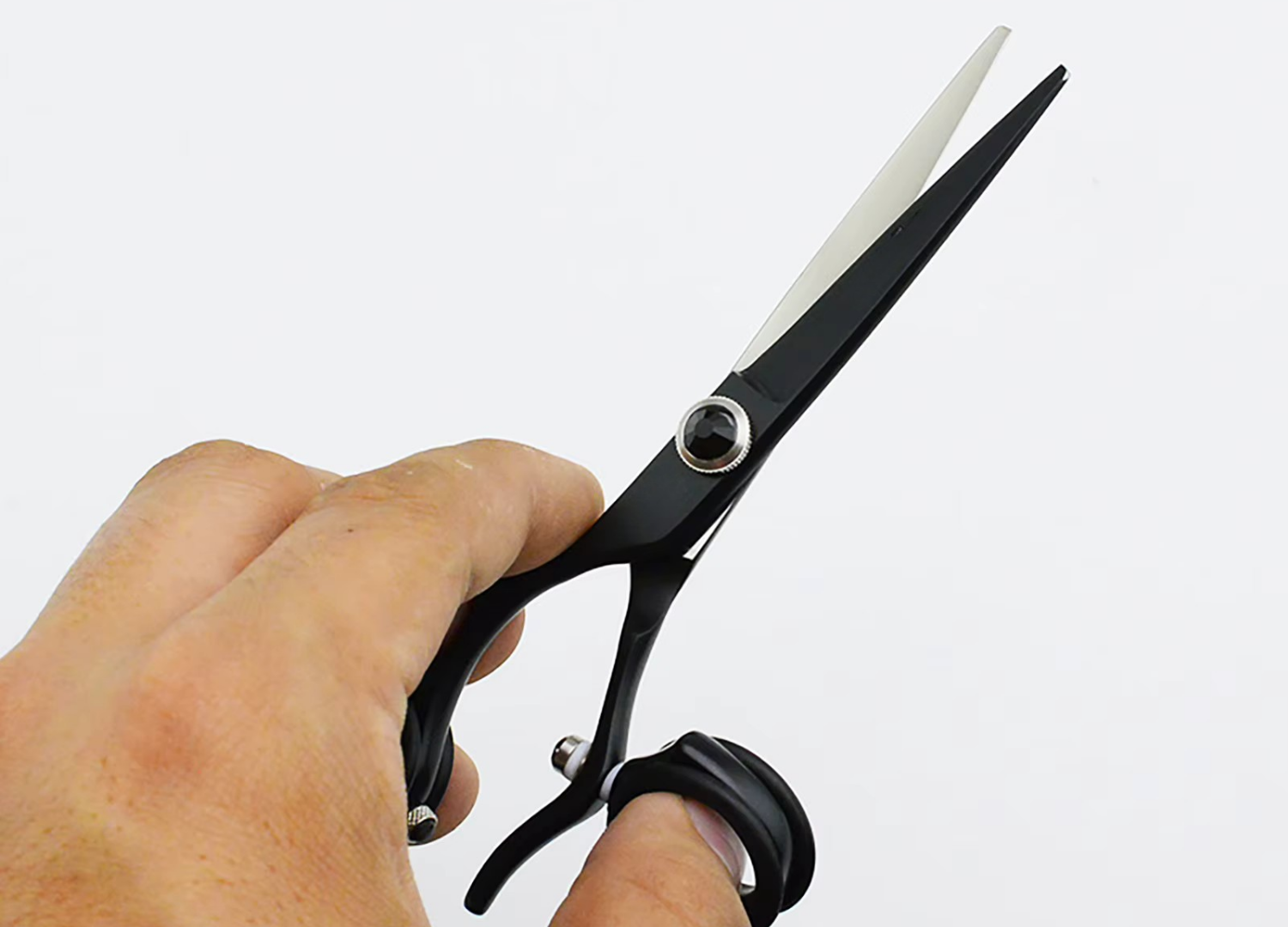
Why Right-Handed Scissors Feel Uncomfortable for Left-Handed Stylists
When using right-handed scissors, the left hand has to compensate for the tool’s construction.
This may lead to:
• disruption of natural
hand movement
• reduced control over the cutting line
• less stable blade contact
As a result:
• precision decreases
• fatigue and discomfort appear faster
• the scissors may begin to pull the hair
Even if the scissors feel comfortable at first, the difference becomes noticeable over time.
A Common Mistake — Symmetrical Scissors ≠ Left-Handed Scissors
There are models on the market that look universal or are often perceived as suitable for left-handed users.
Most commonly these are:
• symmetrical scissors
• “semi-left” models that retain right-handed blade geometry
These scissors may feel more comfortable ergonomically but do not replace a true left-handed design.
For left-handed stylists, this may affect:
• the feel of the scissor
movement
• cutting line control
• comfort during extended use

Symmetrical handle design alone does not mean true left-handed construction.
Important When Sharpening
Left-handed scissors require a separate approach to maintenance and sharpening.
If sharpened as right-handed scissors:
• cutting quality
deteriorates
• blade contact is disrupted
• tool performance changes
That is why sharpening left-handed scissors requires consideration of both construction and blade working direction.
→ Why Left-Handed
Scissors Get Damaged During Sharpening
→ Can Left-Handed Scissors Be Restored After Incorrect Sharpening
Conclusion
Left-handed scissors are a dedicated tool, not simply a different handle shape.
Choosing the right scissors:
• provides a clean cut
• reduces strain on the hand
• makes work more comfortable